SEO marketing tools SaaS teams should actually buy
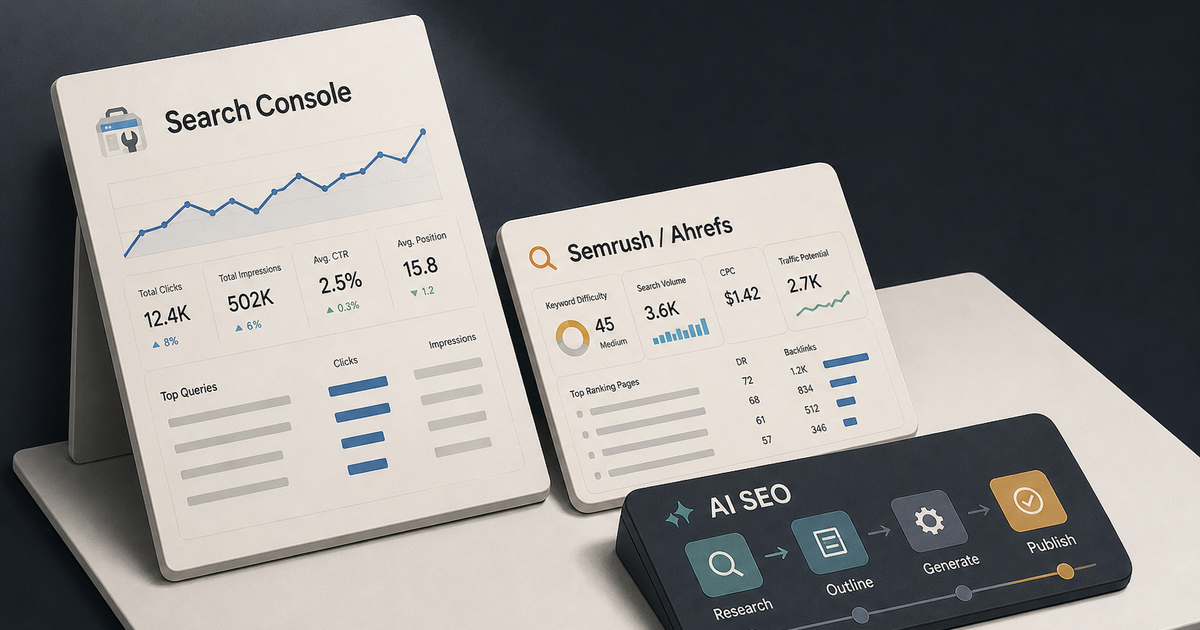
SaaS teams should buy a small stack of search optimization tools: one measurement layer, one research layer, and one AI execution layer. As of July 2026, that usually means Google Search Console, Google Analytics 4, and either Semrush or Ahrefs, plus an AI-powered workflow if the team publishes at scale.
Key takeaways
- SaaS teams should buy for workflow fit first, because the best seo marketing tools reduce friction across research, drafting, optimization, publishing, and refreshes.
- Google Search Console and Google Analytics 4 are the non-negotiable measurement pair, while Semrush or Ahrefs covers research and competitive visibility.
- An ai powered content creation platform is worth paying for only if it connects content operations to outcomes, not if it just writes drafts.
- Search optimization tools, search engine optimizer tools, and seo optimisation tools are overlapping buyer phrases for the same decision: what improves organic growth fastest.
- Essel fits teams that want an ai for seo workflow that can research, write, publish, and improve content continuously.
What SaaS teams should buy first
The right first purchase is a three-part stack: Google Search Console for query and indexing truth, Google Analytics 4 for engagement and conversion context, and one paid SEO platform such as Semrush or Ahrefs for research and competitive gap discovery. That combination covers the basics better than most bloated suites, and it gives SaaS marketers enough signal to decide what to publish next.
For a team with limited headcount, the buying rule is simple: pay for the tool that shortens the path from insight to published page. A lot of search engine optimizer tools can show keywords, but fewer can help a team turn those keywords into shipped content, internal links, and refreshes on a repeatable cadence. If the tool does not improve output speed or decision quality, it is not a priority purchase.
The overlap in buyer language matters here. Search optimization tools, seo marketing tools, and search engine optimizer tools are often used interchangeably, but the buying decision is the same: which stack helps a SaaS team grow organic traffic and stay visible in Google and AI search. If you want a deeper buying framework, use this checklist before you sign a contract.
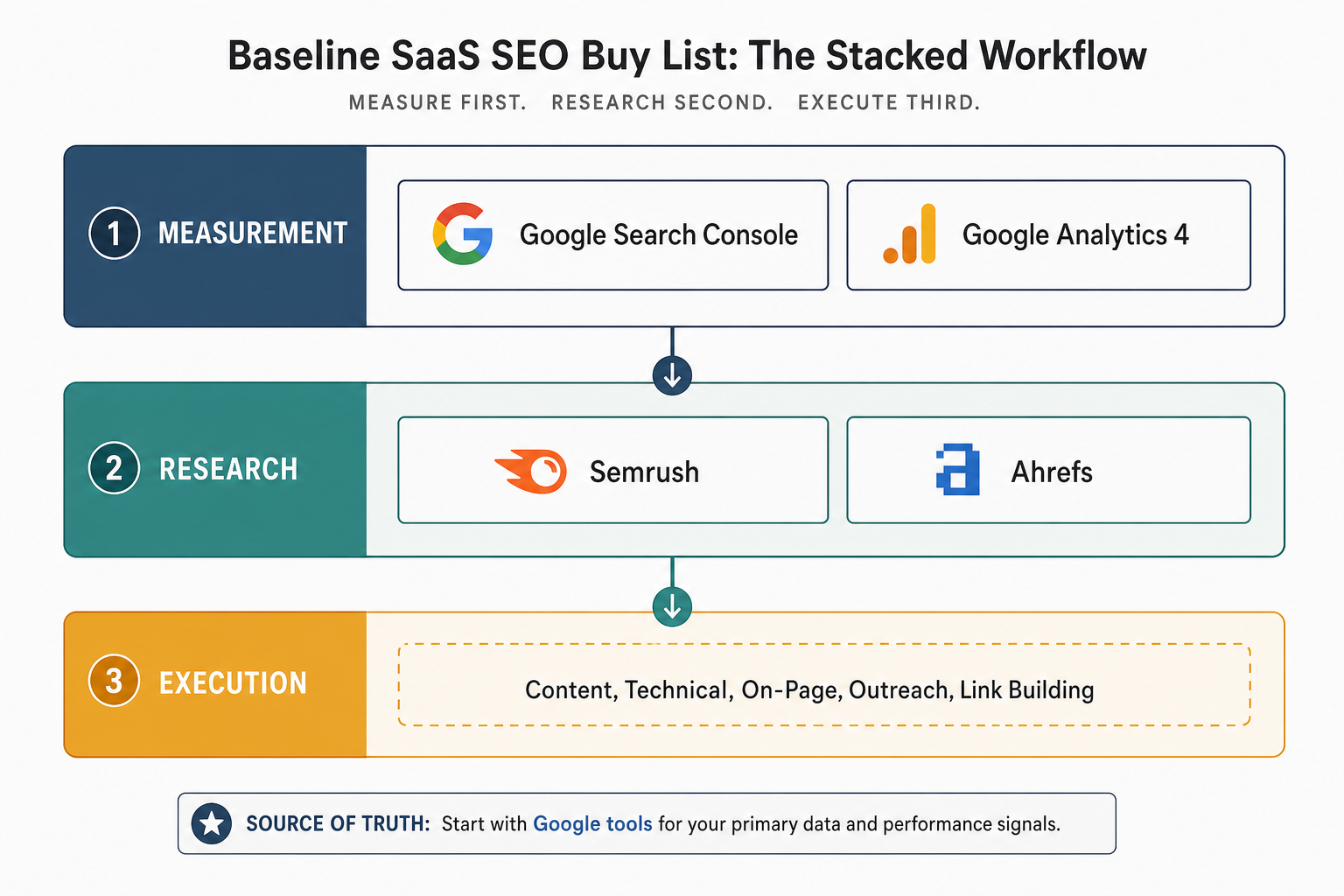
Measurement comes first, then research, then execution.
Note: If your team publishes less than once a week, you probably do not need a heavyweight automation platform yet. If you publish weekly or faster, the workflow savings start to matter fast.
How to evaluate SEO tools for SaaS
The best seo optimisation tools earn their budget by improving publishing speed, content quality, and search visibility together. That means the evaluation has to go beyond feature lists and ask whether a tool helps a team ship better pages with less manual work.
| Criterion | What SaaS teams should look for | Why it matters |
|---|---|---|
| Research depth | Keyword, topic gap, and competitor analysis | Helps you find what to write next |
| Optimization guidance | Content scoring, on-page recommendations, and internal linking prompts | Helps pages rank after they are published |
| Workflow fit | Briefs, drafting, approvals, and CMS publishing | Cuts handoffs and tool sprawl |
| Refresh support | Alerts, content decay signals, and update workflows | Keeps pages compounding instead of aging out |
| AI search readiness | Support for GEO, AEO, and modern search surfaces | Aligns the stack with Google AI Overviews, ChatGPT, and Perplexity |
| Budget efficiency | Replaces multiple point solutions or clearly earns its fee | Prevents paying twice for the same outcome |
This is where seo marketing tools for Google and AI search claims need to be tested hard. Artificial intelligence for content creation is useful when it reduces the time from research to live page, but it is not enough if the output still needs a human to rebuild the structure, add internal links, and clean up the intent match. A tool that writes fast but leaves the team with a second editing pass is not really saving money.
For a workflow-first view of AI in SEO, see how AI fits into SEO work. The right evaluation is not “Can it generate text?” It is “Can it help us optimize seo work end to end?”
Semrush vs Ahrefs vs Google Search Console vs Google Analytics 4
SaaS teams usually need both a paid research platform and Google’s measurement tools, because no single product covers the whole job. Semrush and Ahrefs are the usual paid contenders for seo marketing tools budgets, while Google Search Console and Google Analytics 4 provide the ground truth for performance.
| Tool | Best at | Weak spot | Best fit |
|---|---|---|---|
| Semrush | Broad SEO workflows, keyword research, competitive analysis | Can feel wide before it feels deep | Teams that want one platform for many SEO tasks |
| Ahrefs | Backlinks, authority analysis, SERP research | Less workflow breadth than all-in-one suites | Teams focused on authority and competitor discovery |
| Google Search Console | Query data, indexing, page performance | Not a planning or publishing tool | Everyone who needs search truth |
| Google Analytics 4 | Engagement, conversion context, traffic behavior | Does not tell you what to write | Teams that want business outcomes, not just visits |
Semrush is often the more obvious choice when a team wants an all-in-one SEO operating layer. Ahrefs is often the better buy when backlink analysis and authority research are the main need. Google Search Console and Google Analytics 4 are not optional extras, because they tell you whether the work is actually moving traffic and engagement.
For SaaS use cases, the real comparison is not feature parity. It is whether a tool helps you find topical gaps, prioritize refreshes, and spot internal linking opportunities faster than a spreadsheet can. If you want a broader shortlist for lean teams, this lean-team guide is the better companion piece.
Where AI content platforms fit in the stack
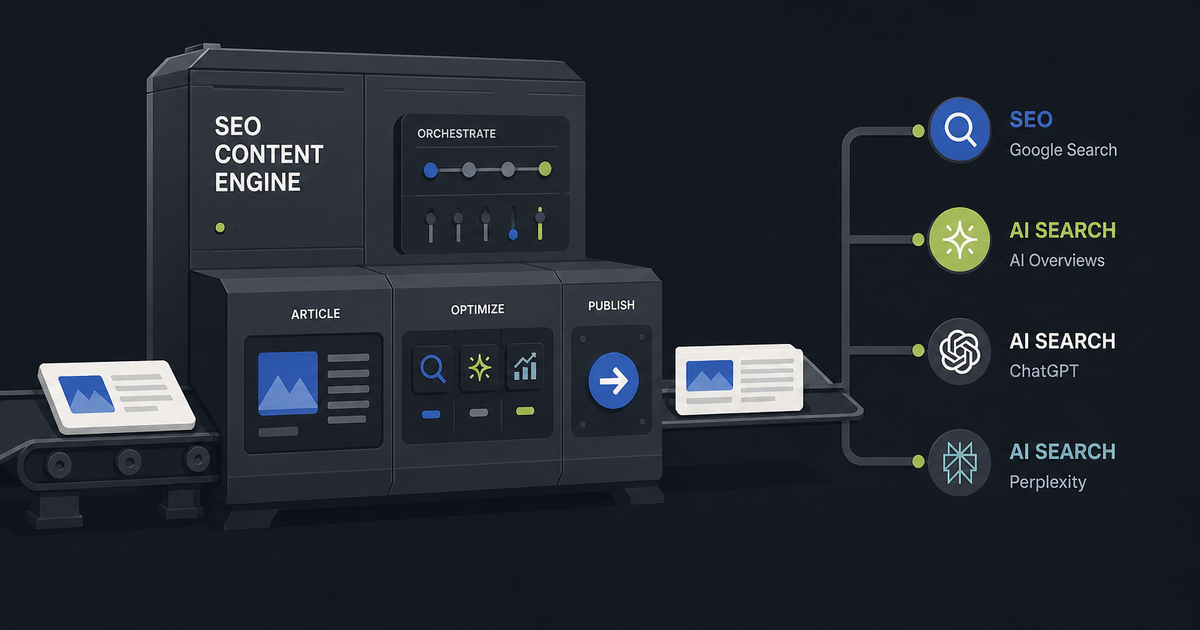
An ai powered content creation platform belongs in the middle of the workflow, not at the edge of it. The strongest setups connect research, drafting, optimization, publishing, and refreshes so the team does not have to jump between separate tools for each step.
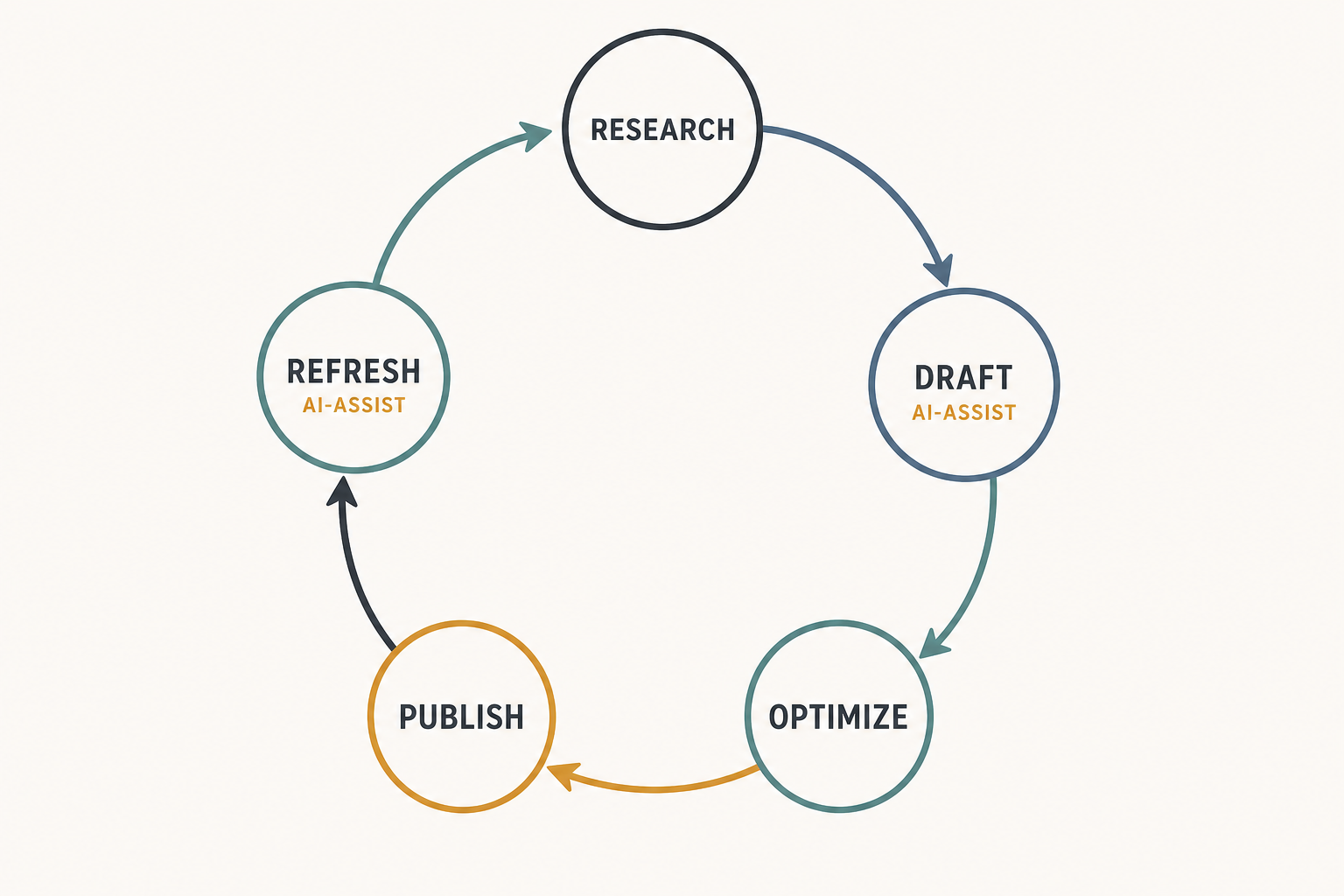
AI platforms add value when they close the full content loop.
That matters because ai for seo only creates leverage when it reduces operational drag. Many teams can generate a draft with AI. Far fewer can take a topic from opportunity to live page, optimize the page, add internal links, publish it, and keep it updated when the search landscape changes. That is the gap an autonomous workflow layer should close.
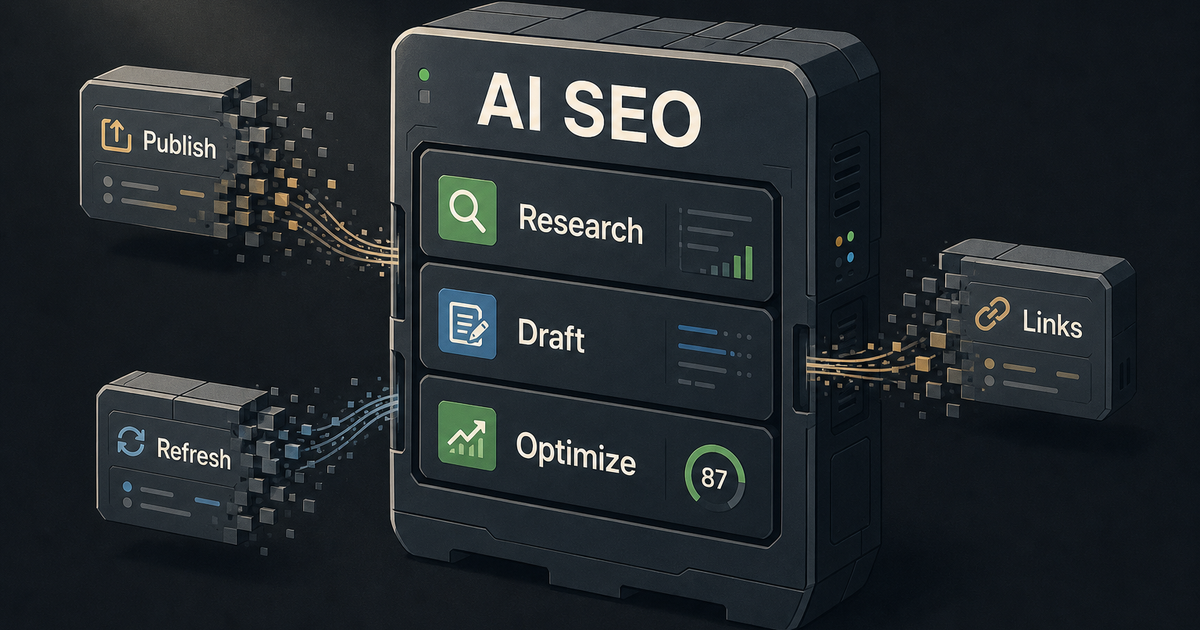
Essel is positioned for that workflow layer: research, drafting, optimization, publishing, and refreshes in one system, so content can compound instead of stalling after publication. For teams comparing workflow-led platforms, ask one question: does the tool help us optimize seo operations, or does it just help us create more text?
This is also where modern search matters. Google AI Overviews, ChatGPT, and Perplexity are now part of the discovery path, so the stack has to support visibility across more than blue links. If that matters to your team, the next step is AI search visibility, not just traditional ranking checks.
Best-fit tool stacks by SaaS team type
The right stack depends on publishing cadence, team size, and how much of the workflow you want to automate. A startup does not need the same stack as a content-led SaaS with a large editorial calendar.
| Team type | Recommended stack | Why this is the right buy |
|---|---|---|
| Lean startup | Google Search Console, Google Analytics 4, one paid SEO platform, one lightweight AI helper | Low cost, enough signal, minimal overhead |
| Growing SaaS team | Search Console, GA4, Semrush or Ahrefs, and an automation layer for briefs, drafting, links, and publishing | Better for recurring cadences and topical expansion |
| Agency | Search Console, GA4, a research suite, collaboration and reporting workflows, and reusable content systems | More clients, more repeatability, less manual chaos |
| Content-led SaaS | Full workflow platform plus measurement stack | Best when output volume and refreshes matter every week |
If you are buying seo marketing tools for a team that publishes often, pay attention to whether the platform can handle internal linking, CMS publishing, and refreshes in the same flow. That is where the value compounds. Free utilities can help with validation, but paid tools tend to win once the content calendar gets serious.
A practical next step is to compare your current stack with the pricing page and decide whether the fee replaces two or three point solutions. If it does not, the tool is probably too expensive for the job.
What to skip if you only want outcomes
Skip tools that duplicate what Google Search Console and GA4 already tell you unless they add a better decision layer. A second dashboard is not a strategy, and it is rarely a good buy for a SaaS team with limited time.
Do not split research, optimization, internal linking, and publishing across four vendors if one platform can cover the workflow. The hidden cost in search optimization tools is handoff friction: briefs get lost, edits get delayed, and refreshes never happen. That is how monthly spend rises while output stays flat.
Warning: Be careful with seo optimisation tools that promise rankings without showing how they handle topical gaps, AI search visibility, or content refreshes. Those products often look useful in a demo and disappear in a real workflow.
The same warning applies to generic artificial intelligence for content creation. If the platform can write but cannot help you publish, optimize, and improve pages after launch, it is only solving half the problem.
Can ChatGPT do SEO?
ChatGPT can help with ideation, drafts, outline cleanup, and rough content rewrites, but it cannot replace a proper SEO stack. It does not own your query data, it does not show indexing behavior, and it does not tell you which pages deserve a refresh next.
That is why ChatGPT works best as an assistant, not as the operating system. SaaS teams still need keyword strategy, intent mapping, on-page optimization, internal links, and performance tracking. In practice, the best ai for seo workflows use ChatGPT for support and pair it with seo optimization software that can actually measure outcomes.
This is also where teams should distinguish between content generation and content operations. A draft generator can save time, but a workflow tool can help the team optimize seo performance over time. That distinction matters more in 2026, because search behavior now spans Google and AI surfaces at the same time.
What are the best AI search optimization tools?
The best AI search optimization tools are the ones that improve both content production and search performance. If a platform only speeds up writing, it is useful. If it also helps a team research, optimize, publish, and refresh content, it becomes a buy.
For most SaaS teams, the shortlist looks like this: Semrush or Ahrefs for research, Google Search Console and Google Analytics 4 for measurement, and an autonomous execution layer such as Essel for the content workflow itself. That mix covers the needs of teams that care about Google AI Overviews, ChatGPT, and Perplexity as discovery surfaces, not just classic rankings.
If your content cadence is recurring, the AI platform matters more. A one-off writer can produce a page. A workflow platform can keep a whole topic cluster moving, fill topical gaps, and update pages when the data changes. That is the practical difference between buying software and buying leverage.
What are the 4 types of SEO?
The four broad types are on-page SEO, off-page SEO, technical SEO, and content SEO. SaaS teams should buy tools based on which of those workstreams they execute most often.
On-page and content SEO benefit most from optimization software, content scoring, and internal linking support. Technical SEO needs crawlability checks, indexing visibility, and structured data support. Off-page SEO depends more on backlink and authority analysis, which is why Semrush and Ahrefs still show up in most stacks.
If your team mostly publishes new pages, your budget should tilt toward content workflow and on-page optimization. If your team mostly inherits a large existing library, your budget should tilt toward audits, refreshes, and authority analysis. The point is not to buy every tool. The point is to buy the mix that matches the work you actually do.
Frequently asked questions
What is an example of an SEO tool?
Google Search Console is a clear example of an SEO tool because it shows query performance, indexing status, and page-level search data directly from Google. Semrush and Ahrefs are also common examples when a team needs keyword research, competitor analysis, and backlink data.
What are the best AI search optimization tools?
The best AI search optimization tools are the ones that combine research, optimization, publishing, and refresh workflows. For SaaS teams, that usually means Semrush or Ahrefs for research, Google Search Console and GA4 for measurement, and a workflow platform such as Essel for execution.
What are SEO and marketing tools?
SEO and marketing tools are the software used to research topics, publish content, measure traffic, and connect organic visibility to business outcomes. In a SaaS stack, that usually includes search optimization tools, analytics, and content workflow software rather than just one standalone app.
Is SEO dead or evolving in 2026?
SEO is evolving in 2026, not disappearing. Google AI Overviews, ChatGPT, and Perplexity have changed how discovery happens, so teams now need tools that support classic rankings and AI search visibility at the same time.
What are some SEO tools?
Common SEO tools include Google Search Console, Google Analytics 4, Semrush, Ahrefs, and AI-powered content platforms that support optimization and publishing. The right buy depends on whether your team needs measurement, research, content creation, or a full workflow.