AI SEO Tools: What to Look For Before You Buy
Last updated: 2026-06-30
As of June 2026, AI SEO tools are worth buying when they cut real workflow time, not when they only produce copy. The right stack should help a team research, draft, optimize, publish, and refresh content with less manual handling, while also improving visibility in Google and AI search. Essel is built for that end-to-end workflow, which is exactly why this buyer checklist matters.
Key takeaways
- The best AI SEO tools remove steps across the full content loop, not just the writing step.
- Automation depth, content scoring, internal linking, structured data, CMS publishing, and AI search visibility are the core buying criteria.
- A good platform should reduce tool sprawl and fit your publishing cadence, not force a new manual process around it.
- If the product cannot improve refresh workflows and topical coverage, it will usually stall after the first draft.
The short answer: what matters most in AI SEO tools
The best AI SEO tools automate the work that slows teams down: research, drafting, optimization, publishing, and refreshes. If a platform only writes text, it is a writing assistant, not a real SEO system.
Buyers should start with five questions. Does the tool handle the whole workflow? Does it improve content quality, not just speed? Does it support internal linking and structured data? Can it publish into a CMS? Does it help content surface in Google, ChatGPT, Perplexity, and AI Overviews?
That is the standard because content teams do not need one more disconnected generator. They need a system that replaces manual handoffs and keeps content moving. If you want a deeper primer on the category itself, start with what AI SEO means before comparing products.
What AI SEO tools should actually do for a modern content team
A real AI SEO tool should cover the full content loop, from research to refresh. That means keyword and topic discovery, brief generation, draft creation, on-page optimization, publishing support, and post-publication updates. If the workflow stops at a draft, the team still has to stitch together five other tools.
The difference matters most for SaaS teams. They usually have a publishing cadence, a need for topical coverage, and a small number of people doing a large amount of work. A platform that understands content cadences and optimization cycles will save far more time than a generic AI writer that only returns paragraphs.
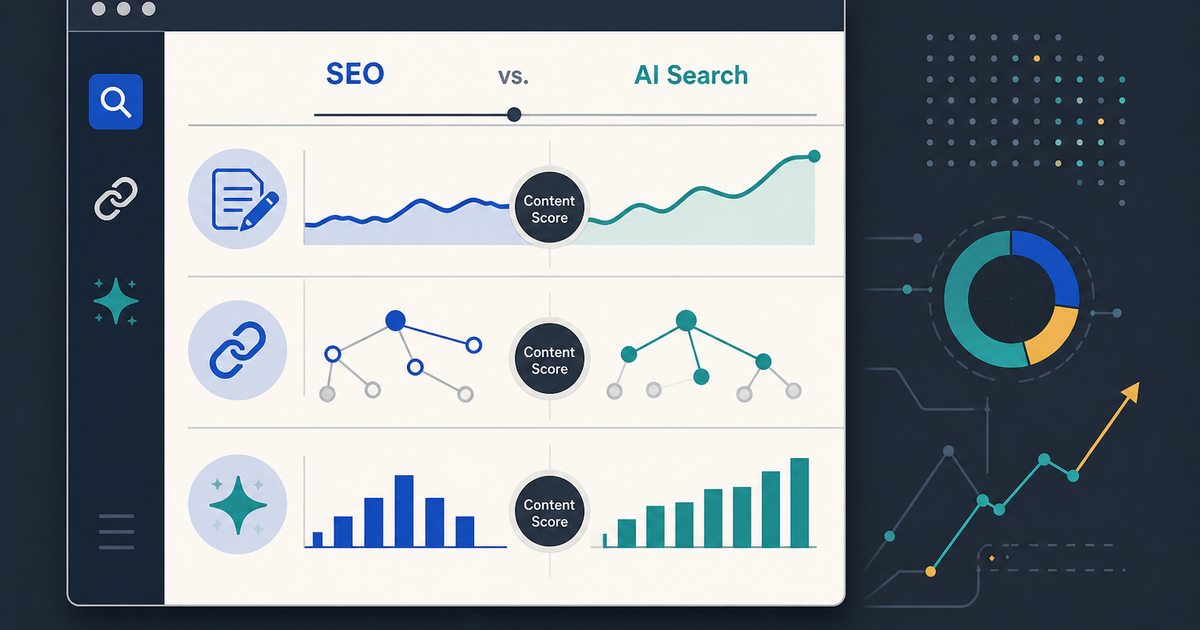
This is also where AI search visibility starts to matter. Modern teams are not only chasing blue links. They are trying to earn visibility across GEO and AEO surfaces as well, so the tool has to help with clarity, structure, and topical depth. If the terminology feels fuzzy, this guide to GEO and AEO helps translate it into practical buying language.
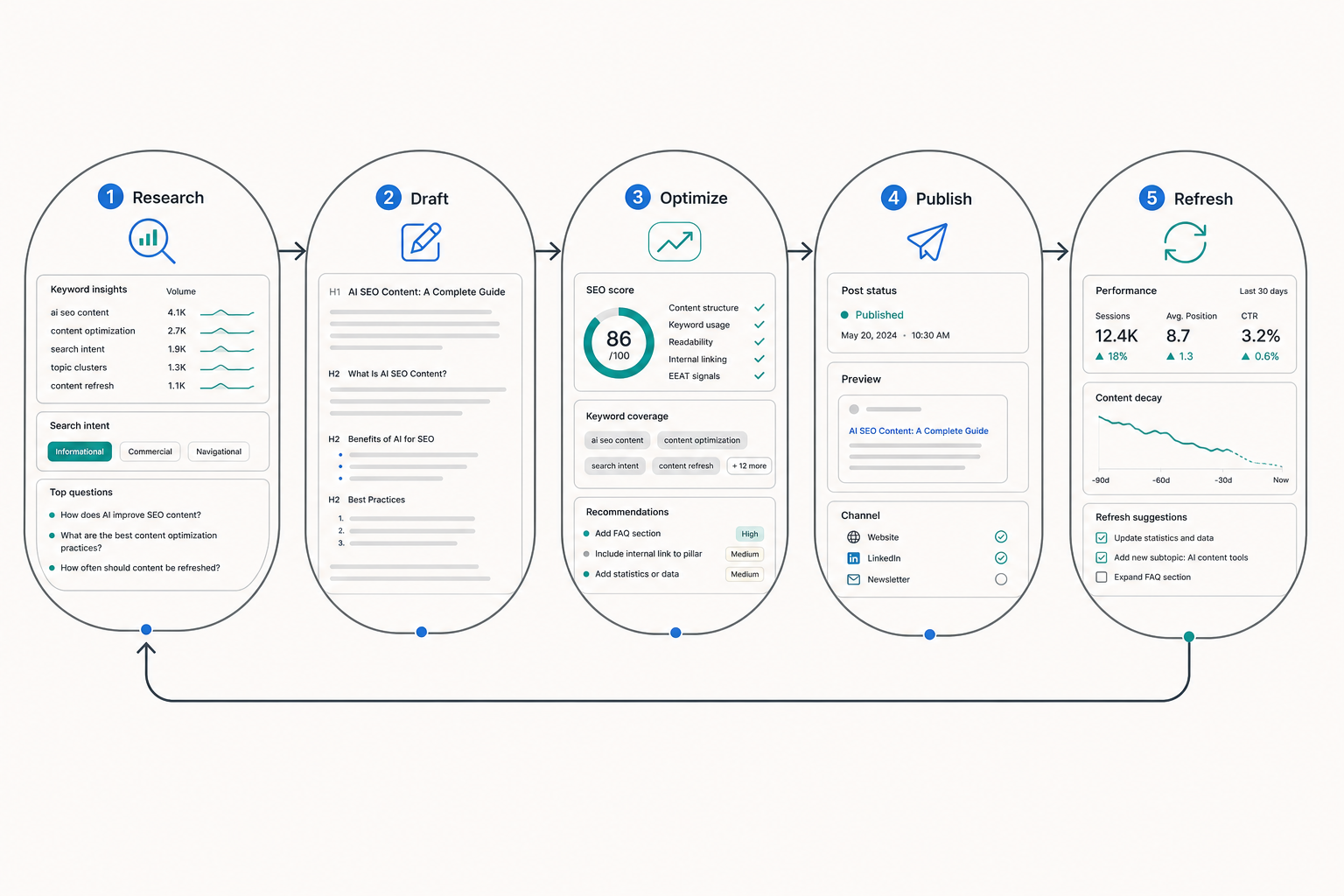
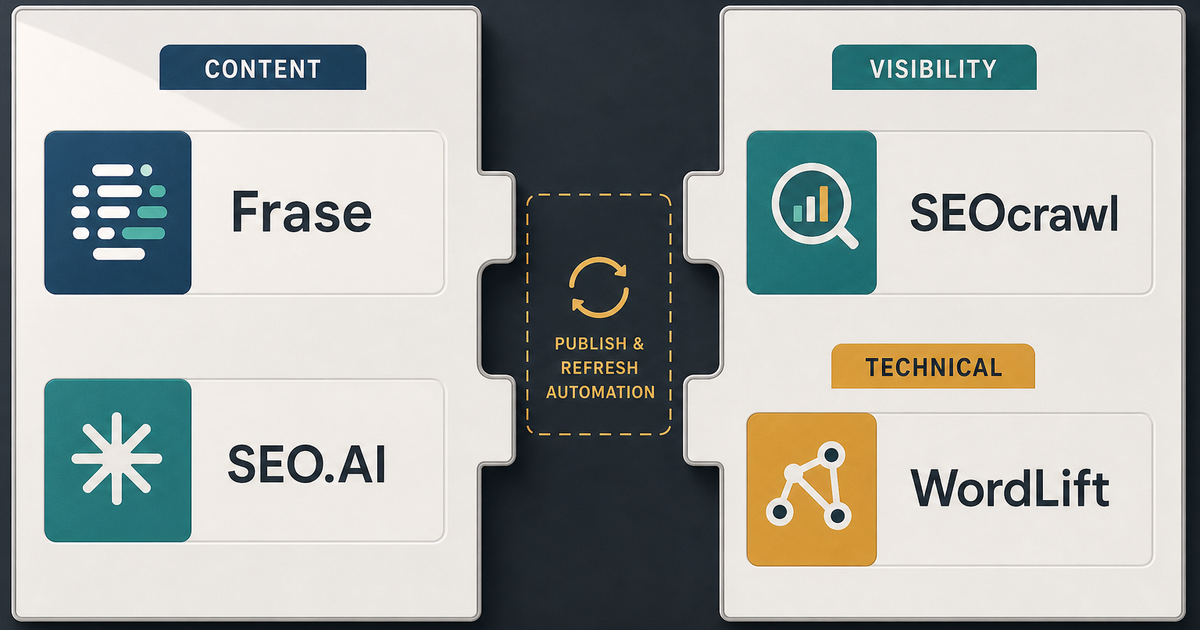
This diagram highlights why workflow coverage matters more than single-step generation.
The quickest test is simple: ask whether the product helps a writer ship a stronger page in fewer handoffs. If it does not help with research, drafting, optimization, publishing, and refreshes in one flow, it is not replacing enough of the stack.
What separates real AI SEO platforms from copy generators?
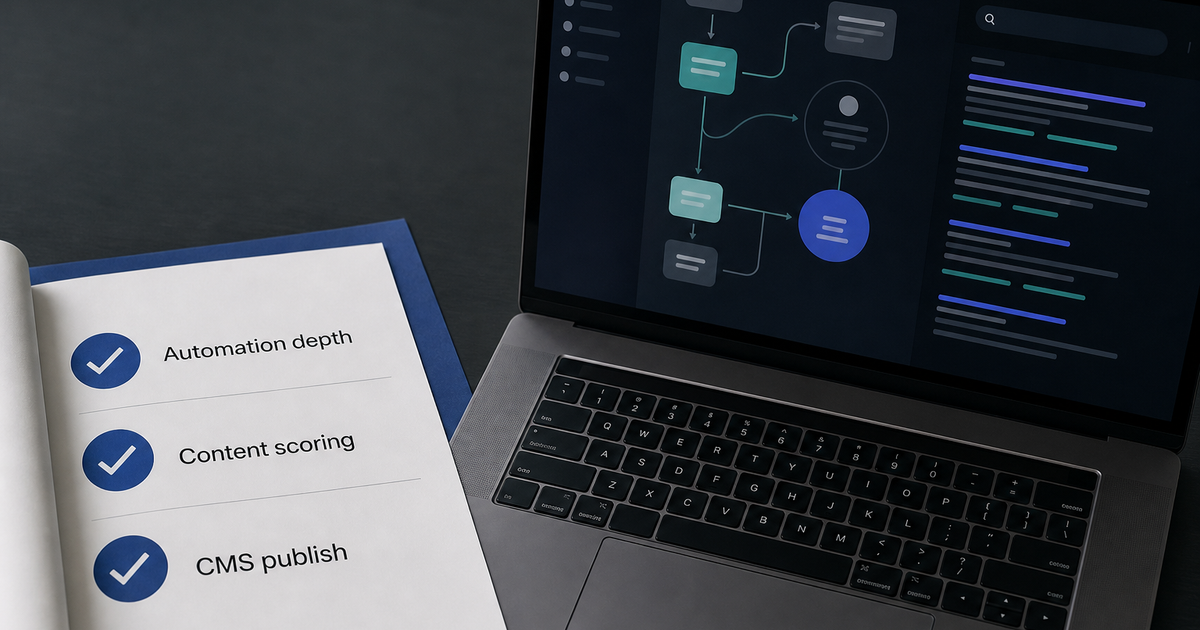
A serious AI SEO optimization platform needs more than fluent text. The buying checklist should focus on what gets removed from the workflow, not how many prompts it supports.
- Automation depth: Can it handle the full workflow, or only generate a draft?
- Content scoring: Does it explain what is missing, weak, or off-target before publish?
- Internal linking: Can it suggest relevant links that fit the page structure?
- Structured data: Does it support schema guidance or generation natively?
- CMS publishing: Can it push content where you already work?
- Refresh workflows: Can it revisit and improve older pages automatically?
- AI search visibility: Does it help content perform across Google and answer engines?
These are the criteria that separate true seo ai tools from thin assistants. They also help compare the vendor landscape without getting distracted by headline features that sound impressive but do not remove work.
If a platform claims to be among the best ai seo tools but still depends on a human to move every step from brief to publish, the practical value is limited. The same applies to teams shopping for a surfer seo alternative: the question is not whether the tool produces content, but whether it actually closes the loop.
How do you judge output quality before you commit?
Output quality is about publishability, not just grammatical cleanliness. A good buyer test asks whether the draft matches brand voice, covers the topic deeply enough, and aligns with E-E-A-T expectations without heavy reconstruction.
Start with one representative page. Run the same brief through the platform, then inspect the result for three things: topical accuracy, search intent match, and editing burden. If the output needs major re-structuring, the tool is probably saving time only on the first pass.
The fastest teams also test consistency across multiple pieces. One decent draft is not the same as a system that can support a content cadence month after month. If the tool weakens as topics get harder, it will not help you build compounding traffic.
Example: A SaaS team asks for a bottom-funnel comparison page. A strong platform should surface the subtopics, suggest the internal links, and preserve the angle, while a weak one gives you a generic listicle that still needs manual optimization.
This is where brand fit matters too. Some tools are fine at first drafts but poor at matching editorial standards. Others are strong on optimization but weak on flow. If your team has a specific operating model, the tool should adapt to it, not fight it.
Where does AI search visibility change the buying decision?
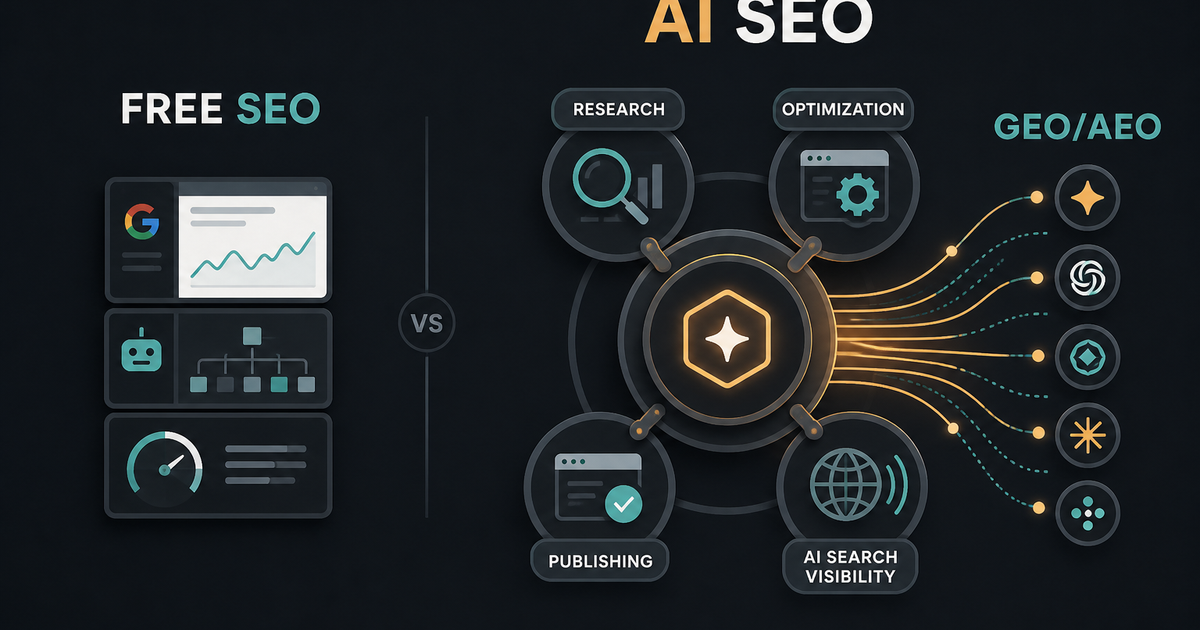
AI search visibility is now a purchase criterion, not a nice extra. Buyers need tools that think beyond classic rankings and support how content is surfaced in Google, AI Overviews, ChatGPT, and Perplexity.
That changes the evaluation. GEO and AEO support should show up in workflow design, not only in marketing copy. The platform should help structure answers clearly, cover related entities, and improve topical completeness so the page is easier for both search engines and answer engines to interpret.
The practical question is whether the system helps content earn visibility in more places with the same asset. That means stronger structure, clearer subheads, better entity coverage, and better internal context. If you want the terminology broken down more cleanly, this explainer on SEO for AI is a useful companion piece.
When is an AI SEO tool the wrong fit?
An ai seo tools platform is the wrong fit when the team does not have enough content motion to benefit from automation. If you only need a one-off analyzer, a full system is overkill.
It is also a poor fit when publishing is not part of the operating model. If nobody owns cadence, refreshes, or on-page improvement, the software becomes another dashboard rather than a lever. In that case, simpler best free seo tools or single-purpose utilities may be a better starting point.
The same caution applies when the stack cannot integrate cleanly with your CMS or workflow. A platform that creates more handoffs than it removes is a cost, not a multiplier. Buyers should be honest about their process before they buy the software.
How do you compare shortlists and make the final call?
The final decision should come down to how much manual work each product removes across the full lifecycle. Compare workflow coverage, SEO depth, publishing capability, and AI search readiness side by side.
| Criterion | Strong platform | Weak platform |
|---|---|---|
| Workflow coverage | Research, drafting, optimization, publishing, refreshes | Draft generation only |
| Content quality | Topic depth, intent match, brand fit | Generic output that needs heavy editing |
| On-page SEO | Internal links, structured data, scoring | Manual SEO work after export |
| Publishing | Native CMS integration or direct publish flow | Copy-paste into CMS |
| AI search readiness | Built for Google, GEO, and AEO visibility | Keyword-only optimization |
If two vendors are close, choose the one that saves the most time on recurring work. That usually means better refresh workflows, better internal linking, and fewer tools to manage. It is also where an internal comparison page can help: readers ready to evaluate vendor comparisons should shortlist products against the work they actually need done, not against a feature checklist that never reaches production.
For teams comparing against Surfer-style products, the easiest path is to look at a focused Surfer SEO alternative page and ask one question: does this tool replace more of the stack, or just rename the same steps?
What does this mean for teams evaluating Essel?
Essel is built as an autonomous content engine that handles research, drafting, optimization, publishing, and refreshes. That makes it a strong reference point for what buyers should expect from a serious platform, because the product is designed to remove the same manual steps this guide calls out.
For SaaS and content-led teams that means one system for content automation instead of a patchwork of tools. The value is not just faster drafting. It is a tighter workflow for internal linking, structured data, CMS publishing, content scoring, and ongoing updates that support organic compounding.
If you are evaluating workflow automation rather than a single-point generator, the home page is the cleanest place to start: Essel. That is the model to compare against when you are buying for scale, not just for speed.
Why are AI SEO tools important?
AI SEO tools matter because they reduce the amount of manual work between research and publish. For teams shipping content every week, that time savings compounds into more coverage, faster refreshes, and better consistency across the content library.
They also matter because search discovery has expanded. Teams are no longer optimizing only for Google. They are trying to stay visible across answer engines too, so the tool has to help with structure, depth, and clarity, not only keyword insertion.
What AI SEO tools do you use?
The best answer is not a brand list. It is a workflow answer. Use the tool that covers the most steps your team repeats: research, draft creation, optimization, publishing, and refreshes.
If your current stack is fragmented, start by replacing the step that creates the most friction. For some teams that is content scoring. For others it is internal linking or CMS publishing. The right choice is the one that removes the largest bottleneck first.
What AI SEO tools start with automation depth?
The first thing to check is whether the platform automates only writing or the full content loop. A tool with strong automation depth should move from topic discovery to optimization and publishing with minimal manual handoffs.
That matters because workflow depth is the difference between a helper and a system. If a vendor cannot handle refreshes, internal linking, or publication steps, it is not starting with automation depth. It is starting with generation.