How AI Is Changing SEO for Product-Led Teams
As of July 2026, how AI is changing SEO is mostly a shift from ranking pages for keywords to earning visibility inside answers. For product-led teams, that means content has to support discovery, activation, and conversion across Google AI Overviews, ChatGPT, and Perplexity, not just pull a click from one blue-link result.
Key takeaways
- AI is changing SEO by rewarding intent-matched, sourceable answers over exact-keyword repetition.
- Product-led teams now need content that is structured for both human readers and AI search surfaces.
- The workflow change is real: AI can speed research, briefs, drafts, internal linking, and refreshes, but strategy and fact-checking still need humans.
- Visibility is no longer measured only by organic clicks, because zero-click answers and AI citations can create exposure before the visit.
- Teams that pair AI SEO with strong product insight, schema markup, and E-E-A-T tend to compound faster than teams that only publish more pages.
How AI is changing SEO
AI is changing SEO by moving discovery away from exact-match keywords and toward intent, context, and answer synthesis. Search systems increasingly surface pages that explain a problem clearly, support the answer with structure, and make it easy to cite the source. For product-led teams, that changes the brief: the page has to help someone understand the problem, evaluate the solution, and take the next step.
That shift is visible in Google AI Overviews, which synthesize multiple sources into a summary, and in assistants like ChatGPT and Perplexity, which answer in natural language instead of sending every query to a classic results page. If you want the terminology around this shift, what AI SEO means is a useful starting point, but the practical point is simpler: the content has to be easier to interpret, quote, and trust than the average SERP page.
For product-led teams, that matters because organic content is no longer only a traffic channel. It is part of the product growth loop. Pages now have to do three jobs at once: educate prospects, capture AI search visibility, and feed activation paths back to the product.
Example: A page targeting “how to reduce churn” will usually perform better if it includes a clear framework, a product-specific workflow, and a concrete example of how the software helps, rather than a long keyword-led essay.
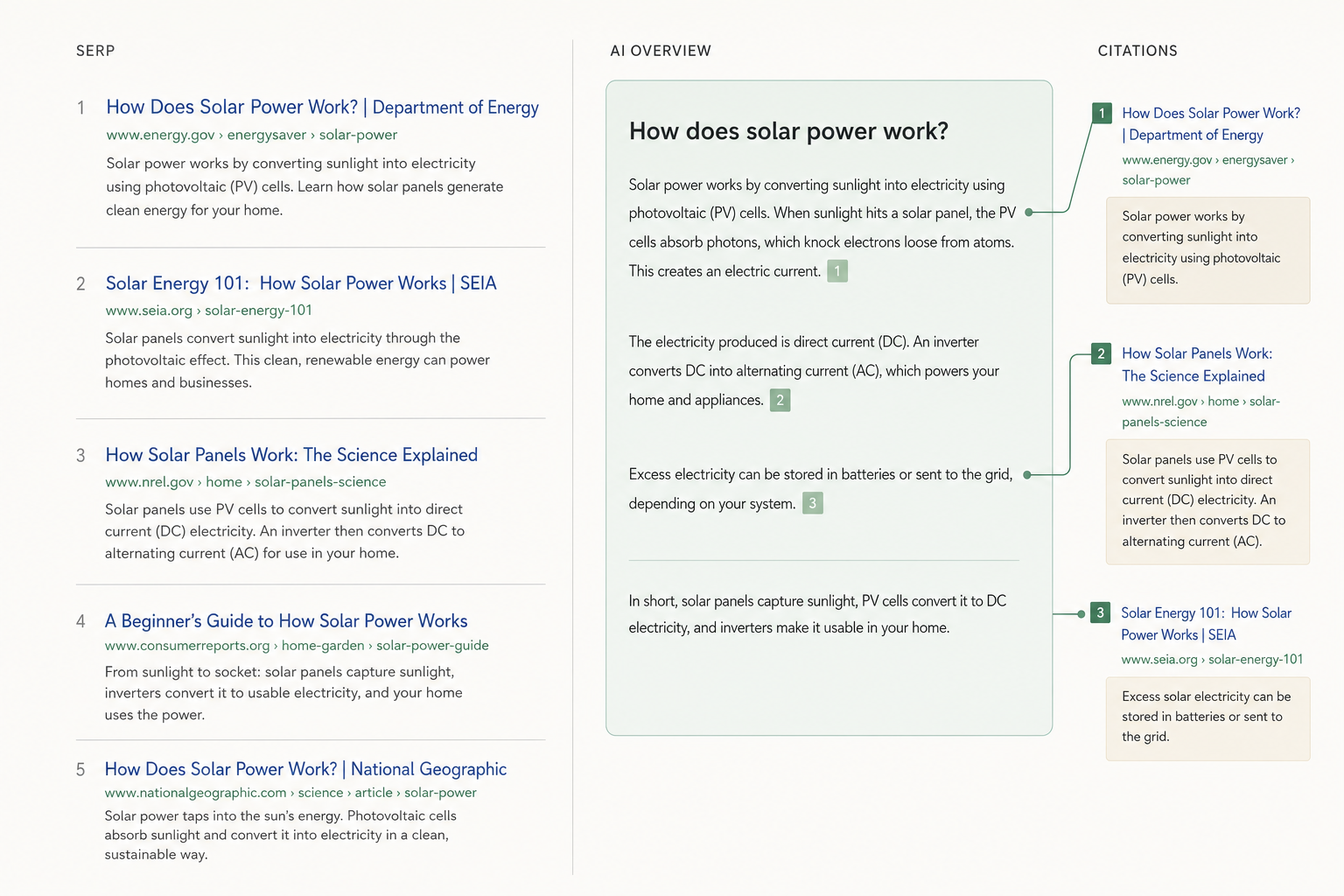
AI systems increasingly synthesize results instead of listing them.
What AI changes in the SEO workflow
AI changes the SEO workflow by compressing the slow parts of production while leaving the high-stakes parts in human hands. Research gets faster because models can cluster topics, draft briefs, and surface gaps in minutes. Drafting gets faster because the first pass can be generated from a clear prompt, a content brief, and supporting sources. Optimization gets faster because AI can suggest internal links, highlight missing entities, and flag sections that are thin on evidence.
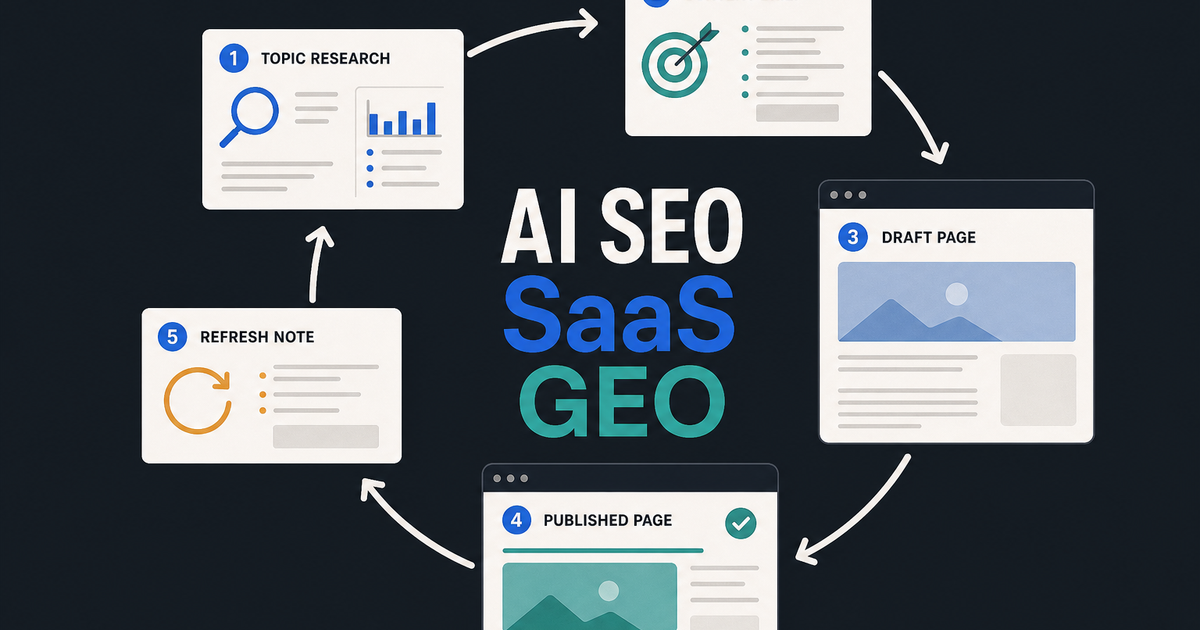
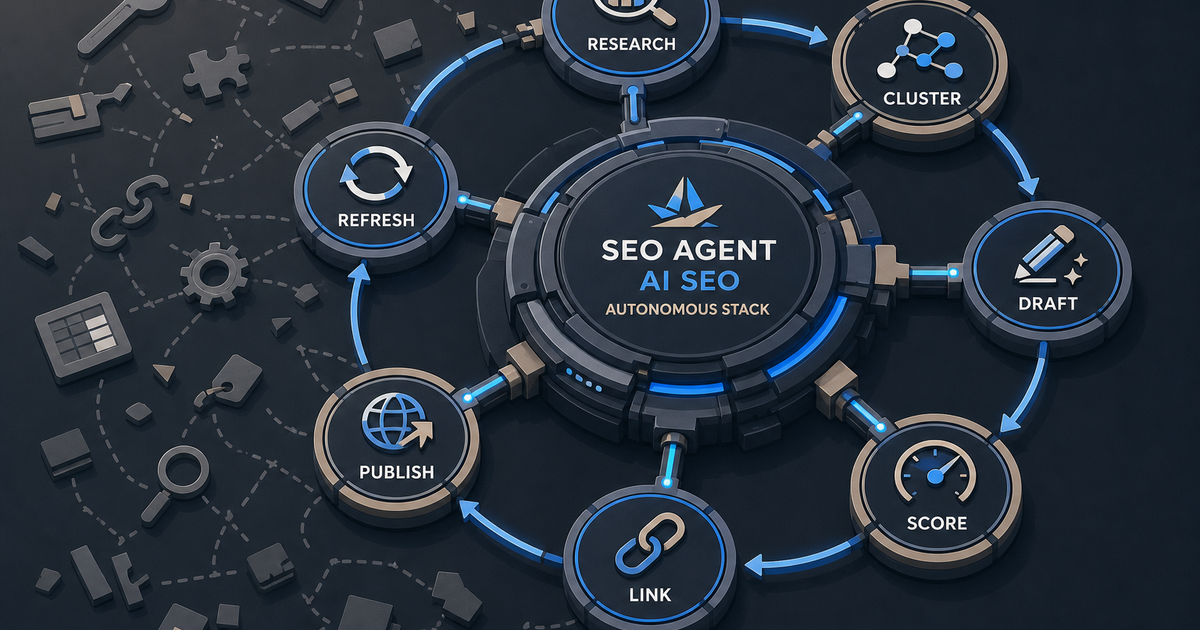
That is where tools and process start to matter more than one-off prompts. A team using an AI SEO workflow can turn a scattered publishing process into something repeatable: research, outline, draft, optimize, publish, refresh. The value is not “write everything with AI.” The value is shipping more often without rebuilding the whole content stack every quarter.
Here is the operating change in practical terms:
| Workflow stage | Before AI | With AI |
|---|---|---|
| Topic research | Manual SERP review and spreadsheet notes | Topic clustering, intent labeling, gap detection |
| Brief creation | Time-consuming and inconsistent | Fast briefs with target entities and structure |
| Drafting | Slow first draft from scratch | Faster draft generation from a clear outline |
| Optimization | Manual link and entity review | Content scoring, schema prompts, internal link suggestions |
| Refreshes | Reactive, easy to miss | Prioritized by decay, SERP change, and impact |
Product-led teams still need editorial judgment here. AI can propose a heading, but it cannot tell you whether the page matches how your product actually solves the problem. It can generate claims, but it cannot validate them against your roadmap, your pricing, or your support data. That is why the best teams use AI to shorten the path to publish, not to remove review.
A good way to think about this is workflow automation plus human control. Using AI for SEO works best when the team keeps ownership of positioning, accuracy, and conversion logic. The machine should handle the repeatable layer. The team should protect the brand layer.
Why AI search rewards product-led content differently
AI search rewards product-led content differently because it favors pages that answer a real job-to-be-done with enough structure to quote cleanly. Generic thought leadership can still rank, but pages built around use cases, comparisons, implementation steps, and decision moments tend to be easier for AI systems to synthesize. That gives product-led teams an edge when they publish content tied directly to features, workflows, and buying questions.
This is where AI search visibility becomes a separate goal from classic organic ranking. Google AI Overviews, Perplexity, and ChatGPT all reward pages that are structured, sourceable, and semantically clear. The content does not need to sound robotic. It needs to be legible to both people and machines. That is why SEO for AI search is becoming part of the core content strategy, not a side experiment.
The KPI mix changes too. A page can earn visibility in an AI summary, get cited in an assistant response, and still see fewer direct clicks than a classic result page. That can feel counterintuitive at first. But for product-led teams, top-of-funnel visibility often matters even when the click happens later in the journey.
BrightEdge's twelve-month analysis of AI Overviews, published in February 2026, puts a number on the shift: only about 17% of the sources cited in AI Overviews also rank in the organic top 10. The exact click pattern varies by query, but the strategic implication is stable: if AI systems can answer the question from your page, your page has a better chance of being surfaced, cited, and remembered.
How to adapt your content system for AI SEO
AI SEO works best when the content system is built for repeatability, not heroics. Product-led teams usually do well when they standardize the parts that can be standardized, then reserve human time for the pieces that shape trust and conversion. That means using AI to sharpen topic selection, content outlines, optimization tasks, and refresh cycles, while keeping real product insight at the center.
Start with topic clustering and gap analysis. The goal is to find the pages your product naturally supports, then map them to search intent and funnel stage. A good cluster does not just chase volume. It connects a problem, a use case, a workflow, and a conversion path. That is where AI SEO tools can help, especially if they can score content, suggest internal links, and support publishing rather than just generate drafts.
Then standardize structure. Pages that are easier for engines to parse are also easier for users to scan. Use schema markup where it fits, especially on articles, product pages, FAQs, and comparison pages. Keep headings descriptive. Make the answer visible early. Break dense sections into concrete subpoints. This is not cosmetic formatting. It improves how systems extract meaning from the page.
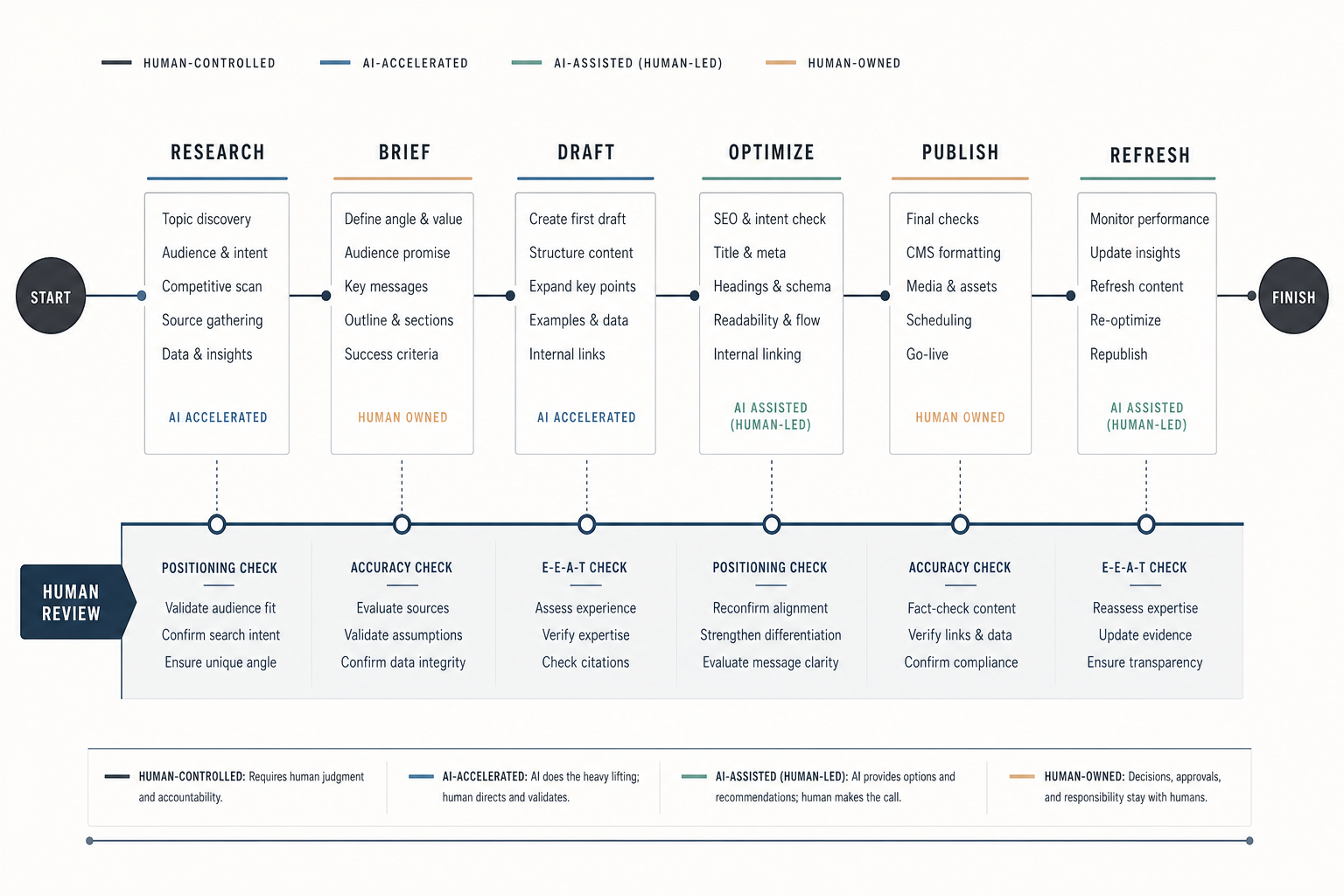
AI speeds the SEO process, but review still protects positioning and accuracy.
Internal linking is the other leverage point. Product-led teams often have strong feature pages but weak connective tissue. A visitor lands on a blog post, reads it, and leaves because the path to the product is not obvious. Strong internal linking solves that. It helps people move from problem to product, and it helps crawlers and AI systems understand which pages are related. If you want a deeper process view, the weekly publishing pattern in this AI SEO cadence guide shows how cadence and linking compound together.
Refresh loops matter as much as new content. AI search surfaces change quickly, and pages that were good six months ago can become stale once search engines start preferring newer structures, clearer answers, or better source patterns. Product-led teams should re-score older pages, update examples, and tighten answer blocks before creating another batch of net-new posts.
What still separates winners from generic AI content
The teams that win with AI SEO use AI as an accelerator, not as the strategy itself. The strongest content still contains first-party insight, specific product examples, and a point of view that cannot be copied from a generic brief. If a page could belong to any company in the category, it usually will not hold up for long.
E-E-A-T still matters because trust signals are part of how content earns visibility. Clear authorship, accurate claims, transparent examples, and useful sourcing all help. Search systems may get better at synthesis, but they still need signals that the page was written by a team that knows the topic and can stand behind the answer. That is especially true for product-led teams, where the content should connect directly to what the product does and how customers use it.
The failure mode is easy to spot. Teams automate volume, then wonder why rankings and AI citations do not move. The issue is usually not the model. It is the lack of product substance. AI can produce more content faster, but without positioning, evidence, and a clear information architecture, the output becomes more of the same.
A practical test helps here: if the page removed the brand and the reader could not tell what makes the product different, it probably needs more original material. Add screenshots, workflow steps, customer context, or a precise comparison. Those details are what make the page worth quoting.
What product-led teams should do next
Product-led teams should start by auditing the pages they already own, not by generating ten new drafts. Look for intent mismatch, weak structure, thin answer blocks, missing internal links, and stale examples. The fastest gains usually come from improving pages that are already close.
Next, prioritize topics where the product is a natural answer to the problem. That includes use cases, comparisons, implementation guides, and decision pages. These pages tend to convert better because they line up with intent instead of forcing a generic top-of-funnel article into a sales path.
Then build a publishing system that can keep up. AI should increase cadence, but it should not lower the bar on review. Claims, examples, and product positioning still need a human pass. If the team wants a cleaner operating model, how to do AI SEO is a useful reference point for turning research, drafting, optimization, and refreshes into one repeatable loop.
The teams that adapt fastest will do three things well:
- publish around real product problems, not abstract trend pieces;
- structure content so AI systems can extract the answer;
- refresh high-value pages before they lose relevance.
That is the real change. AI is not replacing SEO. It is changing what SEO has to optimize for: clearer answers, stronger structure, and a content system that compounds across Google and AI search.
Frequently asked questions
What is SEO for AI called?
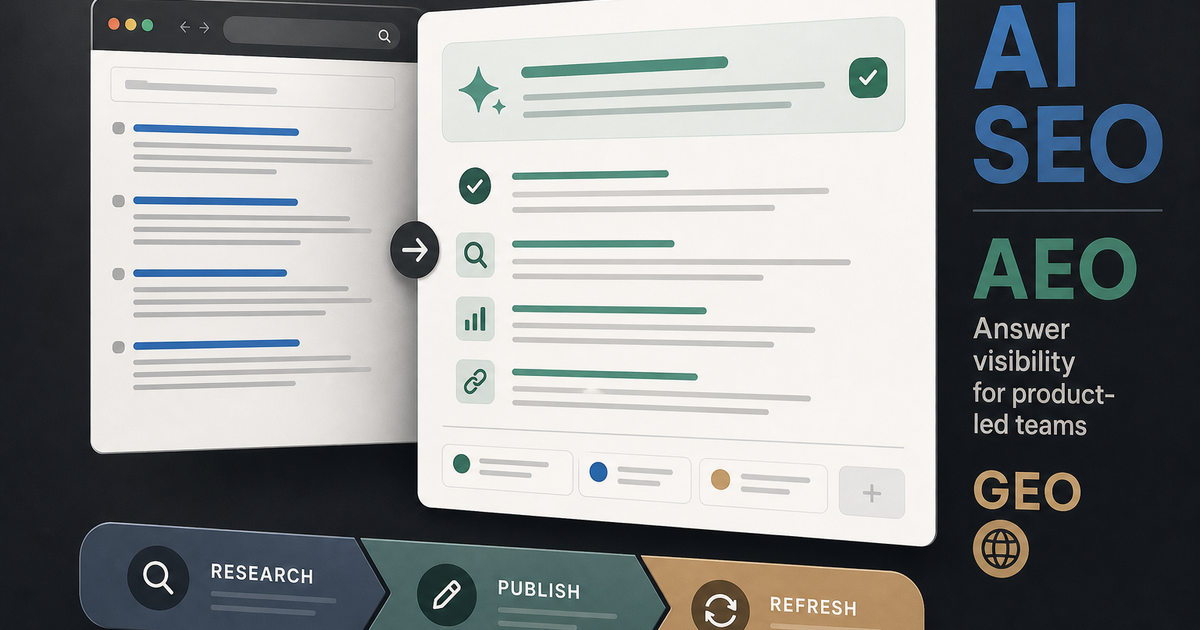
SEO for AI is commonly called AI SEO, SEO for AI search, GEO, or AEO, depending on the surface you are optimizing for. In practice, the labels overlap: AI SEO usually means using AI to improve SEO work, while GEO and AEO focus more on earning visibility in generative and answer-based search experiences. For product-led teams, the useful distinction is simpler: AI SEO changes how content gets produced, while GEO and AEO change how that content gets surfaced.
What is the difference between AI SEO and traditional SEO?
AI SEO puts more weight on intent, structure, and extractable answers than traditional keyword-first SEO does. Traditional SEO still matters, but AI search systems are better at interpreting natural language, comparing sources, and surfacing content that is easy to summarize. In practice, that means a product-led team should write for a searcher’s job-to-be-done first, then support the answer with schema, internal links, and clear page structure.
How do Google AI Overviews affect SEO traffic?
Google AI Overviews can reduce clicks on some queries because the answer appears directly on the results page. That does not make the page less valuable, but it does mean teams should track visibility, citations, and assisted discovery, not just raw sessions. A page can still influence the buyer journey even when the first exposure happens inside the overview rather than on the site.