Online Readability Tool: Diagnose Weak Copy Before You Publish
As of September 2026, the fastest way to catch weak copy is to run it through an online readability tool before it ships. It shows where sentence length, word choice, and paragraph rhythm are dragging the draft down, so you can fix the problem while the piece is still easy to edit.
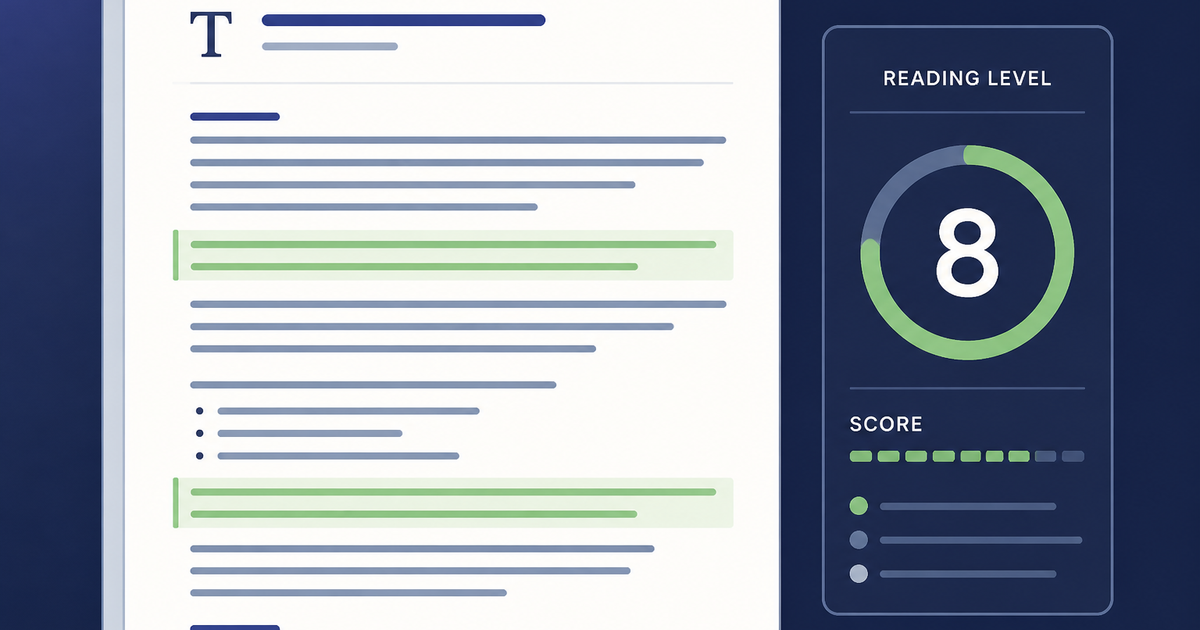
"85% of the public will be able to read and understand your content at Grade Level 8."
Readable
Key takeaways
A readability check is a pre-publish diagnostic, not a score to collect and ignore.
- A score around 60 is usually a solid web target, and a grade level of 8 or lower reaches about 85% of readers (Source: Readable, 2026).
- Full-text testing matters more than sentence snippets because formulas need enough sample size to be meaningful.
- Free tools can absolutely check readability, but manual copy-paste workflows become brittle at higher content volume.
- The best workflow combines a readability checker, sentence-level cleanup, and a final scan for line length and scannability.
Why running an online readability tool is essential before publishing
An online readability tool catches cognitive friction before the draft goes live. It measures how hard the text is to process, usually by looking at sentence length, syllable density, and word patterns that slow readers down. That matters because public-facing copy has to meet the reader where they are, not where the writer wishes they were.
Hemingway App notes that the average reading level for adults in the United States is only an 8th-grade level (Hemingway App). If your draft reads several grades above that, it will usually feel heavier than it needs to. Readers skim. They bail.
That same friction shows up in search behavior. Long, dense sentences reduce scannability, and that hurts the odds that a page gets fully read, quoted, or extracted into AI answers. For teams shipping content on a cadence, readability is not a polish pass. It is a pre-publish risk check.
Essel bakes this into its content workflow, which is useful if you want readability scoring to sit next to SEO checks instead of living in a separate tab.
Note: Spell-checking is not readability testing. A clean draft can still be hard to read if the structure is overloaded.
Core readability formulas: how each scoring engine evaluates copy
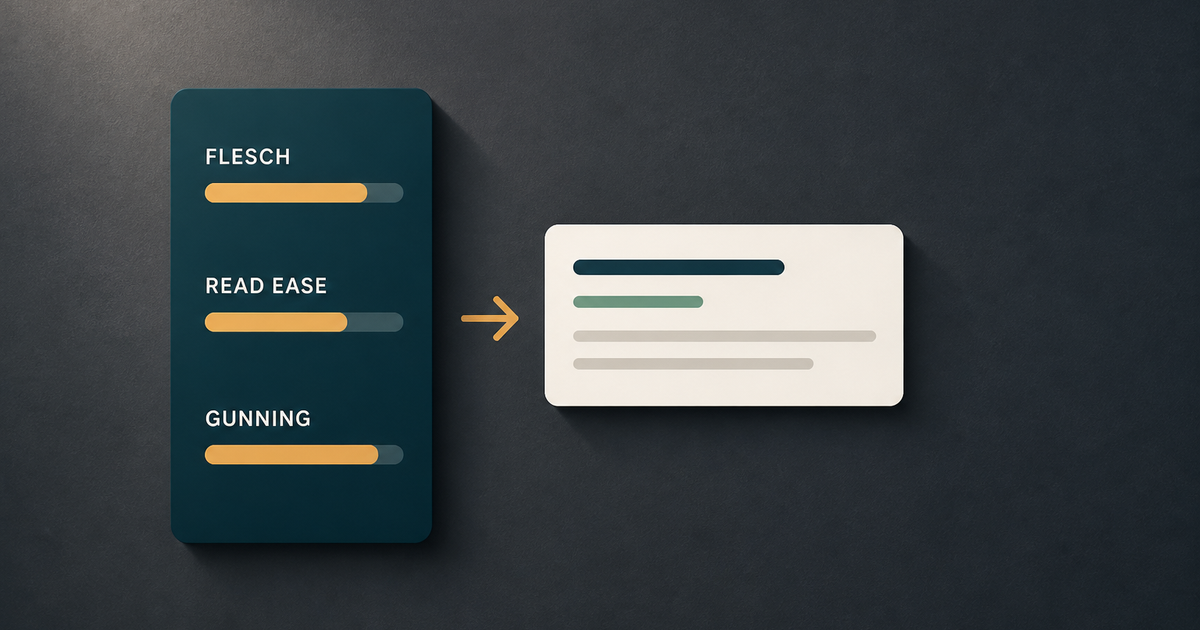
Different formulas look at different signals, so the best readability checker is the one that matches the job you need to do. Some formulas weight syllables, some count characters, and some focus on sentence length. The useful part is not memorizing the math. It is knowing what each score is telling you about the draft.
| Formula | What it emphasizes | Best use case | Practical note |
|---|---|---|---|
| Flesch Reading Ease | Sentence length and syllables | General web copy | Higher is easier to read |
| Flesch-Kincaid Grade Level | U.S. grade level equivalent | Broad editorial benchmarking | Developed in 1975 for Navy training manuals (Hemingway App) |
| SMOG Index | Polysyllabic words | Health, technical, and instructional text | Good at flagging jargon-heavy paragraphs |
| Gunning Fog Index | Complex words and sentence length | Dense business or technical content | Useful for spotting inflated prose |
| Coleman-Liau Index | Character-based complexity | Batch scoring and automation | Needs enough text to be reliable |
Siteimprove says formulas such as Coleman-Liau and Gunning Fog need sample passages exceeding 100 words to calculate an accurate score (Siteimprove Help Center). That is the trap with short snippets: they feel diagnostic, but they can mislead you if the sample is too small.
The practical move is simple. Test the full draft, not a cherry-picked paragraph. Then use the score to find the kind of friction, not just the number itself.
Is a readability score of 60 considered good?
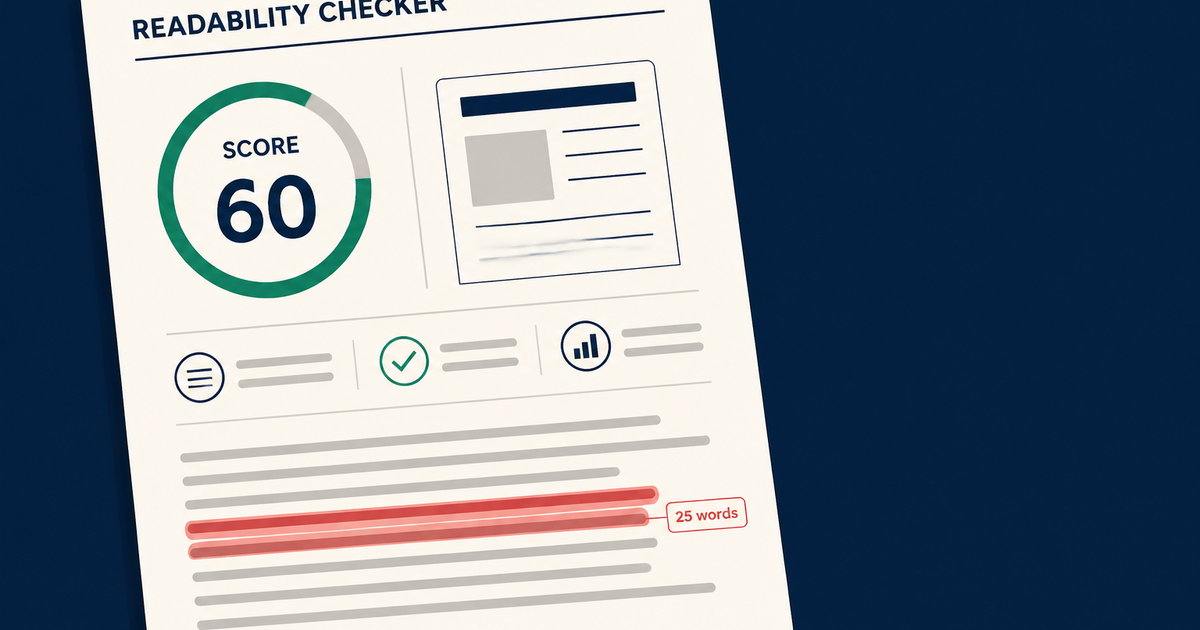
Yes, a readability score of 60 is usually a good target for standard web copy. Siteimprove says a good standard is around 7th-8th grade in the U.S. grade-level system, which maps to the 60-70 range or higher on Flesch Reading Ease (Siteimprove Help Center).
That benchmark is useful because it is readable without being childish. It keeps the text accessible for most web audiences while leaving room for precision. Readable’s guidance is even more direct: targeting grade level 8 or lower ensures that roughly 85% of the general public can understand the content (Readable).
That does not mean every page should chase the same score. Product pages, help docs, and thought-leadership pieces can tolerate different levels of complexity. But if you are publishing marketing copy, support content, or explainers for a broad audience, a score around 60 is a strong default.
A readability test should therefore answer one question: is the draft clear enough for the audience you actually want?
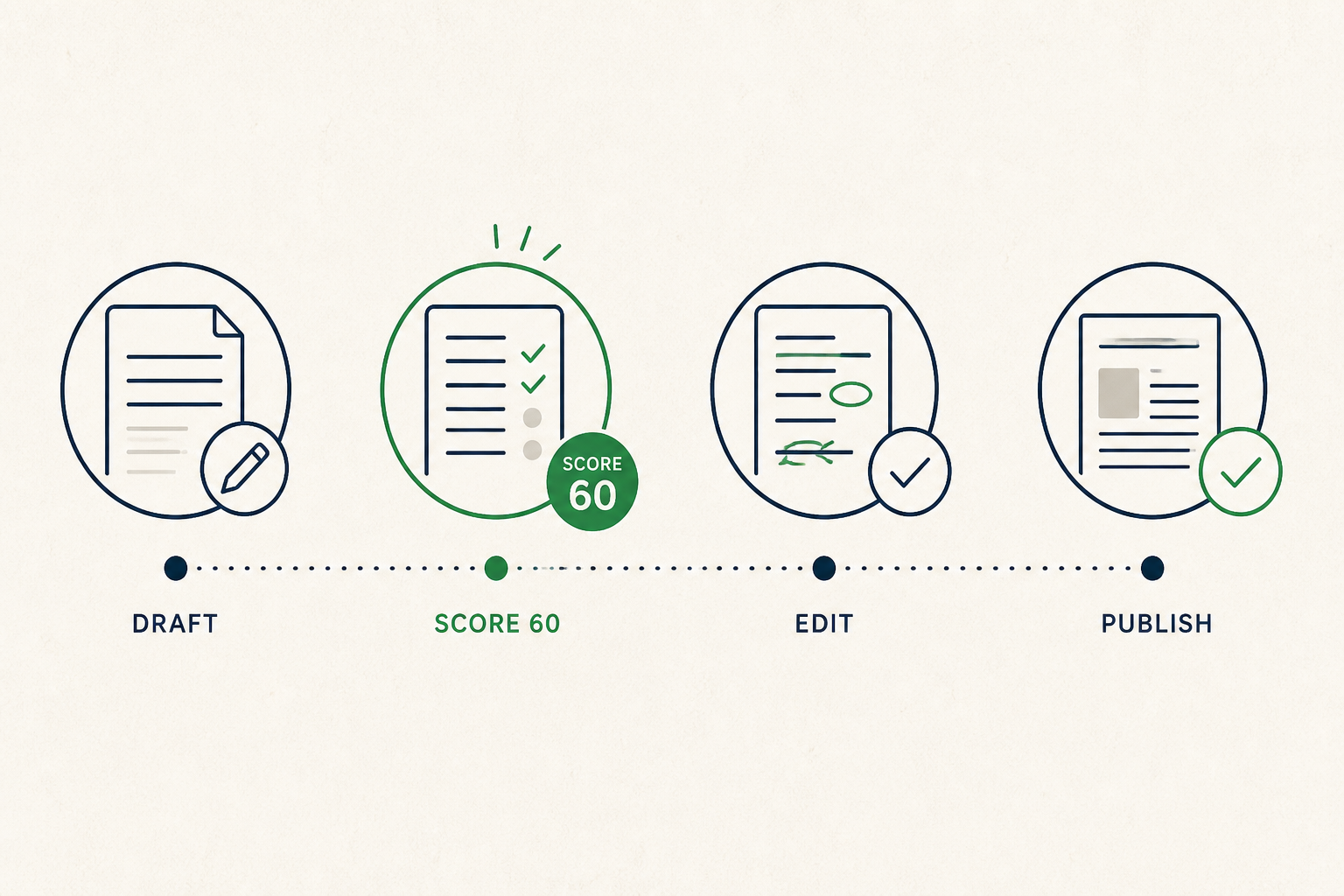
The 4-step pre-publish readability test and diagnostic workflow
A good diagnostic workflow is fast, repeatable, and hard to fake. You should be able to run it on every draft without turning it into a special project.
- Run the full draft through a readability analyzer.
Paste the whole article into a tool that checks Flesch Reading Ease, Flesch-Kincaid Grade Level, and related formulas. If you want a simple place to start, use Essel's readability checker tool and capture the baseline score before editing.
- Find the long sentences first.
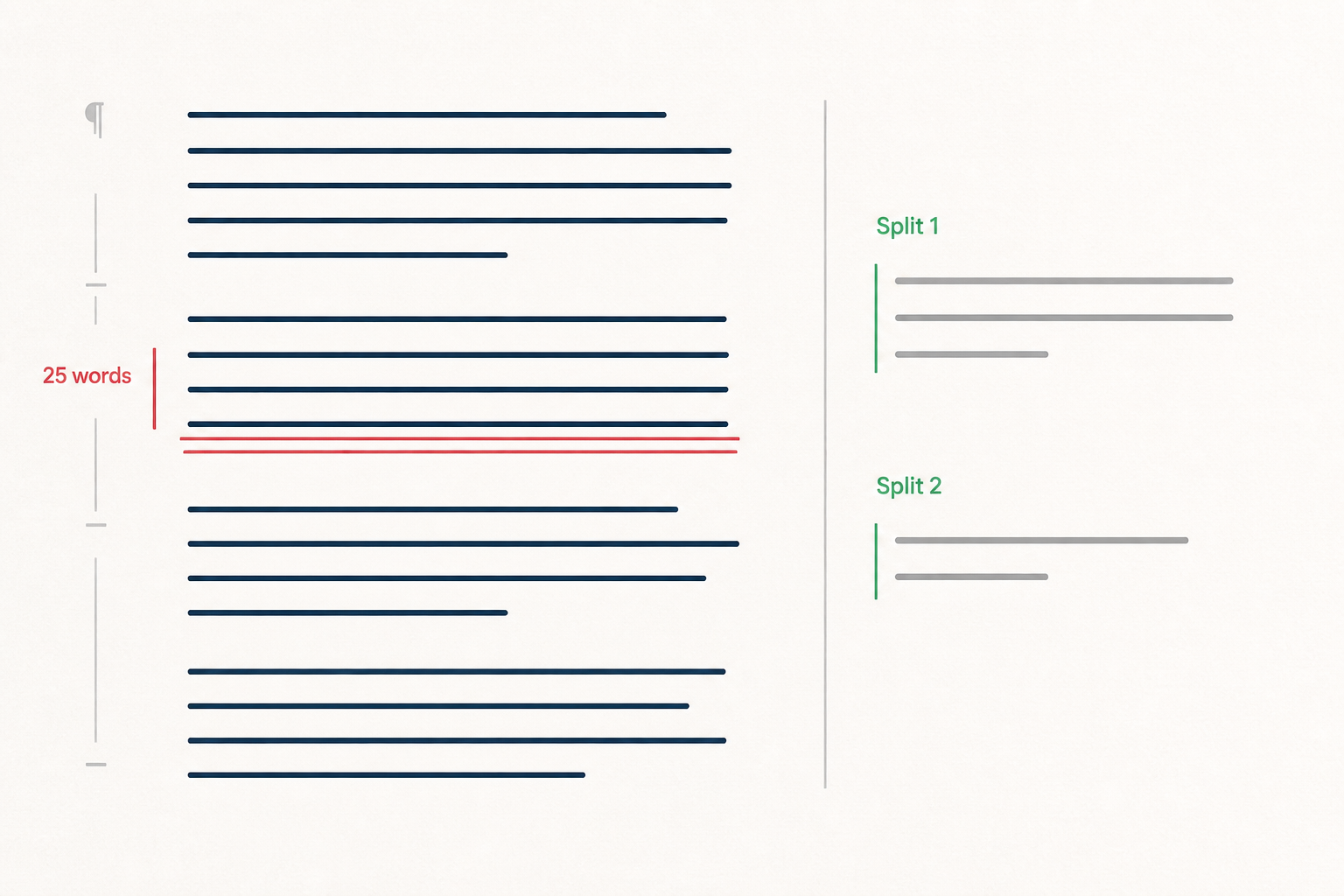
Red-flag anything over 25 words, then look for compound clauses that can be split into two cleaner statements. A sentence counter helps here, especially when the draft looks fine on screen but is quietly packed with too much logic.
- Strip jargon and filler.
Replace inflated nouns with active verbs, and remove terms that do not add meaning. The goal is not to dumb the copy down. The goal is to remove the extra layer of decoding that makes readers work too hard.
- Check the page as a page.
Web readability is not only about the formula score. WebFX notes that optimal line length is between 50 and 60 characters (WebFX). If the lines are too long, the page feels dense even when the wording is decent.
Tip: If you fix readability after design, check the layout again. Line breaks, font size, and spacing can change the final reading experience more than one more edit pass.
The best teams treat this as a gate, not a nice-to-have. Write, score, shorten, scan, publish. That rhythm keeps weak copy from leaking into the CMS.
Is there a free tool that can check my readability score?
Yes, there are free tools that can check your readability score, and the best answer depends on how much depth you need. Hemingway Editor is good when you want visual feedback on hard-to-read sentences. WebFX's Readability Test Tool is useful when you want a quick scorecard. Readable gives you more formula detail and benchmark context.
If you only need a one-off check, a browser tool is enough. If you publish often, manual copy-paste becomes the bottleneck. It is slow, easy to forget, and easy to do inconsistently across writers and editors. That is the hidden cost of free tools: the tool may be free, but the process is not.
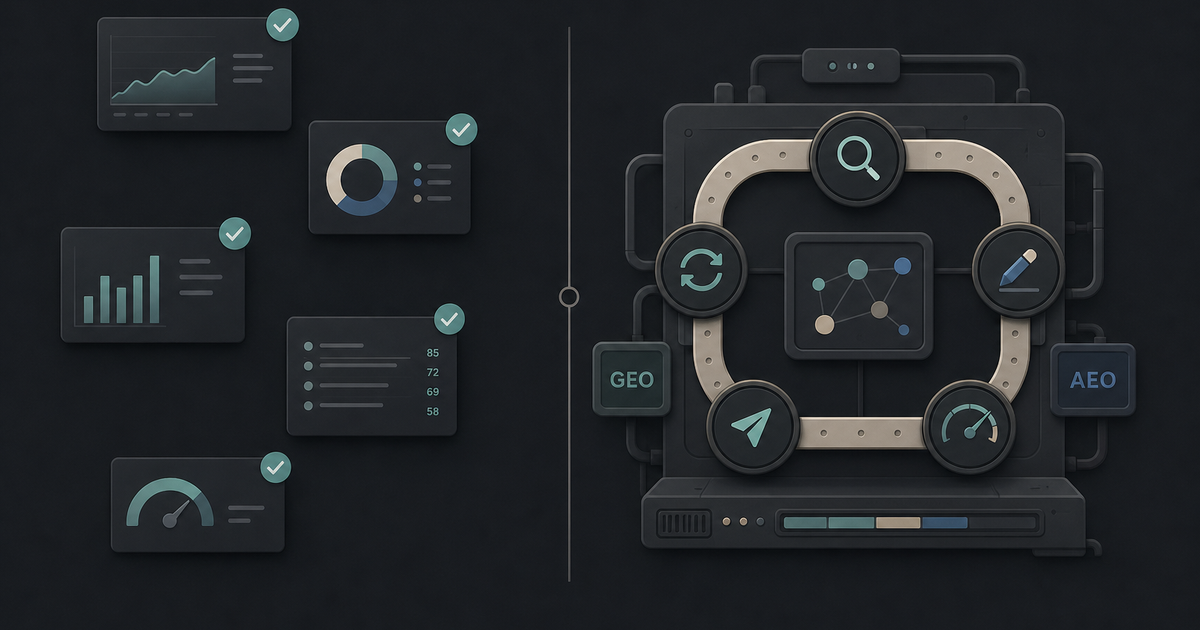
This is where automation pays off. A platform like Essel can fold readability scoring into drafting, internal linking, optimization, and CMS publishing in one workflow, which removes the stop-start friction of bouncing between tools. For teams managing a content cadence, that is the real upgrade.
If you are comparing workflows, a standalone online readability tool answers the immediate question. An integrated system answers the operational one: can we keep quality high without adding manual steps?
Is there a free reading level assessment for adults?
Yes. A free reading level assessment for adults is easy to run with public web tools, and the baseline matters. WebFX says the average American adult reads at a 7th to 9th grade comprehension level (WebFX). That gives you a practical reference point for copy aimed at broad audiences.
For adult-facing content, the test is not whether the copy sounds smart. It is whether it lands cleanly on the first pass. If the score is too high, shorten sentences, cut stacked modifiers, and replace abstract phrasing with concrete language. If the score is already in range, check whether the page still feels dense because of layout, jargon, or weak structure.
That is why a free reading level check is useful even for strong writers. It turns gut feel into a measurable pre-publish step.
Is a 37 readability score good?
No. A score of 37 usually signals difficult text that is much heavier than standard web copy. In practice, it often means long sentences, dense vocabulary, or both.
For most marketing, product, and help content, that score is a warning, not a win. It suggests the copy will ask too much from the reader before it delivers value. The fix is usually mechanical: split sentences, simplify phrasing, and cut any section that is repeating the same point in different words.
If you are writing for experts, a lower score is not automatically required. But if the page is meant for prospective customers, a 37 is typically too high.
What app can I use to determine my reading level?
The best app depends on whether you want a quick visual pass or a formula-heavy diagnostic. Hemingway Editor is good for spotting hard sentences fast, Readable is strong for grading and benchmark context, and a dedicated readability checker like Essel is better when you want the score to sit inside a broader SEO workflow.
If your job is simple editorial cleanup, use the lightweight tools first. If your job is shipping content at scale, use a system that can score, optimize, and publish without forcing the team back into manual QA at every step.
That is the difference between a calculator and a workflow.
Pre-publish readability checklist
The checklist exists to catch weak copy before the page goes live.
- [ ] Run the full draft, not a snippet.
- [ ] Check Flesch Reading Ease and Flesch-Kincaid Grade Level.
- [ ] Flag sentences over 25 words.
- [ ] Remove jargon that does not change meaning.
- [ ] Scan for repeated ideas inside the same paragraph.
- [ ] Confirm line length and spacing still feel clean in the layout.
- [ ] Re-test after edits, not before.
For sentence-level cleanup, Essel's sentence counter is a quick way to isolate the longest lines before they become a readability problem.
A strong readability checker gives you a signal, not a verdict. It shows where the copy is getting hard to process, and the editor decides what to change.
FAQ
Is there a free online tool that can check my readability score?
Yes. Free tools like Hemingway Editor, WebFX's Readability Test Tool, and Readable can check your readability score without a subscription. They are useful for quick passes, but teams that publish often usually need a workflow that scores drafts automatically.
Is a readability score of 60 considered good?
Yes. For most web copy, 60 is a solid target because it sits around the 7th-8th grade range and stays readable for broad audiences.
Is there a free tool that can check my readability score?
Yes. If you want a quick answer, a free browser-based readability checker is enough. If you want repeatable QA, an integrated system is better because it keeps scoring tied to drafting and publishing.
Compare reading level analyzer benchmarks, grade formulas, and tools to hit the right target.