Free AI Tools for SEO Optimization: What They Can Do
Free AI tools for SEO optimization can handle keyword ideas, page-level rewrites, title and meta drafts, and basic technical checks. They do not run a full SEO program, and they stall when the work needs publishing, refreshes, internal links, or consistent AI search visibility. Essel sits in the part of the market that closes that gap for teams that want SEO to run on cadence, but this article stays focused on the free layer first.
Key takeaways
- Free AI SEO tools are useful for isolated jobs like keyword research, content cleanup, and technical audits.
- They can help you optimize SEO on individual pages, but they do not run a content program end to end.
- The best free setup mixes search optimization tools for content, visibility, and technical checks.
- If you need CMS publishing, refreshes, and internal linking at scale, free tools will stall out.
What free AI SEO tools can do today
Free AI SEO tools cover the first mile of SEO work well: topic ideas, draft cleanup, SERP previewing, and quick audits. They are strongest when you need a fast answer on one page or one query, not when you need a system that ships content every week. That is why the phrase seo marketing tools now often includes lightweight AI utilities, not just classic rank trackers.
One useful way to think about them is by job. Some tools help with content generation, some with search visibility, and some with technical hygiene. The overlap is real, but the output is still narrow. A free tool may tell you what to improve on a page, yet it usually will not manage the whole editorial loop for you.
Frase offers three free checkers: a GEO Score Checker, an AI Visibility Checker, and an Agent Readiness Checker. Frase says the GEO checker grades a single page for AI search readiness, the visibility checker measures whether ChatGPT, Perplexity, and Gemini cite your domain, and the agent checker looks at robots.txt, llms.txt, structured data, and whether a Markdown version is readable by agents. Those are real examples of what free tools can do now: score, inspect, and point.
"Three free checkers from Frase: score a page for AI search, see whether AI engines cite your domain, and test whether AI agents can read your site."
Frase
SEO.AI pushes the same pattern further. It says it has 46 Free SEO tools made by SEO.AI, with no login required and AI-powered workflows for keyword ideas, paragraph rewrites, title generation, topic clustering, and internal linking. That makes it one of the clearest examples of what search engine optimizer tools look like at the free tier. You get speed and breadth, but only within individual tasks.
SEOcrawl adds another angle. Its free toolkit includes a SERP Simulator, Sitemap Finder and Checker, Schema Validator, llms.txt Generator, Title Tag Checker, Canonical Tag Checker, and Robots.txt AI Bot Checker. That makes free tools especially useful for search optimization tools work that is diagnostic rather than strategic. They can show you what is broken, what might render poorly, and what AI systems can read.
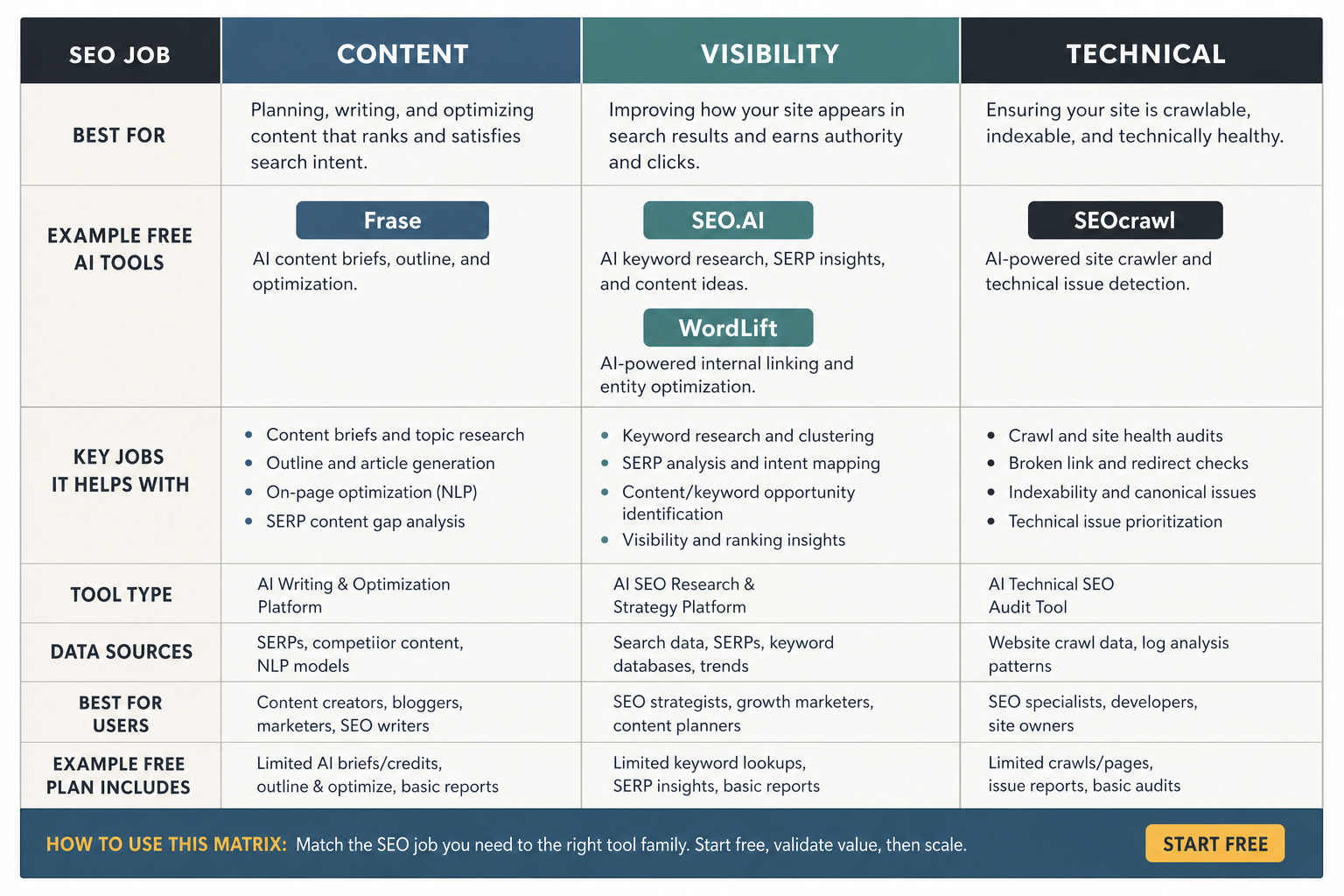
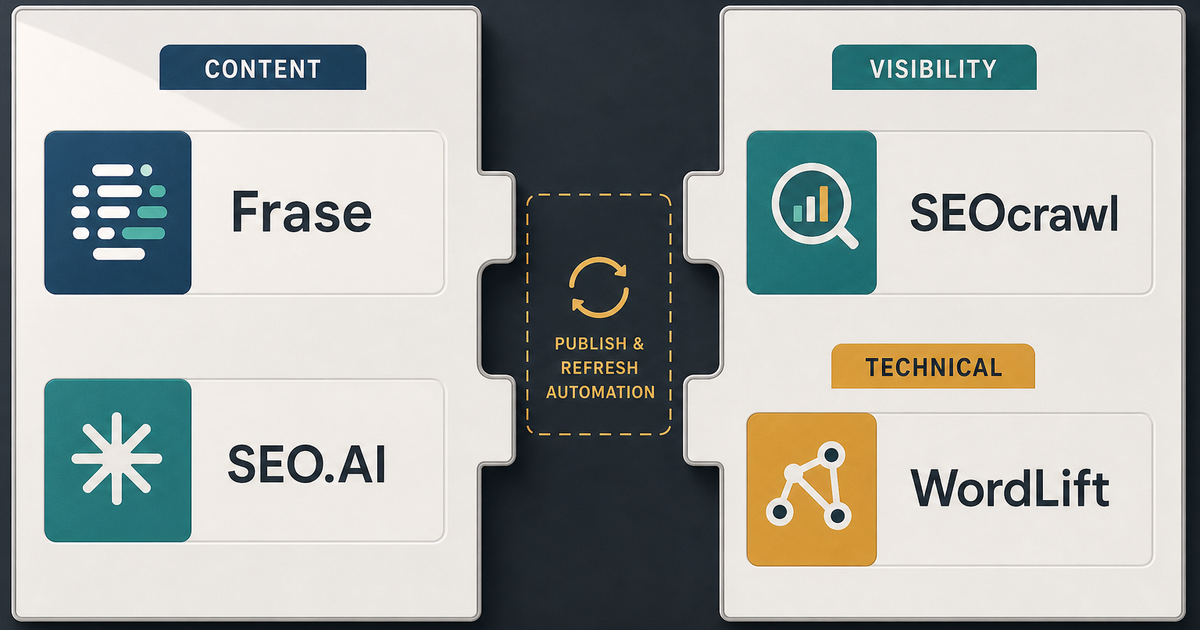
Each tool family is strongest in one SEO job, not all of them.
Which free AI tools fit each SEO job?
The right free tool depends on the job. If you need page-level optimization, Frase and SEO.AI are easy starting points. If you need structured data and AI-readiness checks, SEOcrawl and WordLift are stronger. If you are trying to understand modern search visibility, the best choice is usually not one product but a small stack of seo optimisation tools that each cover one gap.
| SEO job | Best free tool family | What it does well | Where it stops |
|---|---|---|---|
| Content scoring | Frase | Page readiness for AI search and citation | No full content program |
| Keyword and draft support | SEO.AI | Keyword ideas, rewrites, titles, clusters | Limited orchestration |
| Technical auditing | SEOcrawl | SERP, schema, canonical, robots, llms.txt checks | Finds issues more than it fixes them |
| Entity and semantic work | WordLift | Entity extraction and AI audit tools | Narrower than a full SEO workflow |
| AI visibility | Frase | Checks whether AI engines cite a domain | Does not guarantee rankings or traffic |
WordLift’s free AI Audit tool says it helps users quickly find out how ready a website is for AI-driven search, and its free utilities include llms.txt generation, anchor text optimization, search intent optimization, entity extraction, structured data audits, and AI question answering. That matters because free tools often sit at the intersection of content and technical SEO. They help you see whether the page is machine-readable, semantically clear, and likely to be cited.
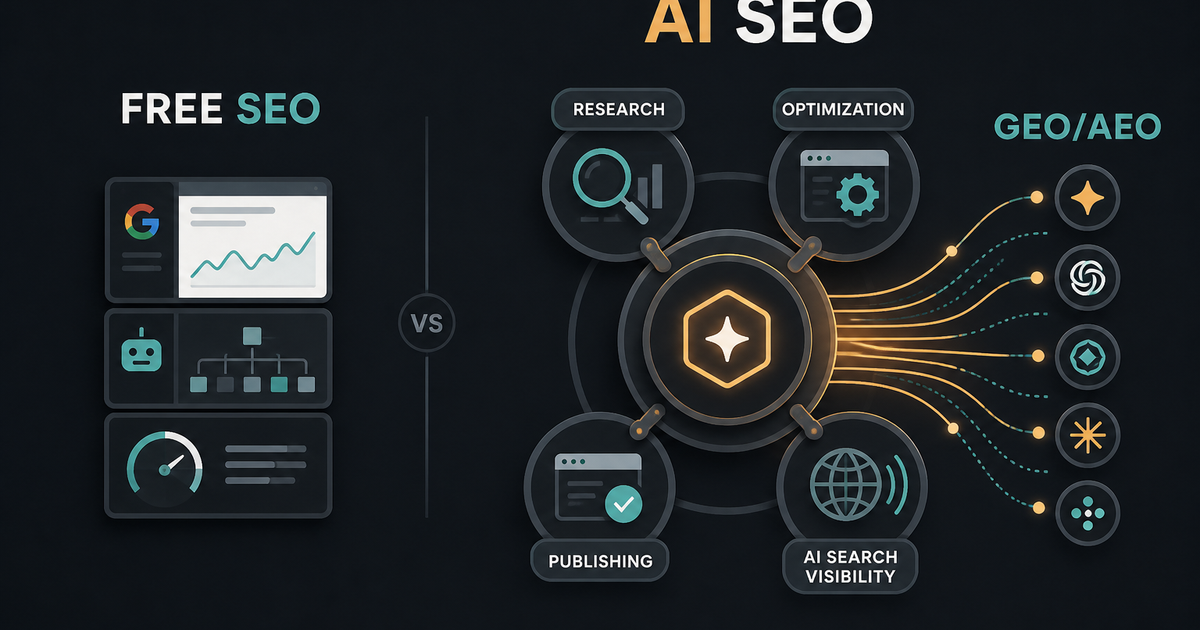
The limitation is obvious once you compare the rows. Free tools are good at answers, not systems. They do not usually decide which pages deserve priority, connect those pages with a linking plan, publish them to your CMS, or refresh them on a schedule. That is where the category starts to feel less like seo software tools free and more like a set of helper apps.
For readers who want a broader catalog, Essel’s Best Free SEO Tools comparison page is the natural follow-up when you want to see the wider landscape of free utilities and where each one fits.
Can free AI tools help with content creation and keyword work?
Yes. Free AI tools can speed up keyword research, title drafting, paragraph rewrites, and topic clustering, which makes them useful for early-stage content work and quick wins. They are especially helpful when a team wants to test artificial intelligence for content creation without buying a full platform.
The catch is control. A prompt can give you a draft, but it cannot judge whether the draft matches your offer, your positioning, or your actual conversion path. That means ai for seo works best as an assistant to editorial judgment, not a substitute for it.
SEO.AI’s free tools include an AI Keyword Tool, AI paragraph generation, AI paragraph rewriting, AI title generation, topic clustering, and internal linking. Those are exactly the kinds of tasks teams expect from an ai powered content creation platform, but the free layer still leaves the heavy lifting to the human operator. You still have to choose the angle, verify the facts, and decide what deserves publication.
That is also where the phrase seo optimization software starts to matter. Real software does not just make content faster; it keeps the workflow coherent. Free tools can help you optimize seo on one URL, but they rarely manage the chain from research to draft to publish to refresh. When people say they want seo a.i, they usually mean they want that chain automated, not just the writing step.
Example: A founder can use a free title generator to produce ten headline options, then use a free SERP simulator to check how they render, and finally edit the winner by hand. That workflow saves time. It does not create a repeatable content engine.
If the goal is to publish one useful article this week, free tools are enough. If the goal is to ship a content program, they are only the starting layer. That distinction is the difference between a helper and an operating system.
Can free AI tools handle technical SEO and AI search visibility?
Yes, but only for diagnosis and previewing, not for end-to-end remediation. Free tools can check schema, canonical tags, robots.txt, llms.txt, and snippet rendering, which gives teams a quick view of whether a page is technically ready for search and AI consumption. They are useful search engine optimizer tools when the question is, “what is broken?”
Frase says its AI Visibility Checker measures whether a domain is cited by ChatGPT, Perplexity, and Gemini right now. That matters because AI search visibility is no longer theoretical. If your page is invisible to those systems, you need to know before you spend more time polishing copy that will never get surfaced.
SEOcrawl is practical here as well. Its free SERP Simulator previews title and meta description rendering on Google Desktop, Google Mobile, and Perplexity AI Overview before publishing. It also ships a schema validator, canonical checker, sitemap checker, and robots bot checker. Those features make the tool useful for search optimization tools work that sits between content and technical SEO.
WordLift adds another layer. Its free tools include entity extraction and structured data checks, and its AI Audit tool is pitched as a fast way to see how ready a website is for AI-driven search. That makes it relevant to teams that want better semantic coverage, not just prettier copy. For modern search, especially Google AI Overviews, ChatGPT, and Perplexity, the technical and semantic layers matter together.
The main limit is execution. Free tools can tell you that your schema is missing, your title is too long, or your page is not easy for agents to parse. They usually do not fix those issues across dozens of pages, and they do not keep checking after the first pass. If you need that level of repeatability, free seo optimisation tools are not enough.
For a deeper bridge into AI search visibility, see Essel’s SEO marketing tools for Google and AI search, which maps the technical and visibility side of the workflow more directly.
What free AI tools can’t do well
Free AI tools usually break down at workflow, scale, and accountability. They can help you on a page, but they do not reliably orchestrate research, writing, internal linking, publishing, refreshes, and reporting as one connected loop. That is the point where lightweight helpers stop feeling like seo marketing tools and start feeling like disconnected utilities.
The biggest gap is continuity. A free tool can generate content ideas today and a SERP preview tomorrow, but it will not remember the editorial plan next week or push updates into your CMS when search intent shifts. It also will not handle internal linking at scale. If you want a practical example of that workflow gap, Essel’s Free AI SEO Tools: Enough Until Workflow Breaks explains where the handoff usually fails.
Free tools also rarely give you a stable operating layer for team collaboration. They may help one person optimize seo on one page, but they do not unify briefs, drafts, approvals, schema, and analytics across a content calendar. That is why teams outgrow them as soon as content starts to compound.
If you need a simple rule, use this one: free tools are fine for tasks, not programs. They are good search optimization tools for isolated jobs, but they are not full seo optimization software. Once you need repeatability, the value shifts from “can it do this?” to “can it do this every week without extra coordination?”
When should you upgrade from free tools?
Upgrade when the work stops being occasional. If you need repeatable publishing, refreshes, internal linking, CMS pushes, and measurable compounding across many pages, the free stack will slow you down. At that stage, an ai powered content creation platform is not a luxury; it is the workflow itself.
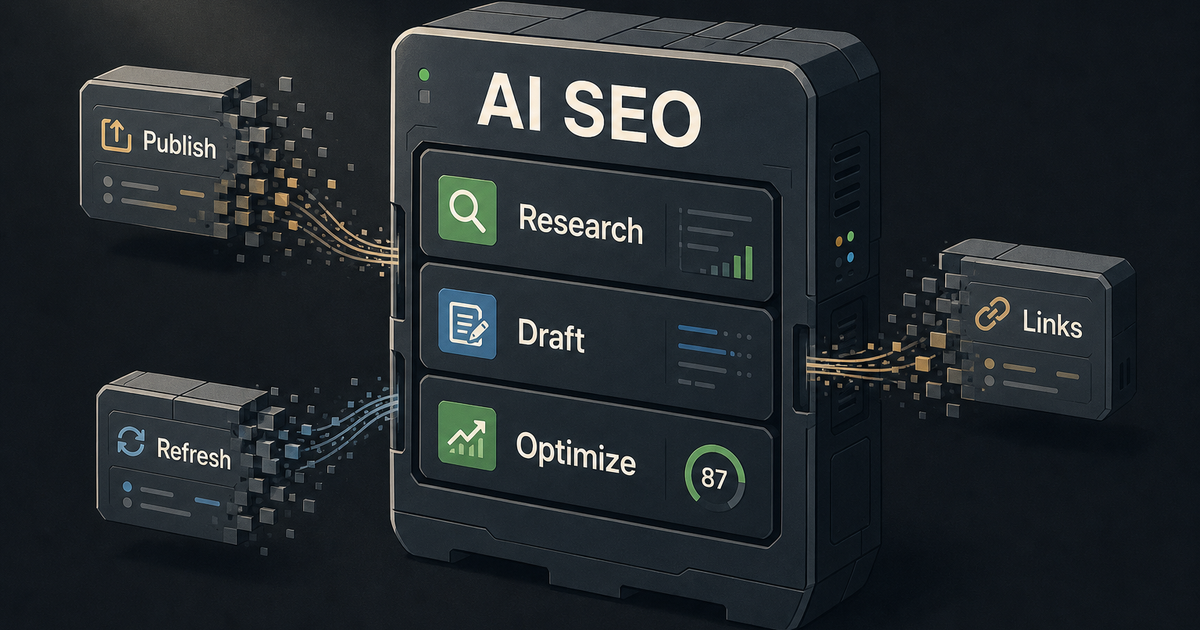
That is where a system like Essel belongs, because it is built as an autonomous content engine for SEO blogs that researches, drafts, optimizes, publishes, and refreshes content on autopilot. For teams that are already using free utilities and seeing the ceiling, the upgrade is about removing manual handoffs rather than adding another dashboard. In other words, it is the move from artificial intelligence for content creation as a helper to AI as the operating layer.
A good upgrade trigger is simple: if you spend more time coordinating tools than shipping pages, you have outgrown the free setup. If your content needs to publish on a cadence, update itself, and stay linked to the rest of your site, you want software that covers the loop, not just the task.
That is also where internal linking and structured data become strategic. You can use free tools to spot problems, but a growing program benefits from tools that keep the site architecture coherent. If you want one free utility to support that step, Essel’s Schema Markup Generator is a sensible place to start while you evaluate the gap.
The practical answer is not “free or paid” in the abstract. It is whether your SEO motion is still episodic. If it is, free works. If it is turning into a publishing machine, you need seo a.i that can run the machine, not just inspect it.
What is the best free AI for SEO?
There is no single best free AI for SEO because the best choice depends on the job. Frase is strong for AI search visibility and page readiness, SEO.AI is broad for keyword and content tasks, SEOcrawl is useful for technical checks and SERP previews, and WordLift is strong for semantic and entity work.
So the better question is: what are you trying to solve today? If it is content, pick one tool. If it is technical readiness, pick another. If it is AI visibility, use the checker that measures citation and parsing directly. That is the simplest way to evaluate seo marketing tools without paying for features you will not use.
Can I use AI to do my SEO?
Yes, but only as part of a human-led process. AI can accelerate research, drafting, optimization suggestions, and audits, which makes it useful for teams that want to move faster without hiring a full-stack SEO bench.
What it cannot do well on its own is own the trade-offs. It will not know your product strategy, your editorial standards, or the pages that deserve priority when resources are tight. That is why the strongest results come from AI plus review, not AI alone.
Use AI for the repetitive parts first: topic expansion, title variants, entity extraction, snippet checks, and page-level rewrites. Then keep humans on the decisions that affect positioning, accuracy, and distribution. That split is the safest way to optimize seo with free tools without over-trusting the output.
Can ChatGPT do SEO?
ChatGPT can help with SEO, but it cannot do the whole job by itself. It is good for brainstorming keywords, drafting copy, rewriting paragraphs, and summarizing optimization ideas, which makes it a useful assistant for content teams.
It does not natively audit a site, verify rankings, check schema, or manage technical SEO workflows. It also does not replace dedicated seo software tools free or paid tools when you need structured diagnostics. Use it as a drafting and ideation layer, then pair it with tools that can inspect the page, the site, and the search result itself.
That distinction matters because people often ask whether ChatGPT is one of the best search optimization tools. The answer is no if you mean a full SEO system, and yes if you mean a fast copilot for one part of the job. Those are very different standards.