SEO marketing tools for Google and AI search
SEO marketing tools are no longer just rank trackers and brief generators. For SaaS teams and content-led businesses, the better tools now help you research, optimize, publish, and refresh content for Google, AI Overviews, ChatGPT, and Perplexity. As of July 2026, buyers should judge each platform on visibility, automation depth, and whether it can improve search performance over time.
Key takeaways
- SEO marketing tools now need to support both classic rankings and AI search visibility.
- The best tools cover research, optimization, internal linking, publishing, and refreshes, not just content analysis.
- An ai powered content creation platform is useful when the team needs repeatable output, not one-off drafts.
- Google Search Console, E-E-A-T, GEO, and AEO are practical buying criteria, not buzzwords.
- The right stack often combines one autonomous system with a few validation tools.
What are the best search engine optimizer tools for Google and AI search?
The best search engine optimizer tools help a team produce content that can rank in Google and be cited in AI answers while still fitting a real publishing workflow. In practice, that means evaluating search optimization tools by how well they research topics, optimize pages, support structured data, and improve discoverability across Google AI Overviews, ChatGPT, and Perplexity.
That definition matters because the category has split. Some tools are still point solutions for audits or briefs. Others now act like an ai content platform comparison in product form, where the software can guide the work end to end instead of handing off a checklist.
For this article, the useful lens is simple: can the tool help a team optimize seo without adding another disconnected step? If the answer is yes, it belongs in the conversation about seo marketing tools, seo optimisation tools, and search engine optimizer tools.
How should you compare SEO marketing tools in 2026?
The right comparison starts with workflow coverage, not feature count. A team should compare seo marketing tools by whether they help with research, drafting, optimization, publishing, and refreshes in one loop, or whether they only solve one part of that loop.
| Criterion | What good looks like | Why it matters |
|---|---|---|
| Research quality | Topic coverage, intent matching, entity gaps | Weak research leads to thin pages |
| Brief generation | Clear structure, questions, and angles | Speeds up production without guessing |
| On-page optimization | Headings, metadata, entities, schema hints | Helps pages satisfy search intent |
| Internal linking | Suggestions based on topical fit | Builds authority across the site |
| CMS publishing | Direct export or publish support | Reduces handoff friction |
| Refresh automation | Detects stale content and updates it | Keeps traffic from decaying |
| Reporting | Clear visibility into performance | Lets teams act on the results |
| AI search readiness | GEO, AEO, and citation-worthiness | Improves visibility beyond blue links |
For SaaS buyers, buyer criteria for SaaS teams usually come down to one thing: can the platform replace several manual tools without breaking the editorial process? If it can, it is more than seo optimization software. If it cannot, it is probably just another dashboard.
Google Search Console should still be part of the stack, because it tells you what is actually getting impressions and clicks. But a modern buyer also needs to ask whether the platform supports AI Overviews readiness, GEO, and AEO. Those are now practical signals of whether the tool is built for how search works in 2026.
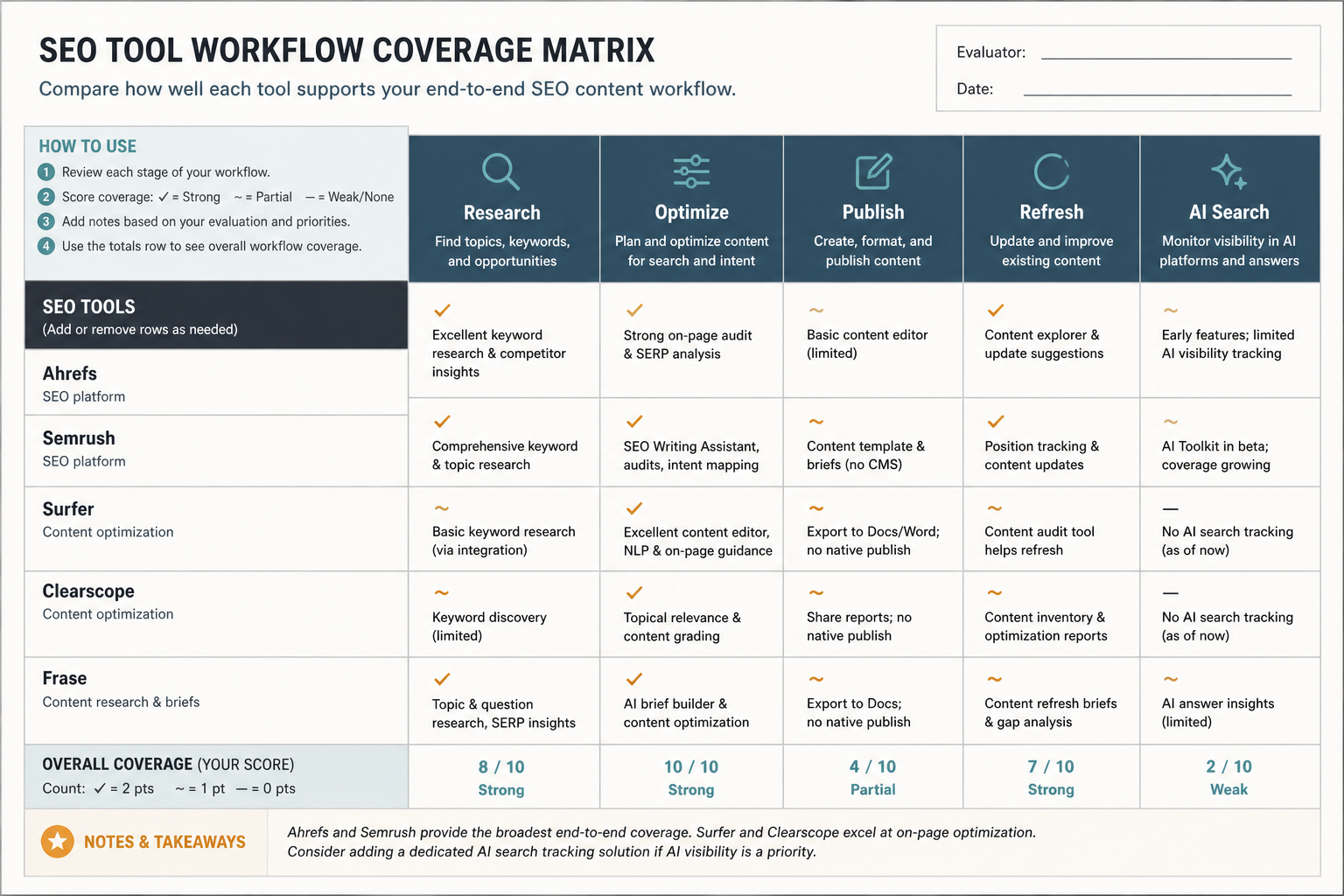
Use workflow coverage, not feature count, to compare platforms.
Tip: If a tool cannot show how it handles refreshes, internal linking, and publishing, it is probably an assistant, not an operating system.
Search engine optimizer tools vs AI content platforms: what’s the real difference?
The difference is scope. Traditional search optimization tools help teams analyze content and improve pages. An ai powered content creation platform goes further by handling research, drafting, optimization, publishing, and refreshes in one system.
That is why artificial intelligence for content creation matters for teams with a real content cadence. It is not just about generating copy faster. It is about making the production loop repeatable so the team can ship more pages without building a larger process around every article.
This is also where ai for seo changes the operating model. Instead of juggling a brief tool, a writing tool, an optimizer, and a publishing workflow, the team can move from topic discovery to live page to content refresh in one place. The workflow shift is the point of an autonomous workflow shift: fewer handoffs, less drift, better consistency.
A useful way to think about the split is this:
- Point tools help you make a better page.
- Autonomous systems help you keep producing better pages.
- The second category is where seo a.i starts to matter as an operating model, not a label.
That is also why the phrase seo optimisation tools can mean two different things now. One group helps with optimization. The other group helps with content operations. Buyers should know which one they need before they compare features.
Best SEO marketing tools by use case
The best tool depends on the job. Some teams only need research and audits. Others need optimization. Growing SaaS teams usually need both, plus publishing and refresh automation.
- Research-first tools help identify topics, entities, and gaps before writing starts.
- Optimization tools improve existing drafts with better structure, keyword coverage, and on-page signals.
- Writing tools help teams produce content faster, but often stop at the draft.
- Operations tools connect content creation to CMS publishing, internal linking, and refreshes.
- Autonomous platforms combine those layers so the team can run a steadier cadence.
If a buyer wants a narrow tool, seo marketing tools can still mean classic audit software or a focused editor. If they want fewer moving parts, they should look for an ai powered content creation platform that also handles optimization and publishing.
For budget-conscious teams, best free SEO tools still help. Essel’s free SEO tools are useful for support tasks, but they do not replace the core workflow when the goal is consistent content output and compounding traffic.
What are the best AI search optimization tools?
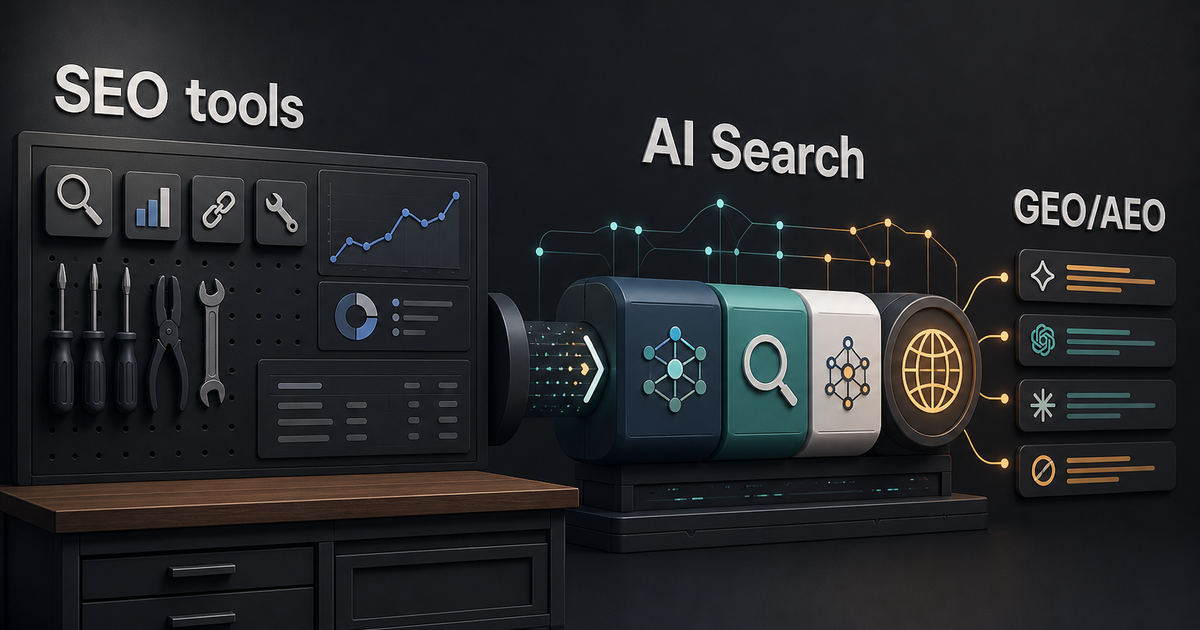
The best AI search optimization tools help content earn visibility in AI answers, not just in blue links. That means they need to support entity coverage, answer completeness, structured data, and citation-worthy source depth for Google AI Overviews, ChatGPT, and Perplexity.
The category is still young, but the pattern is clear. AI search rewards pages that answer the question cleanly, prove the answer with context, and cover related entities that AI systems use to summarize or cite the page. A practical guide on ai search visibility usually includes the same elements: clear structure, concise answers, and strong source signals.
That is why GEO and AEO matter here. GEO focuses on generative engine visibility. AEO focuses on answer engine visibility. Both push teams to write content that is easy for models to lift, quote, or summarize without losing meaning.
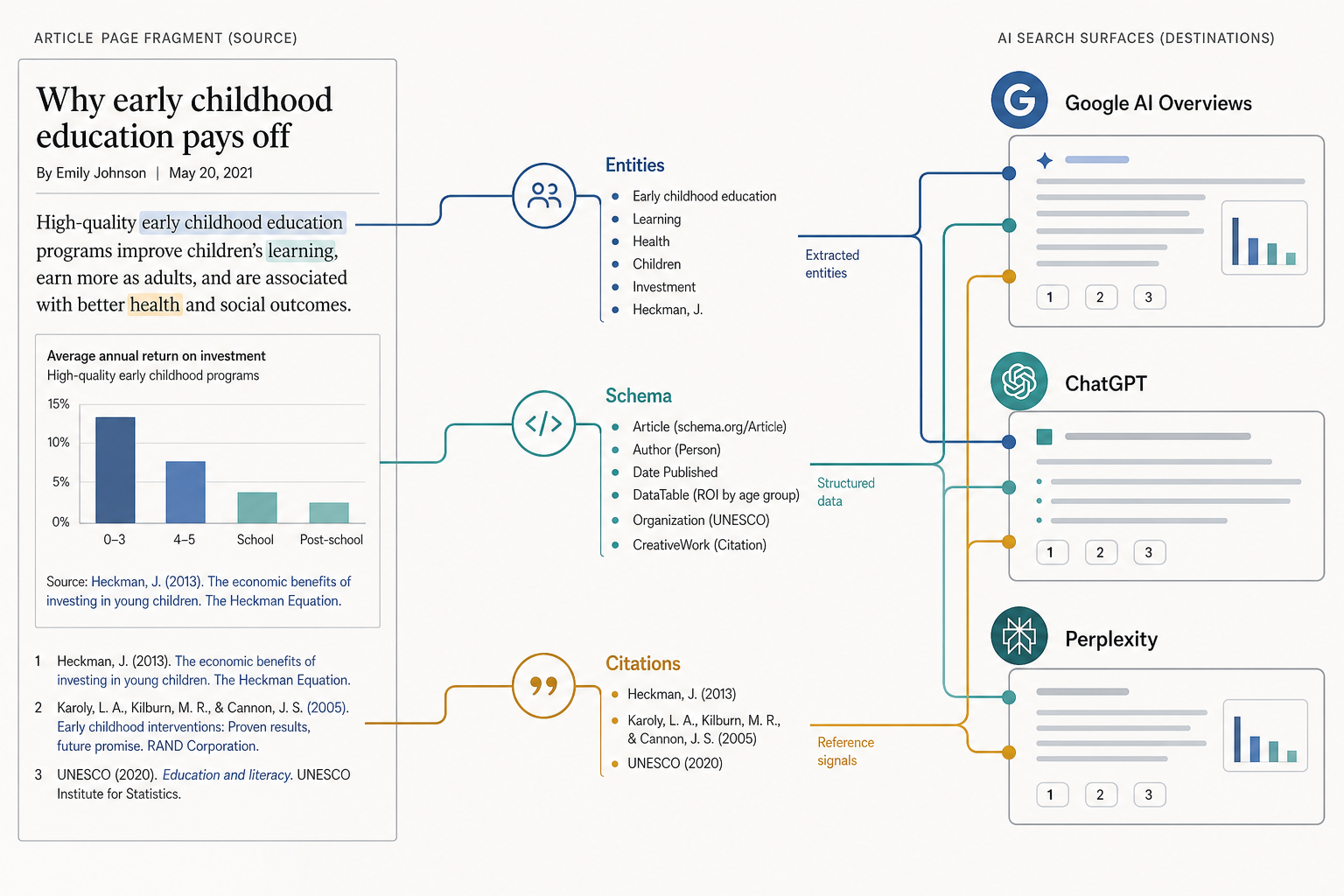
Structured content is what makes a page citation-worthy in AI search.
If you are choosing between tools, ask a simple question: does the platform merely optimize content for Google, or does it also make the content more likely to be cited by AI systems? The second group is where the market is moving.
Essel fits this category because it is built to research, write, optimize, publish, and refresh in one workflow, which is exactly what an autonomous AI SEO content engine should do. Its GEO documentation also reflects the citation and visibility logic teams now need for AI search.
Can ChatGPT do SEO?
ChatGPT can help with SEO tasks, but it cannot replace an SEO system. It is useful for ideation, outlines, rewrites, metadata drafts, and content variations, especially when a team needs to move quickly from brief to first draft.
What it does not provide is live search data, performance feedback, technical validation, or a publishing workflow. That matters because SEO is not only about generating text. It is about choosing the right topic, structuring it for intent, connecting it to the rest of the site, and improving it after publication.
A practical workflow uses ChatGPT as one input, not the whole stack. That is why many teams still pair it with search engine optimizer tools that can validate opportunities, score content, and manage updates. When people search for seo marketing tools or seo optimisation tools, they are often really asking for that wider system.
For teams exploring the category, the right question is not whether ChatGPT can write. It is whether the overall workflow can optimize seo at scale without losing search discipline.
Is SEO dead or evolving in 2026?
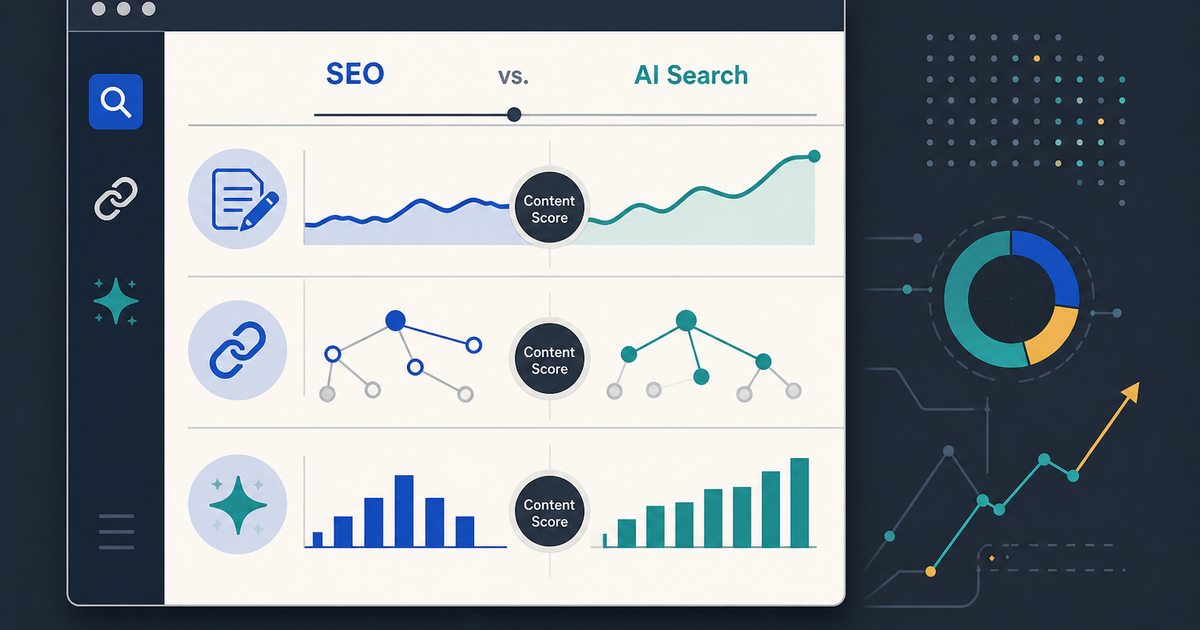
SEO is evolving, not dead. The old version of SEO centered on ranking a page in Google. The current version has to work across Google, AI Overviews, ChatGPT, and Perplexity, which means search visibility now includes GEO and AEO alongside classic ranking work.
That shift changes what counts as a good tool. A platform that only tracks rankings is useful, but incomplete. A platform that helps a team produce well-structured, authoritative, internally linked content is much better aligned with how search works now.
E-E-A-T still matters because trust signals matter more when an answer engine is choosing what to cite or summarize. In other words, the content itself has to be credible enough for humans and machine systems to trust it.
This is where the market’s direction becomes obvious. The best seo marketing tools for 2026 are not just analysis tools. They are systems that help teams publish stronger content faster and keep it updated as search behavior changes.
How does Essel fit into the search engine optimizer tools stack?
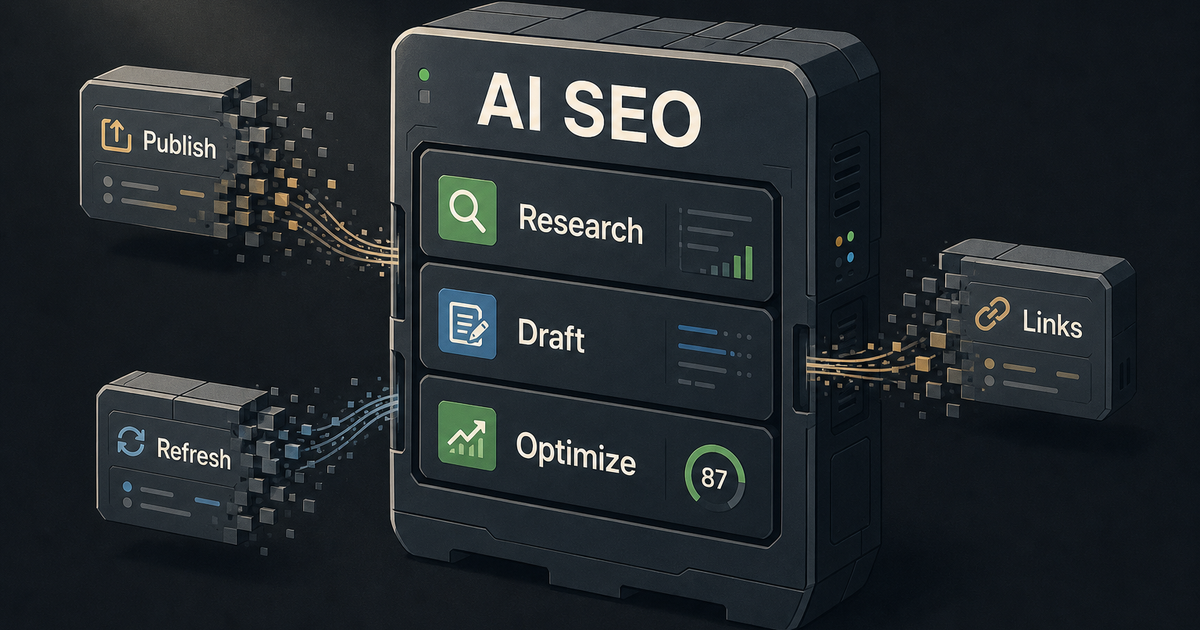
Essel fits as the autonomous layer in the stack. It combines research, drafting, optimization, publishing, and refreshes so teams can run content operations without stitching together five separate tools.
That matters for SaaS and content-led teams because the real bottleneck is usually not writing alone. It is the full sequence: finding the right topics, covering topical gaps, scoring the content, adding internal links, publishing to the CMS, and revisiting pages when performance slips.
Essel also aligns with modern search visibility across Google, ChatGPT, Perplexity, GEO, and AEO. That makes it more than a narrow seo optimization software layer. It behaves like an ai powered content creation platform that is built for output, not just analysis.
For teams comparing vendors, the pricing and plans page is where the commercial decision starts to become real. The useful question is whether the platform can replace a stack of separate tools while still improving quality and consistency.
What are some SEO tools teams still need alongside automation?
Most teams still keep a few point tools even after adopting automation. The core one is Google Search Console, because it remains the best source for impression, click, and query-level verification.
Beyond that, teams usually keep tools for crawl checks, page speed checks, rank validation, and reporting. Those are not replacements for an autonomous platform. They are the diagnostic layer that helps the team confirm what is happening in search.
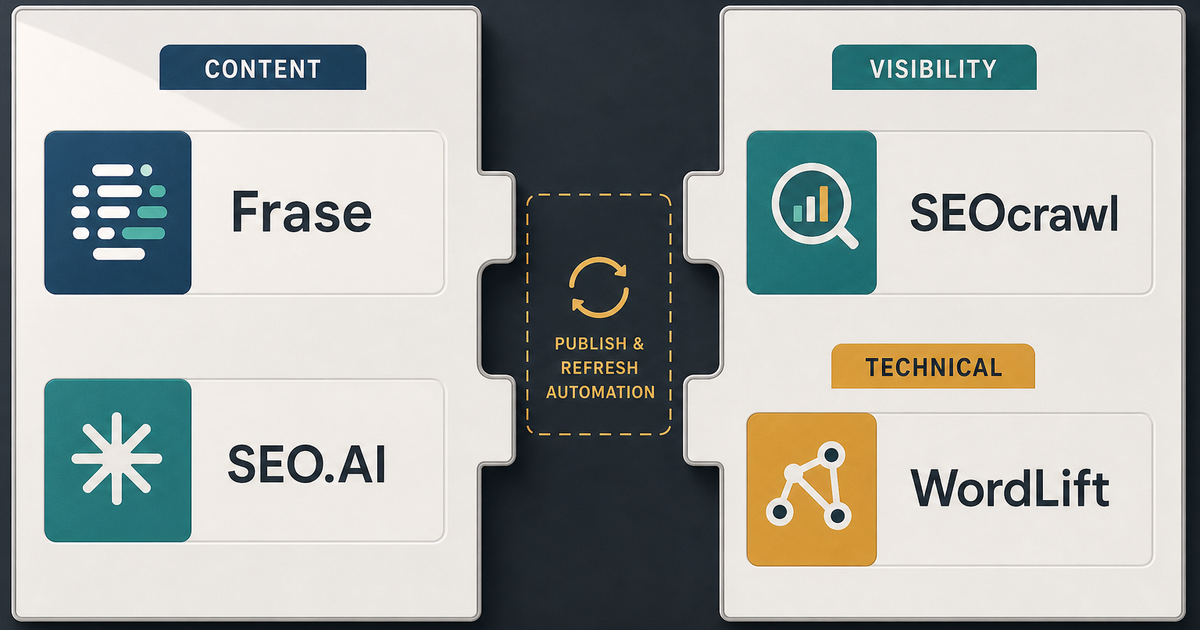
A practical stack might look like this:
- Google Search Console for search performance and query validation.
- A crawl tool for technical checks and indexability issues.
- A reporting layer for trend analysis and attribution.
- An autonomous content system for research, drafting, optimization, publishing, and refreshes.
That is also where support utilities can help. Essel’s anchor text suggester is a small example of a workflow tool that fits alongside a larger content engine, especially when internal linking is part of the optimization process.
If a team wants to compare options more broadly, the alternatives page is a useful next stop for comparing familiar names without getting stuck in generic feature lists.
FAQ
What are the tools for search engine optimization?
The core tools for search engine optimization are search console data, content optimization software, crawl diagnostics, rank tracking, and internal linking support. Teams that publish at scale also add an autonomous content platform to keep research, drafting, publishing, and refreshes in one workflow.
What are the best AI search optimization tools?
The best AI search optimization tools make content easier for Google AI Overviews, ChatGPT, and Perplexity to cite or summarize. They do that by improving entity coverage, structure, answer completeness, and the source signals that models rely on.
Can ChatGPT do SEO?
ChatGPT can assist with SEO writing tasks, but it does not replace a search system or a publishing workflow. It is strongest when a team uses it for ideation and drafting, then pairs it with tools that verify performance and manage updates.