SEO Marketing Tools: Features That Matter Most
Essel uses this buyer guide to show what separates useful SEO software from noisy dashboards: workflow depth, AI search visibility, and publishing support. As of August 2026, teams choosing SEO marketing tools need software that can research, optimize, publish, and refresh pages without turning every update into a manual project.
Key takeaways
- SEO marketing tools should be judged on workflow depth, not just the size of their feature list.
- The most useful platforms cover keyword research, content optimization, rank tracking, technical auditing, and publishing support.
- AI features matter when they speed up research, drafting, internal linking, and refresh work without lowering quality.
- Modern buyers should care about AI Overviews, GEO, and zero-click visibility, not only classic Google rankings.
- Free tools can get you started, but paid software usually wins on automation, history, and content scoring depth.
What SEO marketing tools are and how they’re used
SEO marketing tools are software that help teams improve a search engine optimization campaign, whether that means finding topics, scoring pages, fixing technical gaps, or publishing content faster. Zapier defines an SEO tool as “any software you can use to improve some aspect of a search engine optimization campaign” (Zapier).
That definition is useful because it keeps the category broad enough to include research, optimization, and workflow software, not just rank trackers. In practice, teams use these tools to discover keywords, map content gaps, improve internal linking, audit pages, and push updates into a CMS without bouncing between five separate tabs.
The most important shift is that the buyer is no longer choosing between a spreadsheet and a dashboard. They are choosing between a tool that helps them do one job and a system that helps them run the full content loop.
The features that matter most
The best search optimization tools are judged on SEO-centric functionality, value, user experience, and integrations, not on the number of menus they expose. Zapier says its review criteria focus on those four factors, and That Marketing Buddy groups the work into five core areas: keyword research, rank tracking, backlink analysis, content optimization, and technical auditing (Zapier; That Marketing Buddy).
| Feature area | What it should do | Why it matters |
|---|---|---|
| Keyword research | Surface terms, intent, and topic clusters | Helps teams choose pages worth publishing |
| Content optimization | Score pages against what is ranking now | Shows what to add, trim, or structure better |
| Rank tracking | Monitor visibility over time | Proves whether the work is moving |
| Technical auditing | Find crawl, index, and performance issues | Prevents good pages from underperforming |
| Integrations and publishing | Connect to CMS, analytics, and workflows | Reduces handoff friction and saves time |
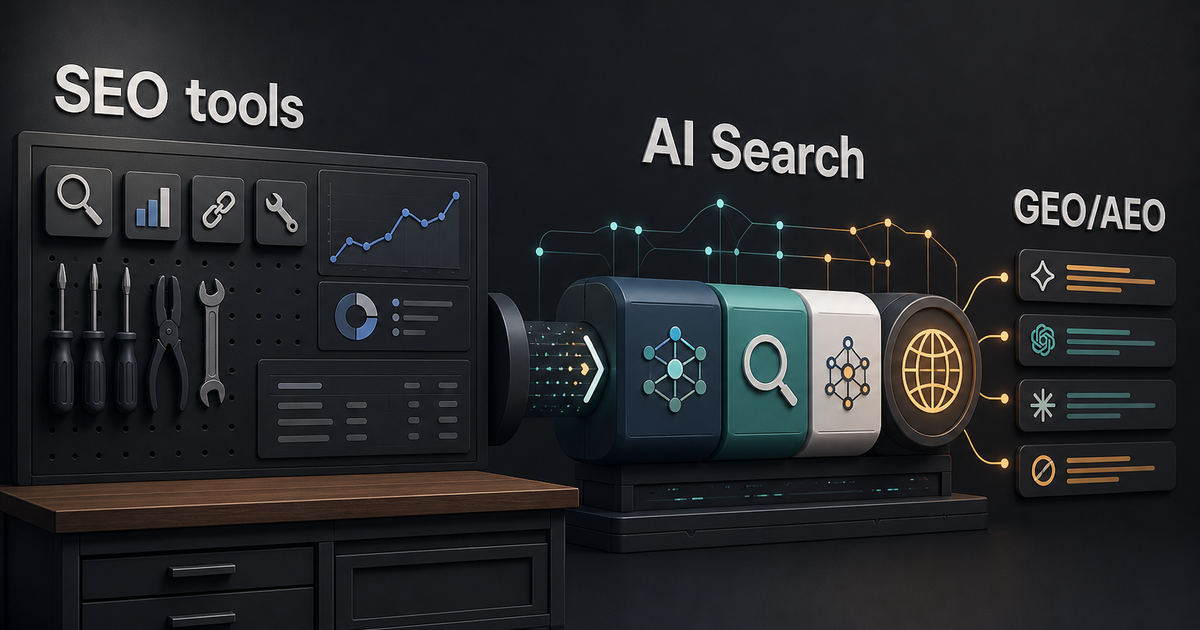
The features that matter most today go beyond classic SEO basics. Internal linking, structured data, and E-E-A-T support now matter because they help search engines and answer engines understand the page faster. If a tool only helps you find keywords but cannot guide the page once it exists, it is incomplete for modern buying.
All-in-one platforms are especially attractive here. Zapier notes that they tend to include advanced features like automation and AI, which can make separate point solutions redundant (Zapier). That is the real buying question: does the software help the team optimize seo at scale, or does it just add another layer of reporting?
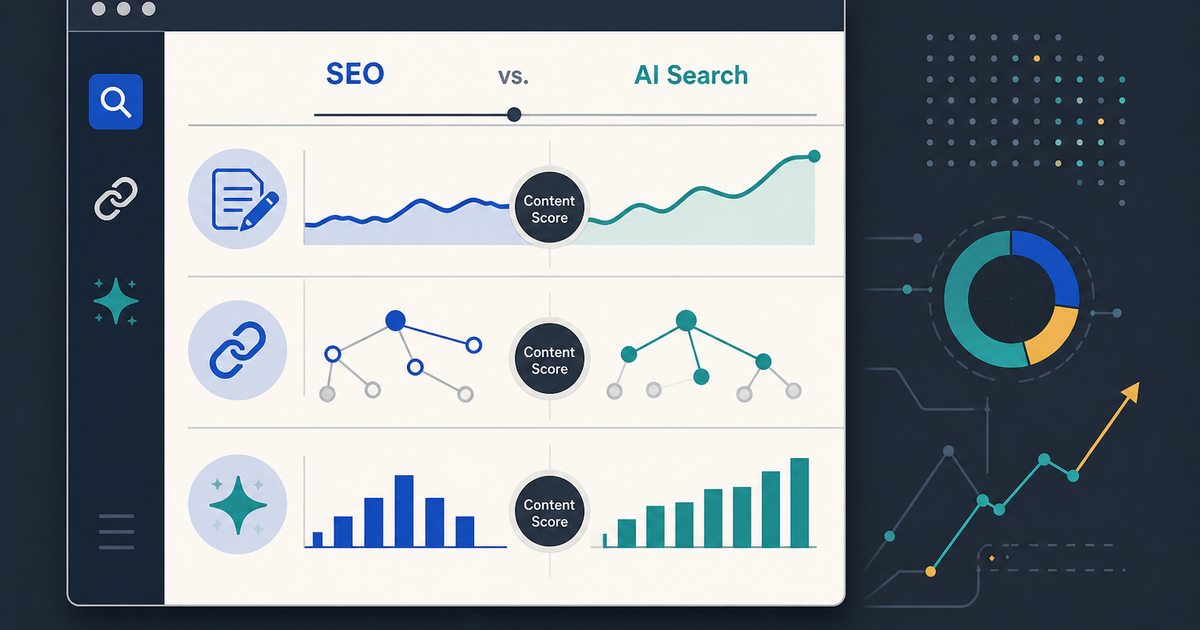
For teams comparing a modern workflow to a legacy checklist, the difference is visible in the output. A strong platform should tell you what to write, where to link, how to structure the page, and what to refresh next.
Which software is best for SEO?
The best software depends on the job, because search engine optimizer tools do not all solve the same problem. Zapier splits the market into four categories: SEO audit tools, keyword research tools, rank trackers, and all-in-one tools (Zapier).
| Category | Best for | Strength | Limitation |
|---|---|---|---|
| SEO audit tools | Technical checks | Fast issue spotting | Limited content workflow depth |
| Keyword research tools | Topic discovery | Strong search demand analysis | Weak publishing support |
| Rank trackers | Visibility monitoring | Clear performance snapshots | Not enough to improve pages |
| All-in-one tools | Full SEO teams | Fewer handoffs, more automation | Usually more expensive |
For seo optimisation tools, the distinction matters because many products overlap. Semrush, Ahrefs, and SE Ranking are familiar benchmarks, but they are not interchangeable in day-to-day use. One team may need deep backlink research and technical diagnostics. Another may need a clean content workflow and a faster path from brief to published page.
That is why the question is not “which tool is best?” in the abstract. It is “which category matches the team’s cadence, content volume, and reporting needs?” A SaaS marketing team that publishes weekly will usually value automation and publishing more than a solo consultant who only needs occasional audits.
What AI changes in seo marketing tools
AI powered content creation platforms matter when they remove friction from the content workflow, not when they just generate more text. The useful version of artificial intelligence for content creation helps with topic clustering, outline generation, content scoring, internal link suggestions, and refresh recommendations.
That is where ai for seo becomes practical. It can help a team optimize seo by speeding up research, drafting first-pass copy, and pointing writers toward the terms and structures that ranking pages already use. If the AI stops at the draft, the workflow still breaks at editing, publishing, and refresh.
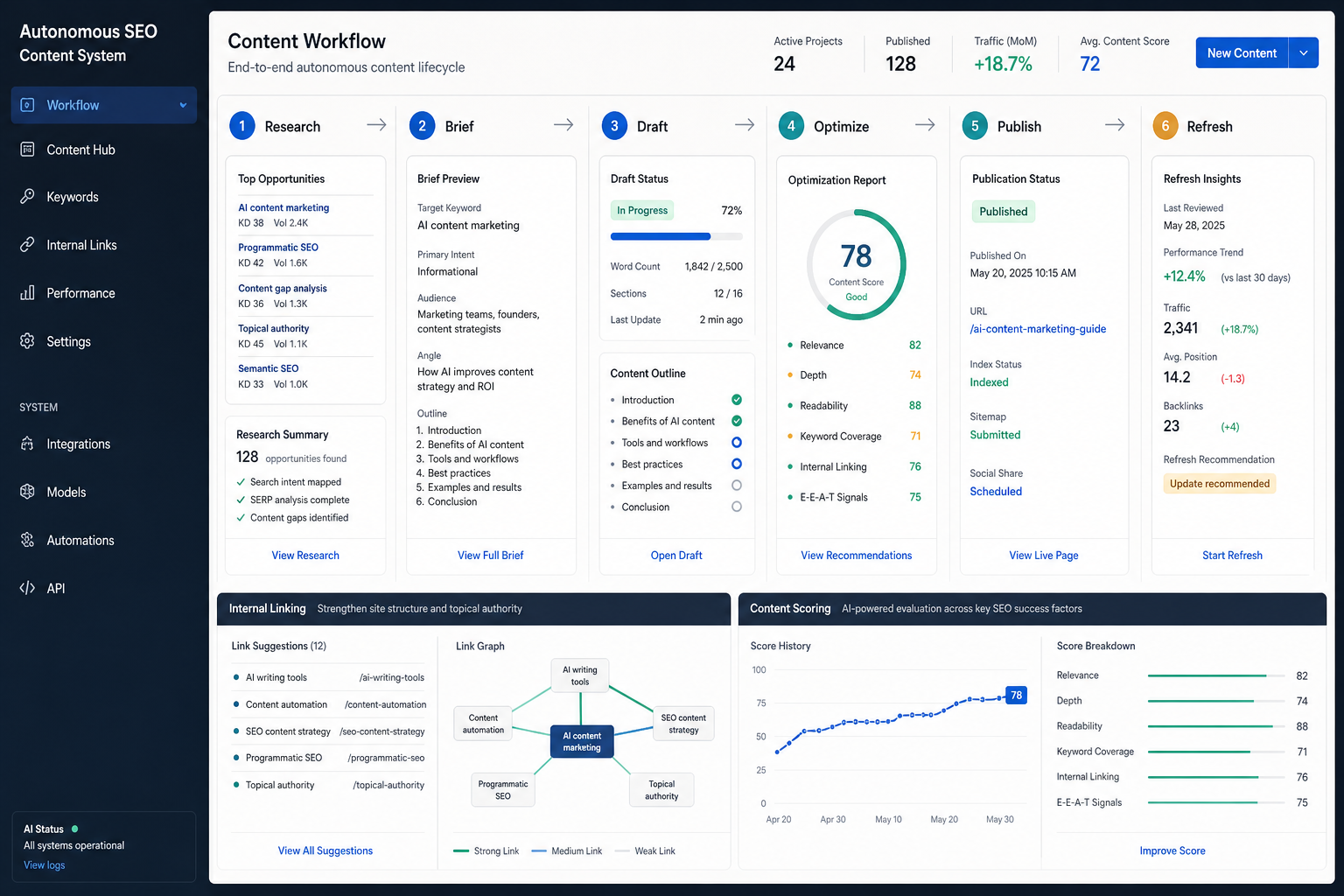
AI only matters when it supports the full content lifecycle.
A good test is simple: does the tool help the team move from idea to live page without export, copy-paste, and manual rework? If yes, it is doing real work. If not, it is just another content generator.
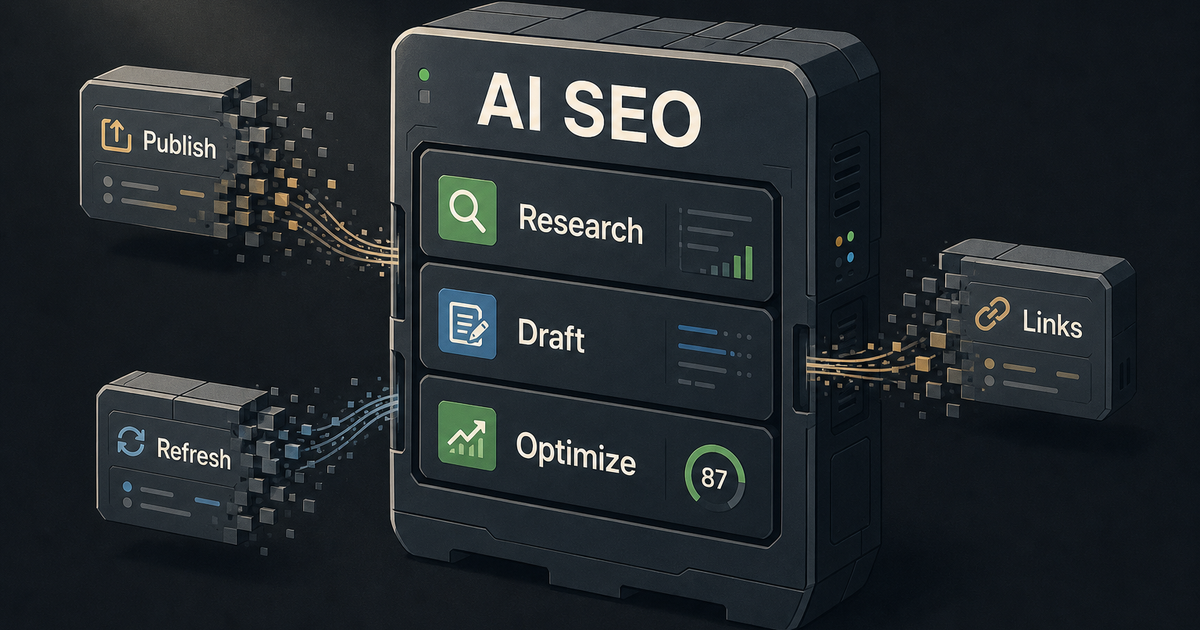
Essel is built around that broader workflow, which is why its AI content workflows fit naturally into this discussion. The product is meant to handle research, drafting, optimization, publishing, and refreshes in one loop, which is the difference between using AI as a helper and using it as an operating layer.
Why zero-click search makes content optimization non-negotiable
Modern seo marketing tools have to optimize for zero-click visibility, because ranking alone no longer guarantees the click. Rankability says that in 2026 roughly 60–68% of U.S. Google searches end without a click to an external website (Rankability).
That changes the buying criteria. If search results increasingly surface answers in AI Overviews, then AI Overviews, GEO, and AEO support are no longer niche features. They are core product requirements for teams that care about discovery, citation, and branded visibility across search surfaces.
“Google is sending more zero-click answers through AI Overviews, and in 2026 roughly 60–68% of U.S. Google searches end without a click to an external website.”
Rankability
A tool that helps only with rankings misses part of the funnel. A tool that helps pages earn visibility in answer surfaces, and then backs that up with content scoring and structured data guidance, is much closer to what buyers need now. For a deeper breakdown of that shift, see SEO marketing tools for Google and AI search.
How to choose between free and paid seo optimisation tools
Free tools can cover the basics, but paid software usually wins when the team needs depth, automation, and repeatability. That Marketing Buddy says its 2026 SEO software landscape tracks 54 tools and 14 free plans, and it reports a median starting price of $49 per month (That Marketing Buddy).
| Buying tier | What you get | Where it breaks |
|---|---|---|
| Free tools | Basic audits, limited keyword checks, light reporting | Depth, history, and automation |
| Low-cost paid tools | More tracking and more exports | Workflow still needs manual work |
| Full platforms | Content scoring, publishing, and integrations | Higher cost, but fewer handoffs |
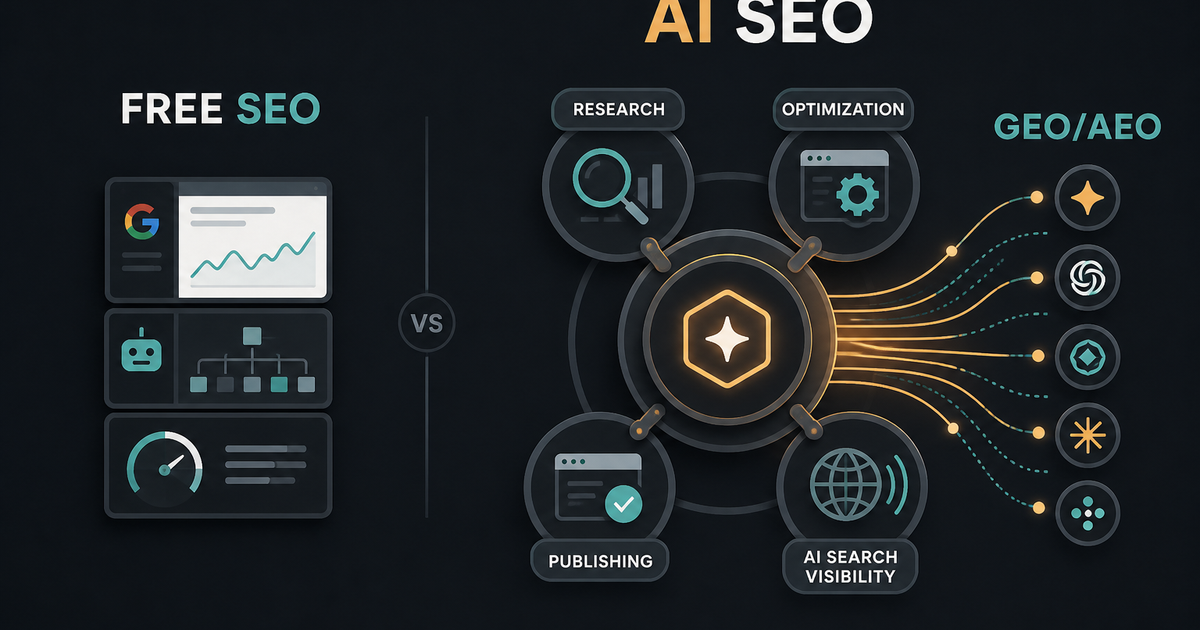
The pattern is predictable. Free seo software tools free are often enough for a solo project, a one-off audit, or a small site with low publishing cadence. Once a team needs structured content scoring, AI-assisted drafting, or CMS publishing, the free tier usually becomes a bottleneck.
That is why buyers searching for the best free seo tools should think in terms of stage, not ideology. Free can be the right start. It is rarely the right finish for a team that wants organic growth to compound.
If you are comparing plan depth and feature fit, Essel’s pricing page is the right place to map capability to subscription level.
The feature set that fits Essel
Essel fits teams that want an ai powered content creation platform with an SEO brain, not a stack of disconnected tools. It is built for research, drafting, optimization, publishing, and refreshes on autopilot, which makes it a strong fit for SaaS teams that care about output as much as insights.
- It connects research, drafting, and optimization into one workflow.
- It supports on-page SEO, internal linking, and content scoring.
- It helps teams publish and refresh pages without rebuilding the process each time.
- It is designed for Google, ChatGPT, Perplexity, and AI Overviews, not only classic rankings.
- It gives content-led businesses a way to compound traffic without adding manual SEO overhead.
For buyers who want the autonomous model, that is the key distinction. Essel is not trying to be one more dashboard in a crowded market. It is closer to an operational layer for teams that want SEO to run continuously, not episodically.
If you are comparing tools specifically for SaaS buying patterns, the guide for SaaS teams is a useful next step. If you want the broader operating model, the autonomous stack framing makes the trade-off clearer.
Can ChatGPT do SEO?
ChatGPT can help with drafts, outlines, and brainstorms, but it cannot replace SEO marketing tools that research, score, publish, and refresh content in one system. It is useful as a writing assistant, yet it still needs a separate workflow for keyword research, internal linking, technical auditing, and performance tracking.
Is SEO dead or evolving in 2026?
SEO is evolving in 2026, not disappearing. The work now includes AI Overviews, zero-click search, structured data, and content refresh workflows, so teams need search optimization tools that support visibility across more than one result surface.
Is SEO optimization free?
Some SEO tasks are free, including basic audits and light keyword checks, but serious optimization usually needs paid software. Free tools can start the process, while paid seo optimisation tools usually add the depth, automation, and history that growing teams need.
What are SEO and marketing tools?
SEO and marketing tools are software that help teams attract traffic, improve content, and measure performance. In practical terms, they support research, content creation, optimization, technical health, reporting, and publishing so the team can move faster with less manual work.
What to do next when comparing search optimization tools
Shortlist the tool by workflow fit, not by brand recognition. A good seo marketing tools decision should answer five questions: can it find the right topics, improve the page, connect to your CMS, support AI search visibility, and keep the content fresh after publish?
Use that test against any shortlist built from search optimization tools, search engine optimizer tools, or seo a.i products. Then run one real page through the platform. If it cannot help you research, score, link, and publish that page faster than your current process, the fit is weak.
The best tool is the one that matches the team’s cadence, content volume, and reporting needs, and that is easiest to prove with one live page rather than a feature matrix.
For a deeper evaluation checklist, see AI SEO tools before you buy and the GEO and AEO docs.