SEO Marketing Tools for SaaS: A Lean Stack Guide
As of August 2026, the leanest answer is simple: SaaS teams do not need more seo marketing tools; they need a stack that covers research, optimization, technical checks, and AI search visibility without duplicating work. Zapier frames SEO software as tools that handle search query analytics, reporting automation, AI-driven content optimization recommendations, and website performance analysis, which is the right bar for this article (Zapier, 2026).
Key takeaways
- A lean SaaS SEO stack should cover one source of truth, one research layer, one technical layer, and one execution layer.
- Google Search Console is the baseline because it gives first-party data and indexing insight for free.
- Semrush, Ahrefs, and Screaming Frog SEO Spider solve different jobs, so the right mix depends on whether you need breadth, backlinks, or crawl diagnostics.
- An ai powered content creation platform becomes useful when the team needs content shipped, optimized, and refreshed on cadence.
- AI search matters now because tools increasingly measure visibility in Google, ChatGPT, and Perplexity, not just classic blue links.
What counts as a lean SEO stack for SaaS?
A lean SaaS stack is a short list of tools that covers the full content and visibility loop without creating tool sprawl. The practical goal is not owning every search optimization tool on the market. It is choosing the few search engine optimizer tools and seo optimisation tools that let a small team research demand, publish quickly, and see whether the work moves.
Zapier’s 2026 taxonomy is useful here because it groups products into four buckets: SEO audit tools, keyword research tools, rank trackers, and all-in-one tools (Zapier, 2026). That framing keeps the comparison honest. If a tool only gives you keyword ideas, it is not a full stack. If a tool only audits technical issues, it does not replace a content workflow.
Morningscore says there are over 450 free and paid SEO tools on the market as of January 2026 when GEO tools are included (Morningscore, 2026). That is exactly why a SaaS buyer needs a filter. The useful question is not “what is the best SEO tool?” The useful question is which tools earn a place in a stack that has to ship every week.
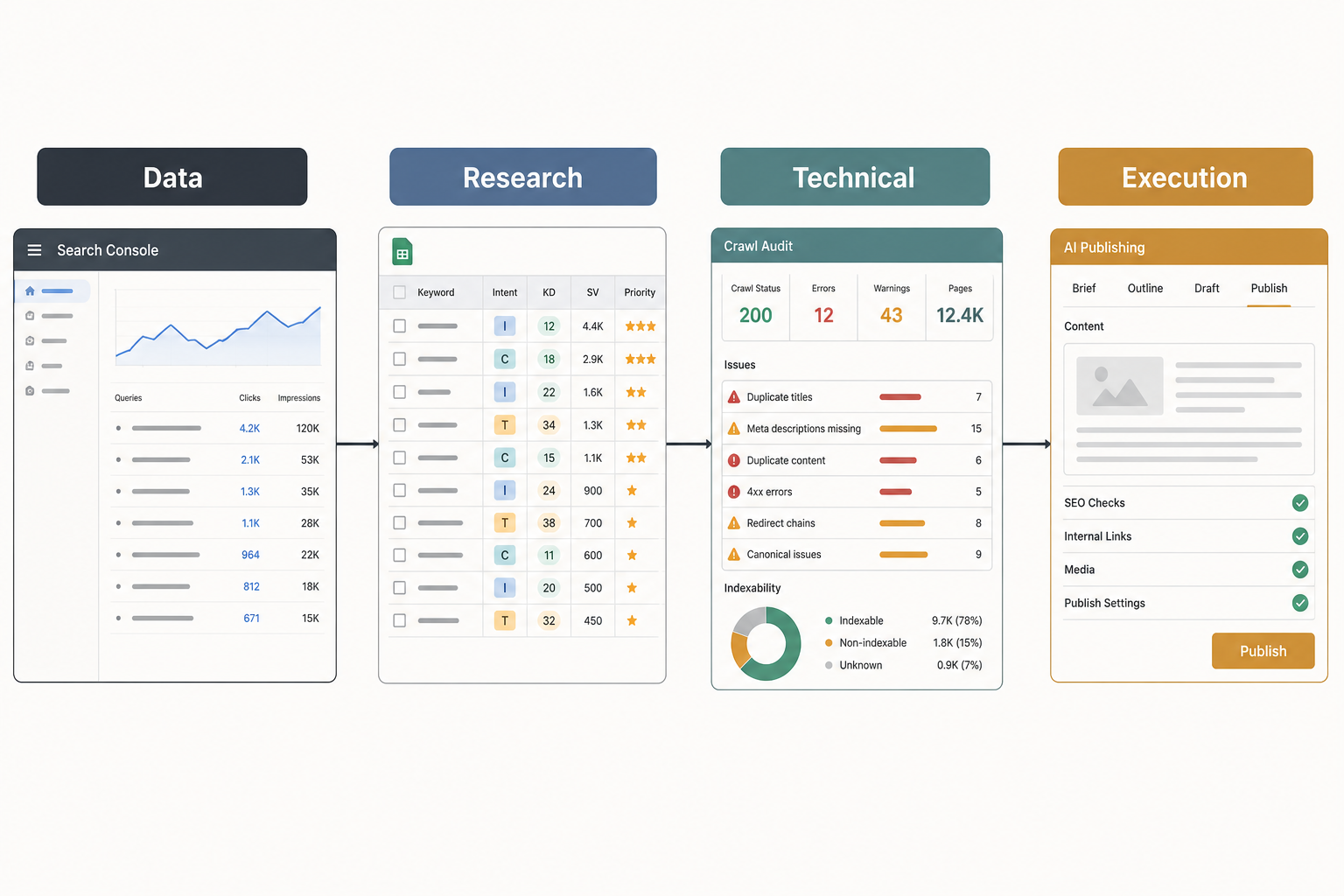
The lean stack should move from first-party data to publishing without overlap.
Note: For SaaS, “lean” does not mean minimalist for its own sake. It means every tool has a job that no other tool already covers.
How should SaaS teams evaluate SEO marketing tools?
The best buying criteria are SEO-centric functionality, value, user experience, integrations, and AI search visibility. Zapier uses that exact evaluation frame for its 2026 picks, and it fits a lean SaaS team because it pushes you toward tools that do real work rather than tools that merely look broad (Zapier, 2026).
For a small team, add four more filters. First, does the tool reduce content cycle time? Second, does it publish or connect cleanly to your CMS? Third, does it support internal linking, schema, and refresh workflows? Fourth, does it help you understand visibility in Google AI Overviews, ChatGPT, or Perplexity, not just in a single rank tracker?
| Criterion | What to look for | Why it matters in a lean stack |
|---|---|---|
| SEO-centric functionality | Research, audits, optimization, or publishing | Prevents paying for pretty dashboards that do not move content |
| Integrations | CMS, docs, analytics, and workflow hooks | Cuts manual handoffs and copy-paste time |
| User experience | Fast setup, clear outputs, low training cost | Small teams cannot afford admin overhead |
| Value | Coverage per dollar, not feature count | Avoids buying overlapping tools |
| AI search visibility | Mentions or measurement for AI-generated answers | Keeps the stack aligned with 2026 search behavior |
That is the lens. It is also why a pricing page matters early in the process. Once the tool list is trimmed, the next move is to check pricing against the actual jobs the stack needs to perform.
The best SEO tools for SaaS teams, by job to be done
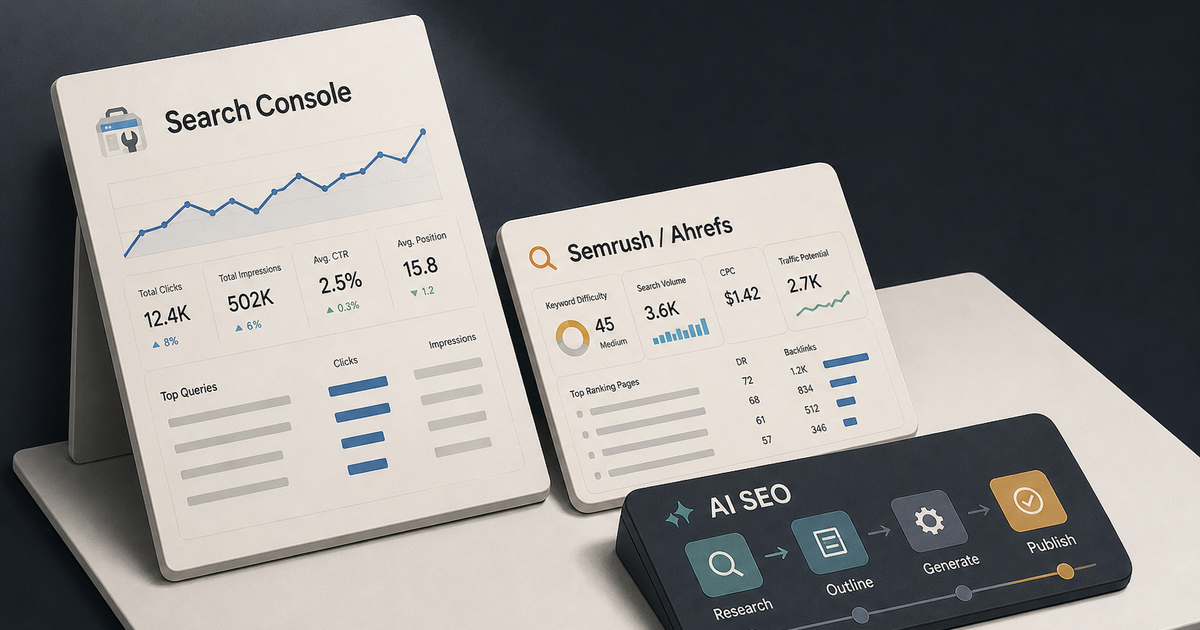
The strongest best seo tools for SaaS are the ones that each own a separate job. Google Search Console is the baseline data layer. Semrush is the broadest all-in-one option. Ahrefs is strongest for backlinks and competitor analysis. Screaming Frog SEO Spider is the technical crawler. An ai powered content creation platform sits on top as the execution layer when the team needs to draft, optimize, and publish on cadence.
Marketer Milk’s 2026 roundup is a useful reminder that SEO is no longer just Google. It says, “This is not just limited to Google. This includes Bing, ChatGPT, Perplexity, and all the other search engines on the market” (Marketer Milk, 2026). That matters because the modern stack has to cover both classic search and AI-generated answers.
| Tool | Best for | Lean-stack fit | Skip it when |
|---|---|---|---|
| Google Search Console | First-party data, indexing, queries | Must-have baseline | Never, unless another team already owns it |
| Semrush | Broad research and tracking | Good all-in-one anchor | You only need one narrow function |
| Ahrefs | Backlinks and competitor research | Best for off-page depth | You do not care about link intelligence |
| Screaming Frog SEO Spider | Technical audits and crawl checks | Strong specialist layer | Your site is tiny and already healthy |
| AI content platform | Drafting, optimization, publishing | Best execution layer for lean teams | You do not need to ship content regularly |
Google Search Console: the baseline every lean stack needs
Google Search Console is the first tool a SaaS team should install because it shows how Google actually sees the site. Marketer Milk recommends that beginners start with the free SEO tools Google gives them, and it calls Search Console the best tool for first-party data and indexing, while noting that it is free (Marketer Milk, 2026).
That makes it the floor, not the nice-to-have. If a page is not indexed, or queries are dropping, or a segment is underperforming after a refresh, Search Console is the place to verify it. Paid tools can layer on competitive context, but they do not replace direct data from Google.
For lean SaaS teams, that direct signal matters more than dashboards. It informs which pages to update, which topics to expand, and which content is earning impressions but not clicks.
Semrush vs Ahrefs vs Screaming Frog SEO Spider
These three tools solve different problems, and buying all three is often overkill for a small team. Semrush is the broadest choice when the team wants one platform for research, tracking, and adjacent marketing tasks. Ahrefs is the better pick when backlink intelligence and competitive research are the main reasons to pay. Screaming Frog is the technical specialist, useful when crawl issues, metadata, redirects, or site health checks are the bottleneck.
| Criterion | Semrush | Ahrefs | Screaming Frog SEO Spider |
|---|---|---|---|
| Main strength | Breadth | Backlinks and competition | Technical crawling |
| Best SaaS use case | One dashboard for multiple SEO jobs | Competitive link research | Site audits and diagnostics |
| Stack role | Anchor platform | Specialist research layer | Specialist technical layer |
| Common overlap | Keyword research and tracking | Keyword research and competitor data | Basic technical visibility |
| Lean-stack verdict | Best when you want breadth | Best when links drive decisions | Best when technical debt is the issue |
Morningscore’s 2026 shortlist includes all three among the 20 tools that stood out most, which is a good sign that the market still treats them as category leaders (Morningscore, 2026). The question is not whether they are good. The question is whether your team needs a broad platform or a narrower specialist.
Can ChatGPT do SEO?
ChatGPT can speed up SEO work, but it cannot replace SEO data, crawl diagnostics, or performance measurement. It is strong for outlines, title variants, content expansion, and rewrite passes. It is weak at first-party query data, site health checks, ranking movement, and live competitive validation.
That is why artificial intelligence for content creation belongs in the stack as an accelerator, not a substitute. Used well, it shortens the time between idea and draft. Used badly, it creates fast content with no visibility signal behind it.
Zapier adds another reason to include AI in the discussion: “More recently, they've picked up a new job: telling you whether your brand shows up in AI-generated answers” (Zapier, 2026). That is the practical shift. AI-for-SEO is no longer just drafting support. It also means tracking whether the brand appears in the surfaces people now use to ask questions.
If you want the operational version of that workflow, the lean answer is to pair content creation with AI search visibility rather than treating them as separate projects.
What are SEO and marketing tools?
SEO and marketing tools are systems that help a team find demand, create search-aligned content, optimize pages, and measure whether that work earns visibility. In SaaS, the best ones are not the noisiest. They are the ones that remove handoffs, reduce rework, and keep the content engine moving.
At a practical level, that means the stack should handle keyword discovery, content optimization, internal linking, reporting automation, and AI visibility. It may also include technical audit software, but only if the site has enough complexity to justify it.
This is where the labels blur. seo marketing tools, search optimization tools, search engine optimizer tools, and seo optimisation tools are usually different names for overlapping software categories. The real distinction is job coverage. A tool either helps you ship and improve search content, or it adds another dashboard to watch.
For teams that want a deeper framework for selection, the feature checklist is the right next read.
What are some SEO tools SaaS teams can use today?
A lean SaaS shortlist starts with free Google tools, then adds one research anchor and one execution layer. The most practical set is Google Search Console, Semrush or Ahrefs, Screaming Frog SEO Spider, and an AI content platform. That covers the minimum jobs without building a bloated stack.
Marketer Milk’s advice for beginners is still the cleanest starting point: use the free SEO tools Google gives you first, then add paid software only when the workflow has a clear gap (Marketer Milk, 2026). In 2026, that free layer can still coexist with AI search planning, because the visibility surface now includes Google, ChatGPT, and Perplexity.
- Google Search Console for indexing, queries, and page-level performance.
- Semrush for broad research and all-in-one coverage.
- Ahrefs for link and competitor depth.
- Screaming Frog SEO Spider for technical audits.
- An ai powered content creation platform for drafting, optimization, and publishing.
If the goal is low-friction experimentation, free SEO tools are the safest first step before committing budget.
Which stack fits your team size and budget?
The right stack depends on team size, publishing cadence, and how much manual work the team can tolerate. Solo founders should run on Search Console plus one paid anchor. Small SaaS teams should add either technical auditing or AI content automation. Larger teams can justify specialist tools for each job if the content program is already consistent.
| Team profile | Lean stack | Why it fits |
|---|---|---|
| Solo founder | Google Search Console + one paid tool | Lowest cost path to useful signal |
| Small SaaS team | Search Console + research tool + AI content platform | Enough coverage to ship and improve content |
| Growth-stage SaaS | Search Console + Semrush or Ahrefs + Screaming Frog + AI platform | Covers research, audits, and execution without too much overlap |
| Content-heavy SaaS | Broader stack with refresh and publishing workflows | Justified when volume and site complexity are high |
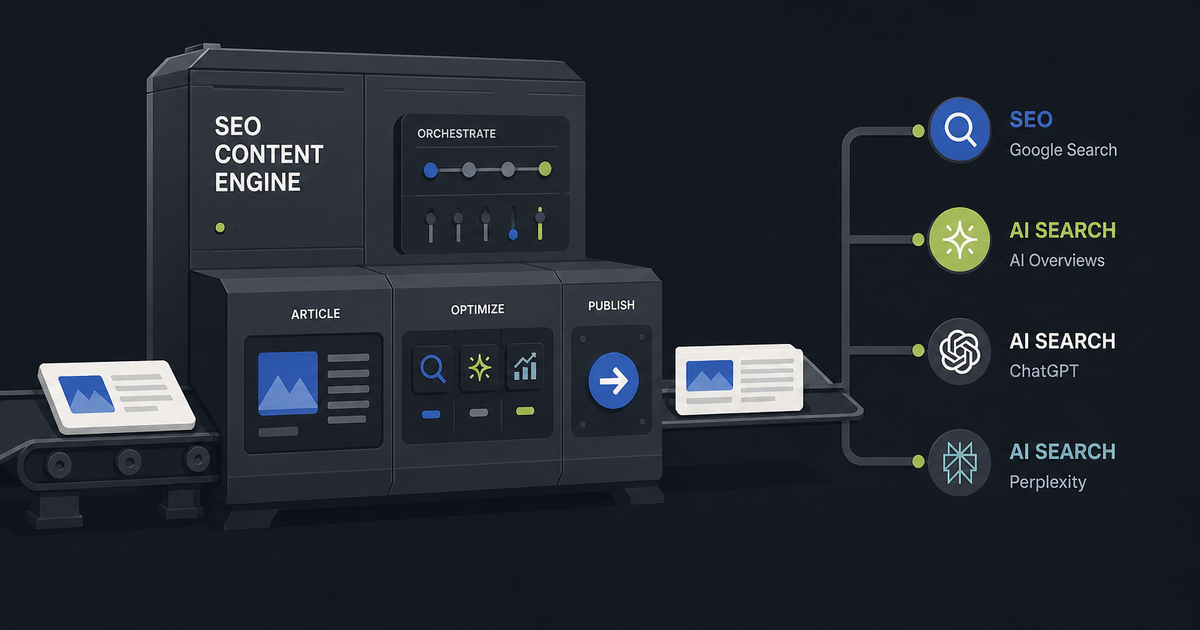
A useful rule: if the team spends more time moving content between tools than improving it, the stack is too heavy. That is where an AI execution layer wins over another research subscription. Essel’s model fits that gap because it is built to research, write, optimize, publish, and refresh content on autopilot.
For teams that want the broader lean-team comparison, best AI SEO tools for lean teams is the closest adjacent guide.
Tip: Choose the stack that reduces handoffs first. Feature depth matters less than the number of hours the team gets back each week.
Can ChatGPT do SEO well enough for a SaaS team?
ChatGPT can do enough to accelerate SEO work, but not enough to replace the stack. It can draft briefs, generate topic variants, and help rewrite sections for clarity or intent match. It cannot tell you whether the page is indexed, whether a query is rising, or whether a technical issue is blocking performance.
That is why the cleanest workflow pairs AI drafting with measurement and publishing. A SaaS team can use ChatGPT for first-pass creation, then validate with Search Console, technical tools, and AI search visibility checks. The output gets better when AI is part of the workflow, not the whole workflow.
If the team needs a more operational version of that sequence, how to do AI SEO explains the small-team workflow in practice.
Frequently asked questions
What is the most used SEO tool?
Google Search Console is the tool most lean SaaS teams should treat as mandatory, because it is the free first-party source of indexing and query data. Marketer Milk specifically recommends it as the best tool for first-party data and indexing, and says it is free (Marketer Milk, 2026).
Is SEO dead or evolving in 2026?
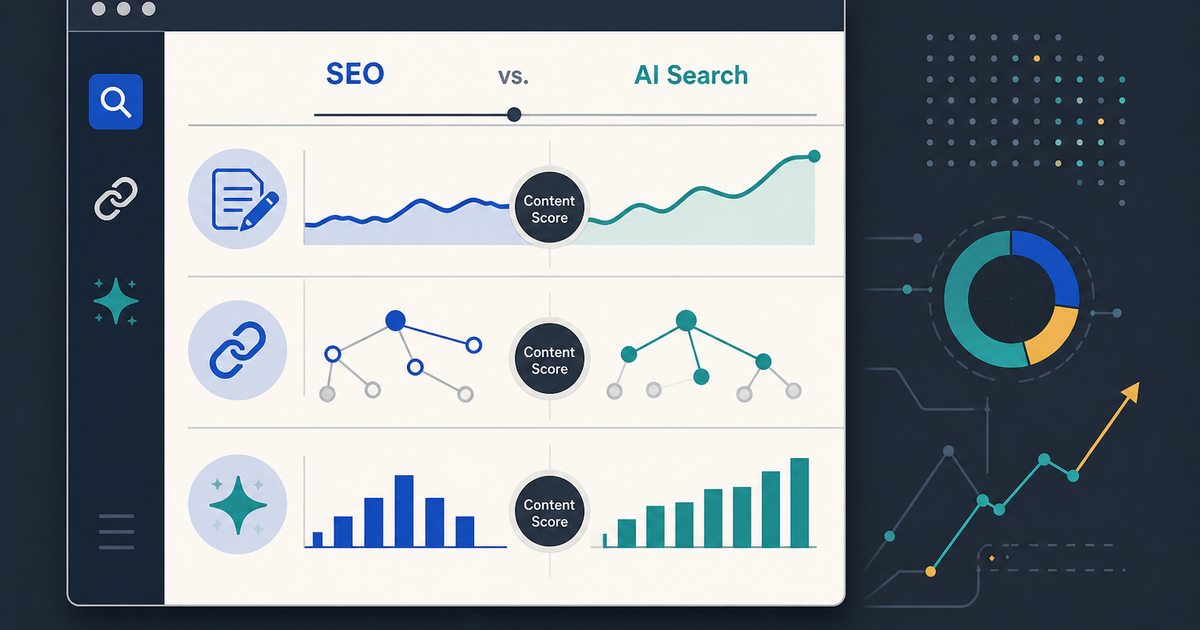
SEO is evolving in 2026, not disappearing. The definition now includes Google, AI Overviews, ChatGPT, and Perplexity, which is why modern seo marketing tools need to measure AI-generated answers as well as classic search performance.
What are SEO and marketing tools?
SEO and marketing tools are software systems that help teams find demand, build search-aligned content, optimize pages, and measure results. In a lean SaaS stack, they should also reduce manual handoffs and support publishing, internal linking, and refresh workflows.
What are some SEO tools?
The most practical shortlist is Google Search Console, Semrush, Ahrefs, Screaming Frog SEO Spider, and an AI content platform. That set covers baseline data, research, technical audits, and content execution without forcing a large-tool stack.
What is the 80 20 rule of SEO?
The 80 20 rule of SEO means a small set of pages, queries, and fixes usually drives most of the impact. For SaaS teams, that often means focusing on the pages already getting impressions, the topics with commercial intent, and the technical issues that block those pages from performing.