SEO Marketing Tools for Teams That Need More Output
As of August 2026, the best seo marketing tools help a team research, optimize, and publish faster across Google Search, AI Overviews, ChatGPT, and Perplexity. Zapier defines an SEO tool as “any software you can use to improve some aspect of a search engine optimization campaign” (Zapier), and that is the right frame here: output, not just dashboards. If a stack cannot help content ship, it is not doing enough.
Neil Patel says, “Good SEO marketing tools are vital if you want to succeed in the digital marketing game.” That is the bar. Teams need systems that cut handoffs, reduce tool switching, and keep content moving from idea to indexed page.
Key takeaways
- SEO marketing tools are most useful when they shorten the path from research to publish, not when they only report on performance.
- The strongest stacks combine content scoring, internal linking, AI drafting, and CMS publishing.
- Modern teams should evaluate tools for Google Search and AI search visibility together, including AI Overviews, ChatGPT, and Perplexity.
- Free tools can cover narrow jobs, but output-heavy teams usually need automation and workflow support.
- The right choice is the one that increases output per operator.
The short answer: which SEO marketing tools actually help teams ship more output?
The best SEO marketing tools are the ones that turn research into publishable content with the fewest manual steps, especially when they support AI-assisted drafting, optimization, internal linking, and CMS publishing in one flow. For teams that need more output, that usually means choosing an integrated platform over a pile of separate search optimization tools.
SEO marketing tools for Google and AI search matter because visibility now spans search results, AI summaries, and answer engines, not just blue links. If a tool helps with keyword discovery but stops before publication, it helps less than a system that keeps the pipeline moving.
“For some jobs, you can get by purely on your own cunning, physical abilities, or ambition alone. SEO marketer is not one of those jobs.”
Zapier, November 15, 2024
What are SEO and marketing tools?
SEO and marketing tools are the software layer teams use to improve search visibility, content quality, and campaign reporting from planning through publishing. In practice, that includes search engine optimizer tools, seo optimisation tools, and the broader set of search optimization tools that help content teams make better decisions faster.
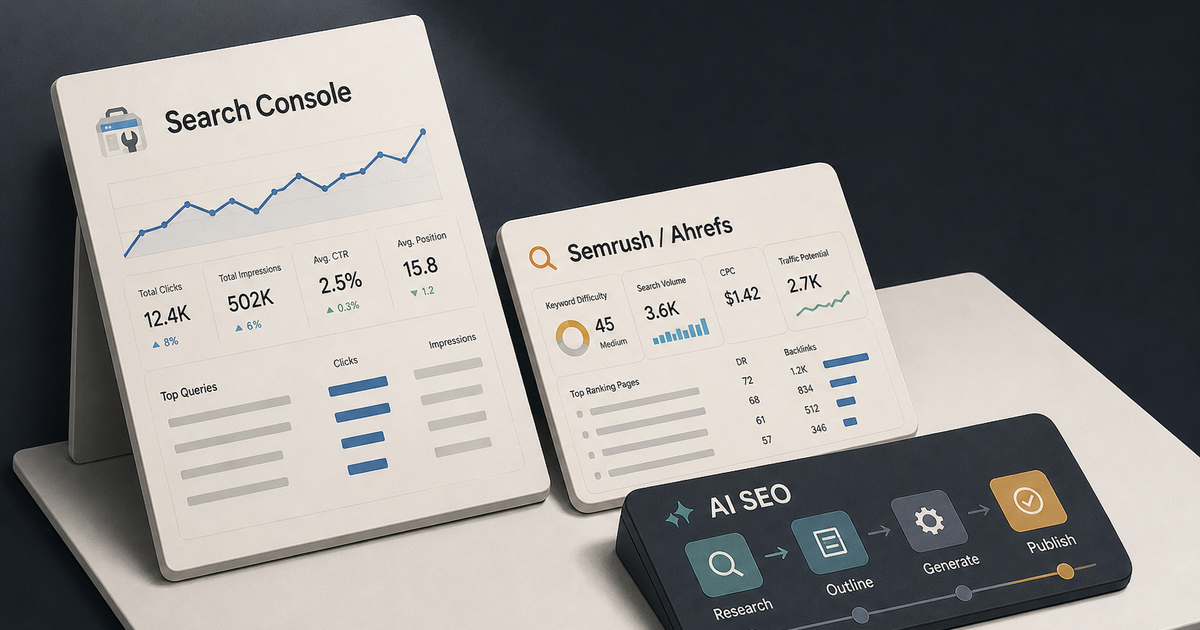
Zapier groups SEO products into four categories: SEO audit tools, keyword research tools, rank trackers, and all-in-one tools (Source: Zapier, 2024). That breakdown is useful because it shows where a stack can stay narrow and where it needs to expand. Audit tools tell you what is broken, rank trackers show movement, keyword tools surface demand, and all-in-one platforms try to connect the whole loop.
Zapier also says modern tools can handle search query analytics, reporting automation, AI-driven content optimization recommendations, and website performance analysis (Zapier). That is the practical baseline for teams that want output. If a platform only does one of those jobs, the rest of the workflow still falls back on people.
What should teams look for if they need more output?
Teams that need more output should buy for workflow compression, not feature count. The right seo optimization software reduces the number of tools, approvals, and handoffs between topic research and live content.
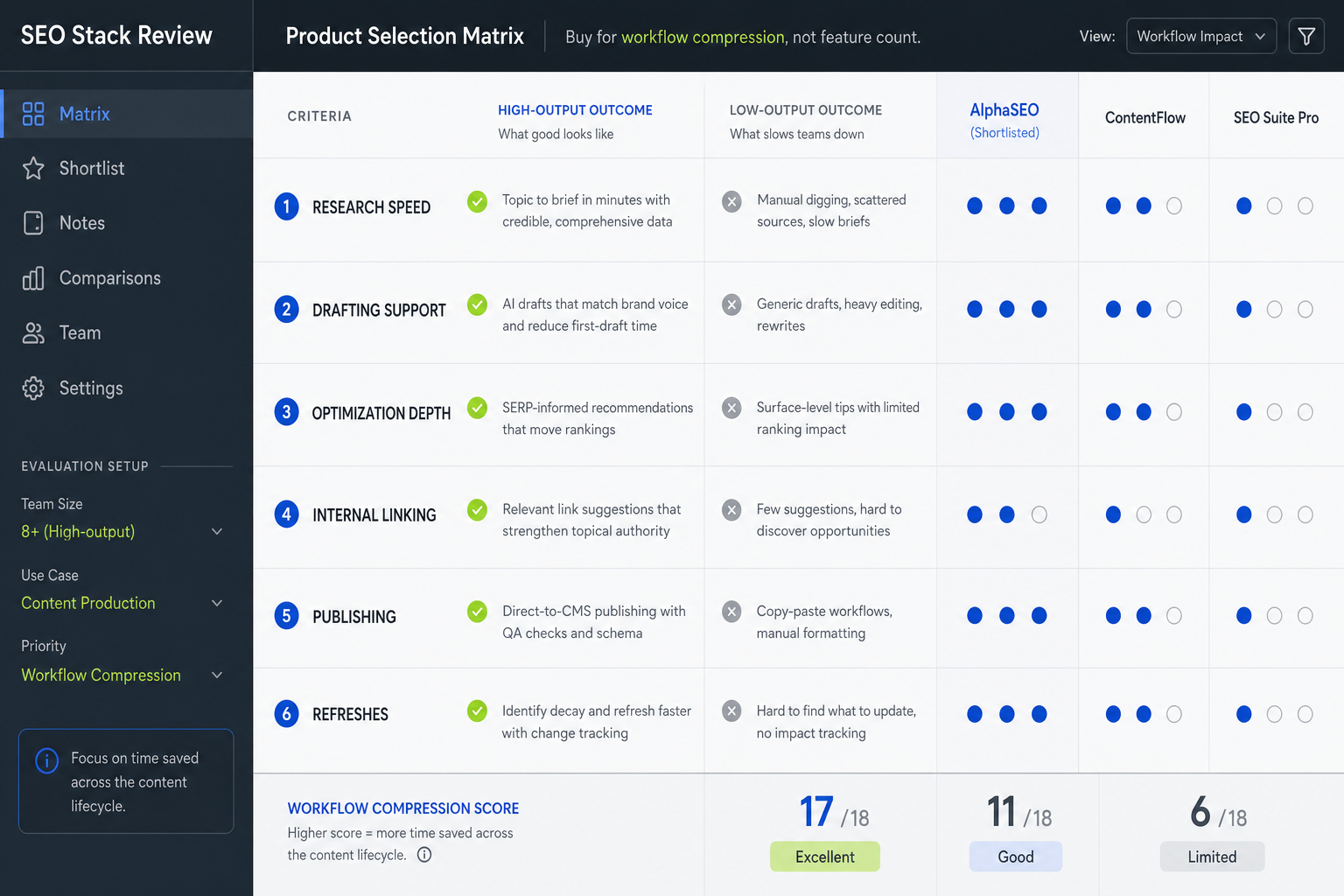
Buy for workflow compression, not feature count.
A useful buying checklist looks like this:
- Research speed: Can the tool surface topics, intent, and gaps without a separate keyword spreadsheet?
- Drafting support: Can it turn a brief into a usable first draft with brand context?
- Optimization depth: Does it help optimize seo with headings, entities, metadata, and content scoring?
- Internal linking: Can it suggest or insert relevant links across the site?
- Publishing: Can it push content to a CMS without manual copying?
- Refreshes: Can it identify pages that need updates and generate improvements?
That list is where an ai powered content creation platform starts to separate itself from a point solution. The keyword tool may still matter, but teams that publish every week need orchestration, not isolated utilities. In that context, artificial intelligence for content creation is only valuable if it reduces time to publish and improves consistency.
SEO marketing tools SaaS teams should actually buy usually share one trait: they make the operator do less busywork. If the workflow still requires copy-pasting, reformatting, and manual publishing, the stack is not really helping scale.
When does an AI-powered content creation platform beat a patchwork of tools?
An ai powered content creation platform wins when the bottleneck is production volume, not just topic ideas. If the team already knows what to write but cannot ship enough good pages fast enough, the problem is coordination, and that is where integrated automation matters.
Zapier notes that all-in-one SEO tools can include automation and AI (Source: Zapier, 2024). That matters because the value is not the acronym, it is the reduction in friction. A strong platform can map opportunities, draft on-brand content, optimize it, and hand it off for publishing without forcing the team to stitch together five separate tools.
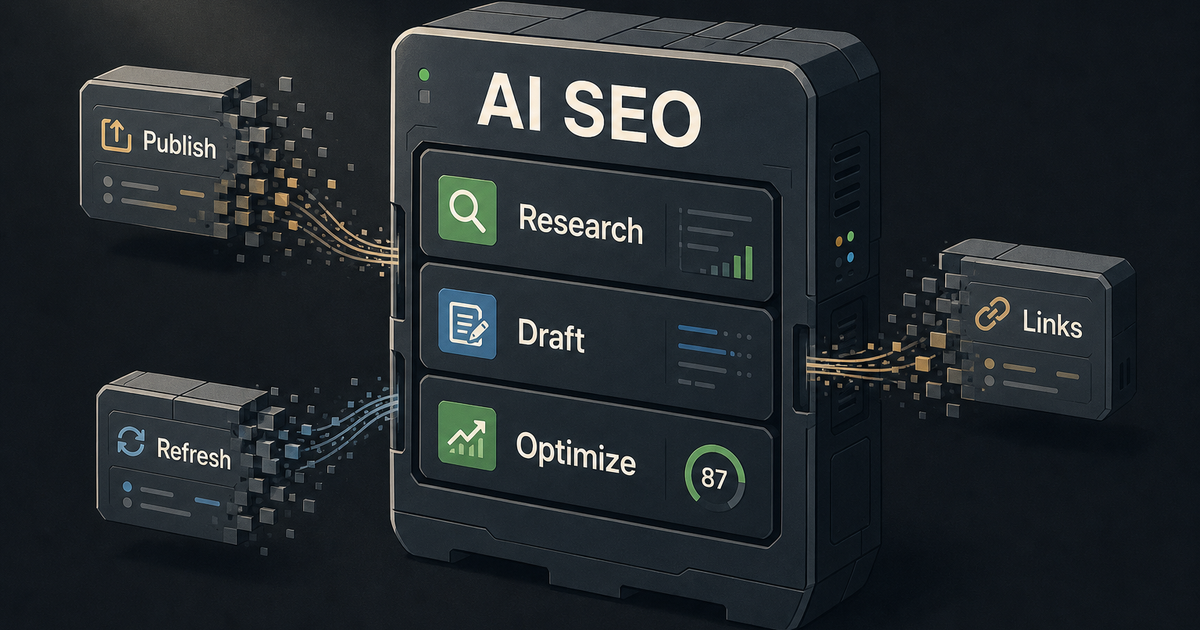
Essel is built around that workflow. It researches, writes, optimizes, publishes, and refreshes content so teams can keep a cadence without managing writers, keyword tools, and manual CMS work.
AI-powered content creation platform comparison is the right lens when the current stack looks like this: one tool for research, one for writing, one for SEO checks, one for links, and one for publishing. That stack can work, but it usually works slowly.
What capabilities separate modern SEO tools from old-school software?
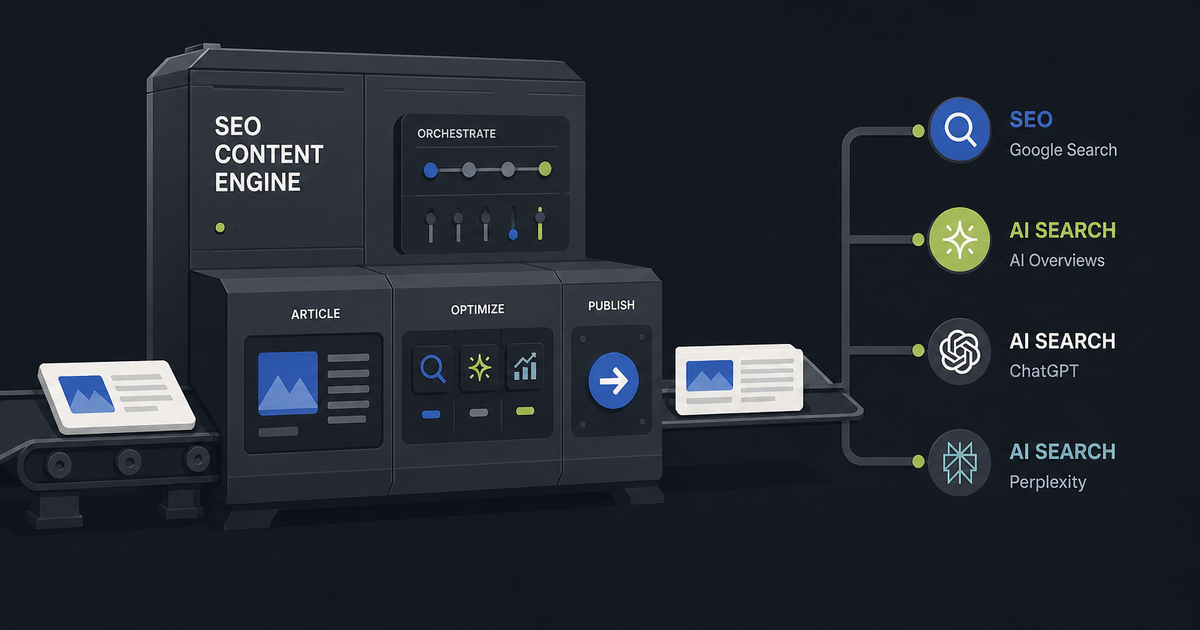
Modern SEO tools do more than audit pages and track positions. They now have to support GEO, AEO, and AI search visibility alongside classic search tasks, because discovery happens in Google Search, AI Overviews, ChatGPT, and Perplexity.
ClickDo says, “In 2026, the meaning of an SEO marketing tool has expanded” (ClickDo). That is the right shift to recognize. The job is no longer only to help a page rank. It is to help a page get cited, surfaced, and reused in the places buyers now ask questions.
What are SEO and marketing tools doing now that they did not do before?
They are moving from passive reporting to active content operations. Modern seo a.i workflows can suggest briefs, optimize a draft, add internal links, and connect publishing to performance feedback, which is very different from a static rank tracker.
SEO for AI search, Google, ChatGPT, and Perplexity matters because the optimization target is broader now. Teams that keep treating Google as the only surface will miss how answer engines are reshaping traffic acquisition.
How should teams choose between free and paid SEO tools?
Teams should start with free tools for narrow tasks and move to paid tools when they need scale, automation, and collaboration. Neil Patel says there are plenty of free SEO tools for digital marketing that can do just as good a job, and sometimes even better, than paid alternatives (Source: Neil Patel, 2026), and that is true for basics like audits, analytics, and lightweight research.
Google Analytics 4 is a good example of a free foundational layer. Neil Patel calls it “the most powerful analytics platform on the planet” (Neil Patel), which is another reminder that a team does not need to pay for every useful capability.
Morningscore says there are over 450 free and paid SEO tools on the market as of January 2026 (Morningscore), and it has tested over 180 tools (Source: Morningscore, 2026). That crowding makes selection matter more than ever. The right filter is simple: what increases output per operator?
A quick way to choose
| Team need | Lean on free tools | Pay for a platform |
|---|---|---|
| Basic visibility | Yes | Sometimes |
| Faster research | Sometimes | Yes |
| Automated drafting | Rarely | Yes |
| Internal linking at scale | Rarely | Yes |
| CMS publishing | Rarely | Yes |
| Content refreshes | Sometimes | Yes |
If the team only needs one task, keep the stack lean. If the team needs a repeatable publishing system, the paid side starts to make more sense.
How do autonomous platforms change the SEO content workflow?
Autonomous platforms compress the whole SEO content loop into one operating system. Instead of moving from keyword tool to brief to writer to editor to CMS, the team works from one pipeline that maps opportunities, drafts content, optimizes it, publishes it, and then refreshes it when the page starts to age.
- Opportunity mapping identifies what to publish next.
- Drafting turns the brief into a usable article faster.
- Optimization tightens headings, entities, and internal links.
- CMS publishing gets the page live without manual copy-paste.
- Refreshes reopen the loop when the content needs an update.
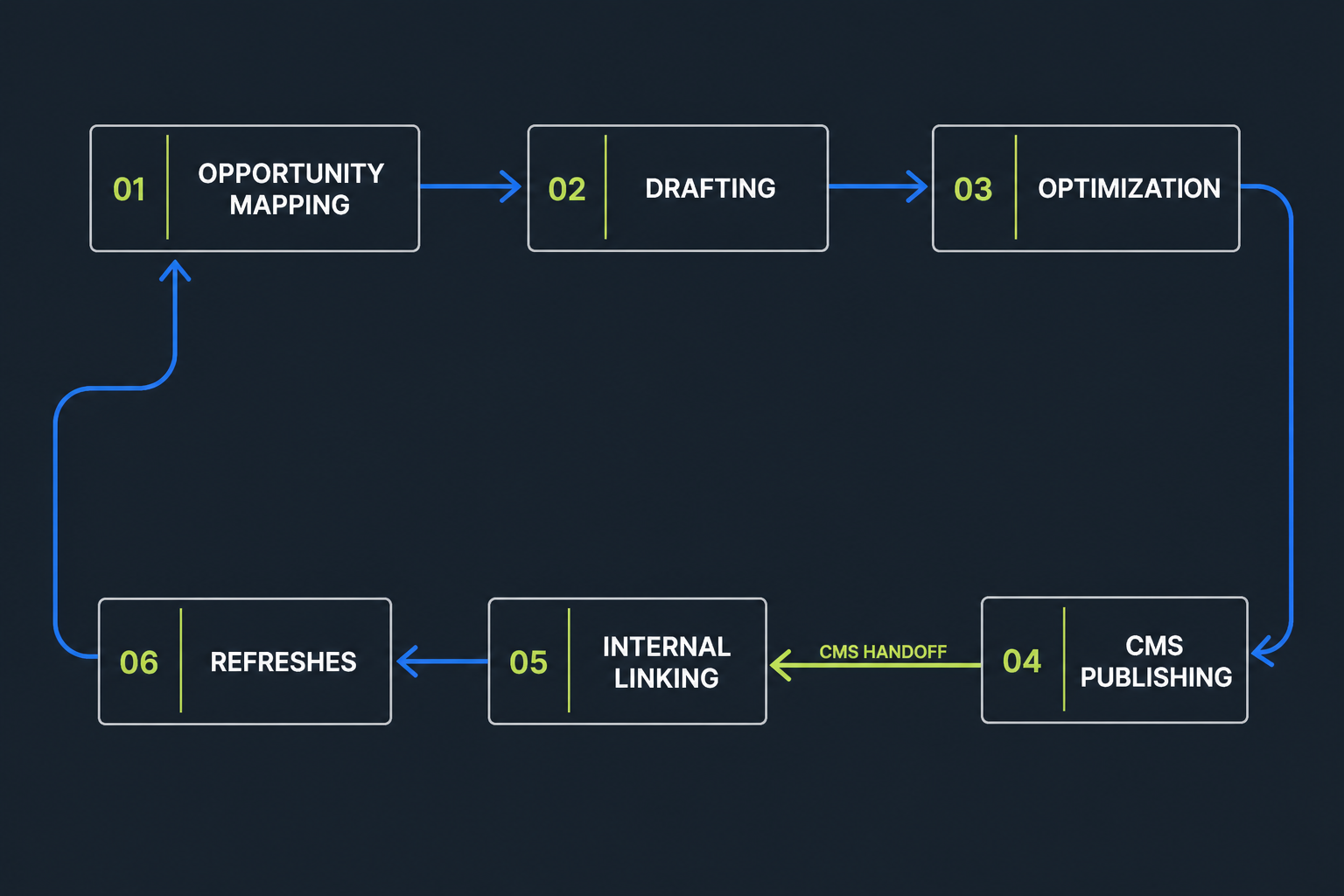
Autonomous platforms keep the content loop moving after publish.
That shift matters because seo optimization software is most valuable when it removes coordination overhead. A traditional stack may still require separate tools for research, rank tracking, internal linking, and publishing. An autonomous platform connects those steps so content can move on cadence, not on ad hoc bursts.
SEO marketing tools: what an autonomous stack changes is where the workflow advantage becomes obvious. Teams do not just need recommendations. They need throughput that compounds across Google Search, AI Overviews, ChatGPT, and Perplexity.
Essel fits this model because it is not just a content generator. It acts like an AI SEO team that keeps the machine running, which is the difference between producing one-off posts and building a durable content engine.
Is SEO dead or evolving in 2026?
SEO is evolving in 2026, not dying. The surface area has expanded from classic search results into AI Overviews, answer engines, and conversational search, so the tools have to evolve with it.
That is why modern search engine optimizer tools need GEO and AEO features. If they cannot help content earn visibility in AI-first surfaces, they are solving last year’s problem. Teams still need keyword research and technical hygiene, but they also need content that can be cited and summarized cleanly.
The practical move is to optimize for usefulness, structure, and coverage. Pages that answer the query directly, use clear entities, and support the topic cluster are the ones most likely to hold value across search formats.
What are popular SEO tools?
Popular SEO tools still fall into a few clear buckets: audit tools, keyword tools, rank trackers, and all-in-one platforms. Those categories cover most buying decisions for teams that need a seo tools list without turning the page into a generic roundup.
- Audit tools help find technical issues and on-page gaps.
- Keyword tools help find demand, intent, and topic clusters.
- Rank trackers show movement over time.
- All-in-one platforms combine research, optimization, and workflow automation.
The strongest teams usually mix categories instead of forcing one tool to do everything. But when the goal is output, the better question is not “What are some seo tools?” It is “Which system helps us publish more, faster, and with less manual drag?”
What is the best move for teams that need more output?
The best move is to choose an integrated platform when throughput is the bottleneck and use point solutions only when a single task is the issue. If the team needs more output, the stack should combine research, drafting, optimization, internal linking, structured data, and CMS publishing.
That is why seo marketing tools should be judged by output per operator, not by how many tabs they replace. A tool that helps one person ship three good pages a week is more useful than a dashboard that looks impressive but leaves the actual publishing work untouched.
If your team wants a system built for that kind of cadence, start with SEO marketing tools for Google and AI search and the AI-powered content creation platform comparison. The right choice is the one that keeps content moving and keeps it visible.
FAQ
What are SEO and marketing tools?
SEO and marketing tools are the software a team uses to improve search visibility, content quality, and reporting across planning, writing, optimization, and publishing. In this article, they include search optimization tools, search engine optimizer tools, and seo optimisation tools that reduce manual work.
What are some SEO tools?
Some SEO tools are audit platforms, keyword research tools, rank trackers, and all-in-one systems. Teams that need more output usually get the most value from seo marketing tools that connect research, drafting, optimization, internal linking, and CMS publishing.
Can ChatGPT do SEO?
ChatGPT can help with research, outlining, and draft support, but it does not replace search engine optimizer tools that handle optimization scoring, internal linking, publishing, and refresh workflows. Teams use it best as part of a larger ai for seo process, not as the whole stack.
What should teams buy first if they need more output?
Teams should start with the bottleneck. If research is slow, buy a stronger research layer. If publishing is the problem, choose seo optimization software or an ai powered content creation platform that can push content to the CMS and keep the cadence moving.