SEO Marketing Tools Free: The Hidden Cost of Manual Work
As of August 2026, free SEO software can get a team started, but it rarely removes the work. It gives you pieces: audits, keyword data, backlinks, and rank checks. The hidden cost shows up when those pieces still have to be stitched together by hand.
Key takeaways
- Free SEO tools are useful for narrow jobs, but they do not replace a full SEO workflow.
- The real cost of “free” is manual coordination, slower publishing, and more context switching.
- A tool stack can cover research, audits, and tracking, yet still leave drafting, internal linking, publishing, and refreshes to people.
- AI helps most when it is part of an AI content platform, not a one-off writing helper.
- Teams move beyond free tools when cadence and consistency matter more than occasional checks.
What do free SEO tools actually cover?
Free SEO tools cover tasks, not the whole job. They are useful for checking rankings, scanning pages, spotting backlinks, and pulling search data, but the team still has to turn those outputs into briefs, drafts, optimised pages, and published content. That is why free AI tools for SEO optimization often feel helpful at first and then start to slow execution as volume rises.
Moz’s free tool set spans keyword research, link research, brand strength measurement, algorithm-change tracking, competitive research, local citation auditing, mobile analysis, and domain analysis (Moz free SEO tools). That is a broad list, but it is still a collection of separate checks. The work is in the stitching.
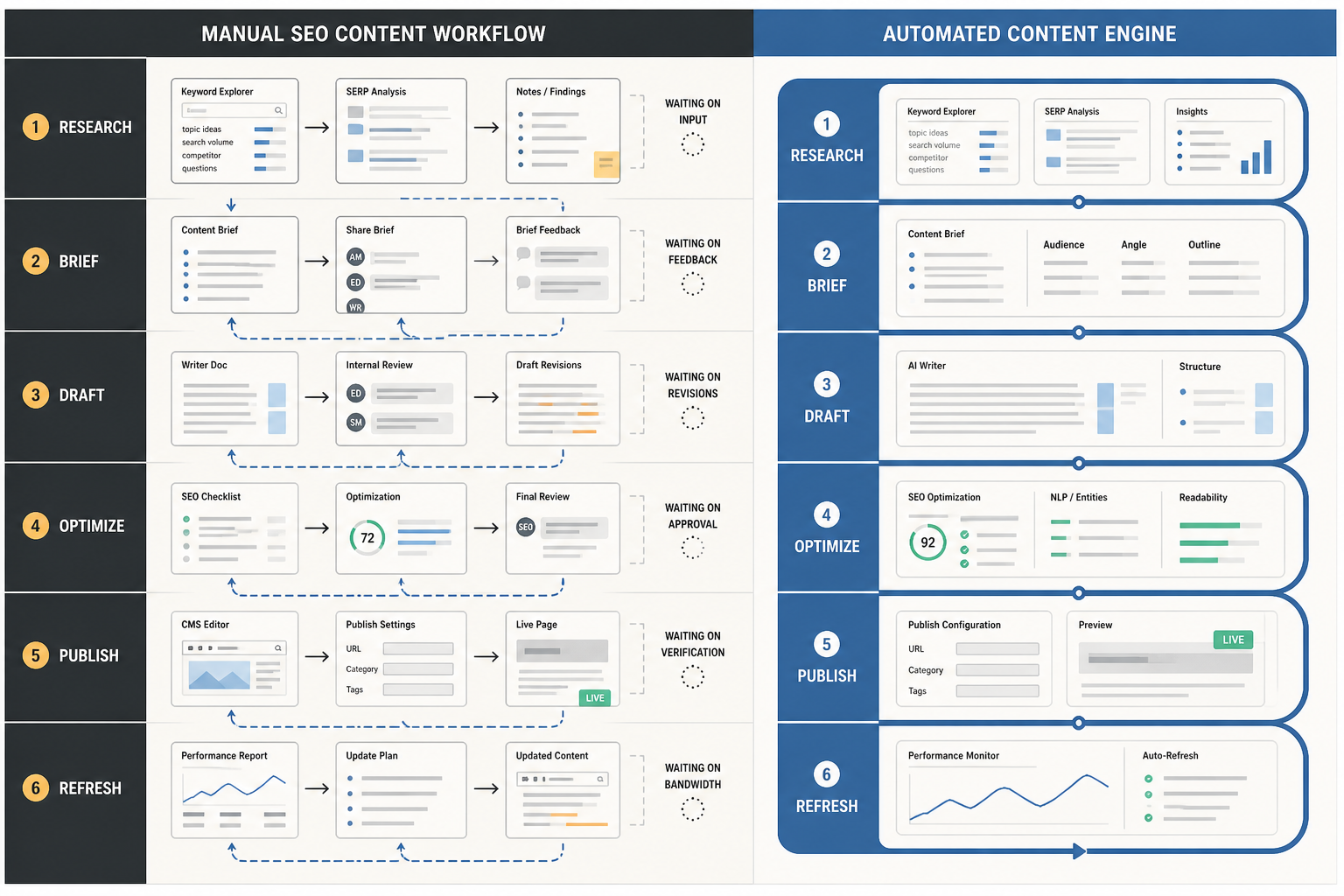
The manual path adds friction at every step.
A free stack can answer, “What changed?” It usually cannot answer, “What gets published next, who links it, and how do we refresh it on schedule?” That gap is the hidden cost.
Which free SEO software categories are worth using first?
The best free stack starts with the job you need done today, then stops before tool sprawl turns into admin work. For most teams, the first pass is search performance, keyword discovery, technical checks, backlinks, and light content review.
- Search performance: Google Search Console and Google Analytics 4 show clicks, impressions, page behaviour, and traffic sources.
- Keyword research: Google Keyword Planner and Google Trends help you validate demand and spot shifts.
- Technical audits: Screaming Frog SEO Spider and Ahrefs Webmaster Tools are the fast sanity checks when pages break or metadata goes missing.
- Backlinks and authority: Ahrefs Webmaster Tools and Moz’s free checks help with link and domain review.
- Light optimisation and drafting support: ChatGPT and Perplexity can help brainstorm, summarise, and rewrite, but they do not run the workflow end to end.
Ahrefs says its free SEO tools cover keyword research, on-page SEO, link building, and more (Ahrefs free SEO tools). SE Ranking also groups its free tools around Google Rank Checker, Website Traffic Checker, Keyword Research Tool, and AI-powered content editing and copy creation (SE Ranking free tools). That mix is useful because it shows how the category has expanded from diagnosis into early content support.
For readers comparing features, the key question is simple: does the tool save a step, or does it just create another tab? If it only saves a step, the team still pays in time.
What is the hidden cost of doing SEO manually?
Manual SEO is expensive because every tool handoff adds friction. A writer researches one place, a marketer checks intent in another, an editor compares competitors in a third, and then someone else has to format the page, add links, and publish it. None of those tasks are hard alone. Together, they eat cadence.
| Workflow stage | Free tool stack | Manual cost |
|---|---|---|
| Research | Keyword tool, trend tool, Search Console | Repeating searches, sorting exports, reconciling intent |
| Briefing | Notes in docs or spreadsheets | Turning raw data into a usable plan |
| Drafting | ChatGPT or another assistant | Prompting, rewriting, and checking brand fit |
| Optimisation | Separate on-page checker | Moving between tabs to fix titles, headings, links |
| Publishing | CMS copy-paste | Formatting, QA, and handoff delays |
| Refreshing | Occasional checks | Reopening old pages and repeating the cycle |
The US Chamber of Commerce says free SEO software helps small businesses check backlinks, analyze keyword efforts, and monitor ranking progress (US Chamber of Commerce). That is exactly the point: free tools help you monitor, but they do not remove the work of deciding, writing, and shipping. They can also cap throughput. The same article notes that AnswerThePublic allows three daily searches after registration, which forces teams to prioritise manually instead of exploring more broadly.
“Try the best free SEO tools for link building and analysis, keyword research, webpage performance, local listing audits, and more!”
Moz
The quote sounds generous because the tools are generous. The catch is that “and more” still depends on the person operating them.
Are free SEO tools worth it?
Yes, if the goal is validation. No, if the goal is an operating system for content.
Free SEO tools are worth it for low-volume checks, early-stage sites, and one-off diagnostics. They are not worth it when a team needs a steady cadence of pages, internal linking, optimisation, and refreshes. That is where the free stack stops being cheap and starts becoming fragmented.
A solo marketer can use free tools to answer one question at a time. A SaaS team shipping ten pages a month has a different problem: every extra search, export, and tab switch slows the next publish.
Seobility describes its free SEO tools as analysis without registration, including technical analysis, ranking checks, backlink checks, keyword research, and TF*IDF content optimisation (Seobility free SEO tools). Useful? Absolutely. Complete? Not even close. If the team still has to jump between five interfaces to get from insight to publishable page, the time cost rises with every article.
Best free SEO tools are only “free” until the workflow becomes repeatable. After that, the question changes from cost to throughput.
Can ChatGPT do SEO?
ChatGPT can help with SEO, but it cannot run SEO by itself. It can brainstorm keywords, draft outlines, rewrite sections, and speed up first-pass content, yet it still needs a human workflow for research, on-page checks, internal linking, publishing, and refreshes.
That is why the market is moving toward an AI powered content creation platform instead of a single writing assistant. The phrase matters because the job is bigger than writing. Teams want artificial intelligence for content creation that can actually support AI for SEO, not just generate paragraphs.
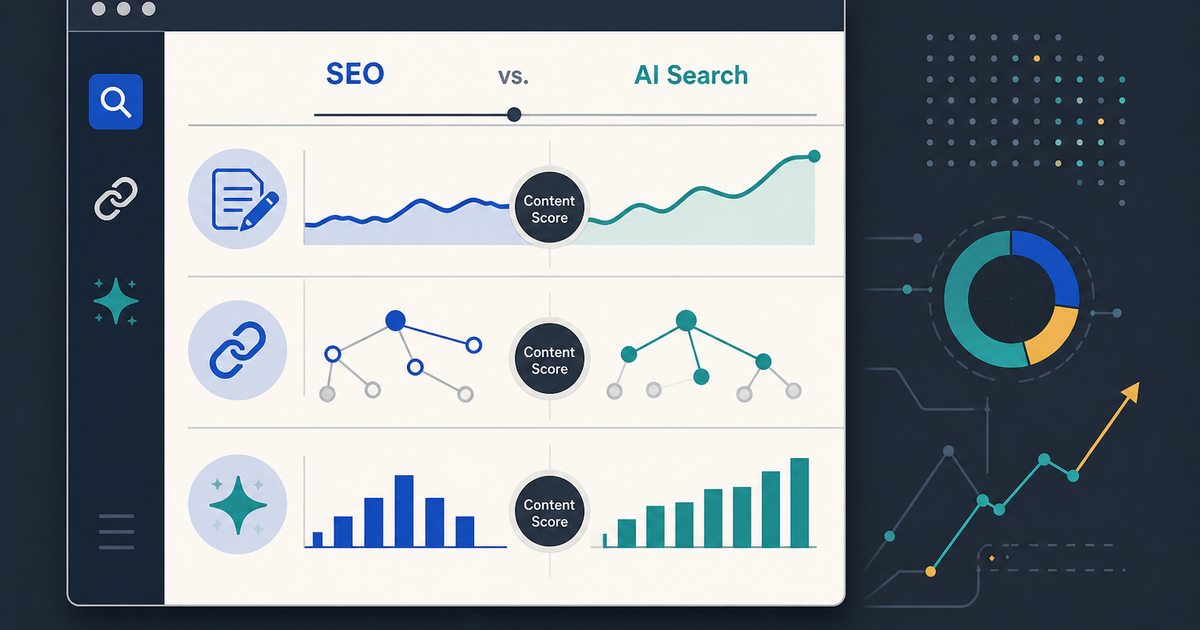
ChatGPT and Perplexity are now part of the discovery surface, which means modern SEO software has to think about Google, AI Overviews, and answer engines at the same time. A tool that only helps you draft text does not optimize SEO. A platform that can research, draft, optimise, and publish starts to look much closer to seo optimization software than a prompt box does. That is the line where teams begin to talk about seo a.i as a workflow, not a toy.
If you are evaluating this category, the useful test is blunt: does the system reduce handoffs, or just produce more content faster? Speed without publishing discipline is still manual work.
SEO and marketing tools in practice
SEO marketing tools are the systems teams use to find opportunities, improve pages, and measure visibility. In practice, that includes search optimization tools, search engine optimizer tools, and seo optimisation tools, even if vendors label them differently.
The category is broader than rank tracking. It includes content discovery, intent analysis, internal linking, technical audits, publishing, and measurement. If a platform only reports data, it is a diagnostic. If it helps the team act on the data, it is closer to an operating tool.
The best platforms reduce both analysis time and execution time. That matters because teams do not need another dashboard. They need more pages shipped with less coordination.
When should a team move beyond free tools?
Move beyond free tools when content needs to ship on a cadence, not as a side project. The tipping point is usually not budget. It is operational drag.
If every article still needs manual research, manual drafting, manual optimisation, and manual CMS handoff, the stack is too fragmented. If internal links are added one by one, refreshes are delayed, and search performance is checked in spreadsheets, the workflow is already costing more than it looks.
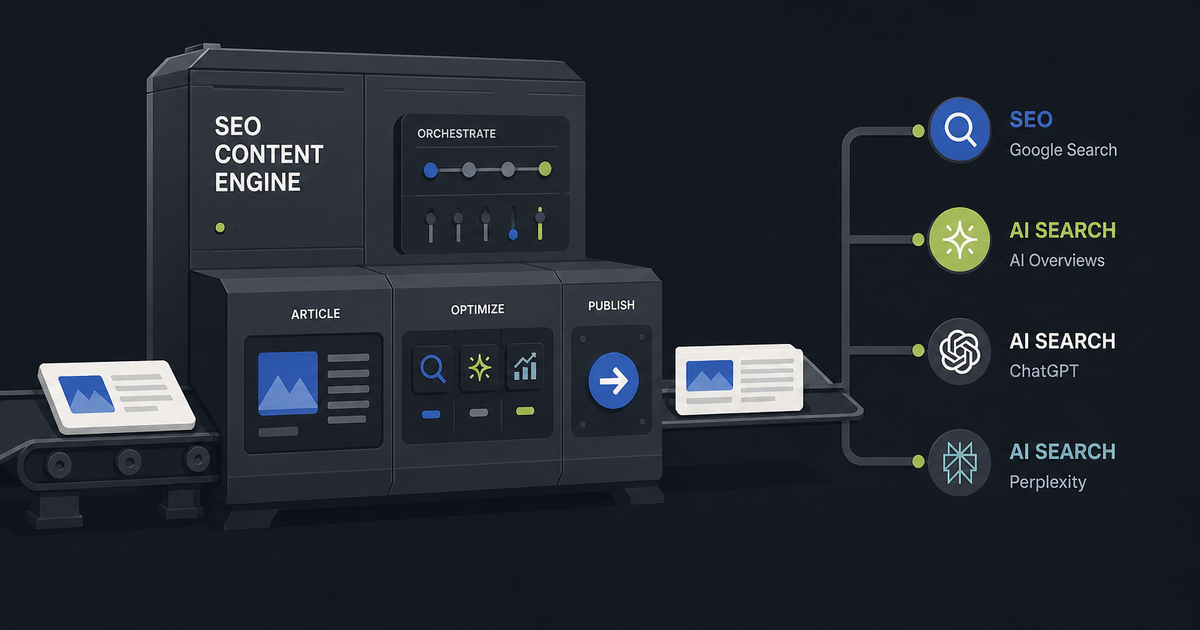
That is where Essel fits. Essel is built for teams that want an autonomous AI SEO content engine that researches, writes, optimises, publishes, and improves content on autopilot. It is the difference between using free seo software tools to patch gaps and using a system that keeps the whole pipeline moving.
For a practical next step, review the buying checklist and compare it with your current stack. If the answer is “we still do most of this by hand,” the next bottleneck is already clear.
What is the best free SEO tool?
The best free SEO tool depends on the job. Google Search Console is the best starting point for performance data, Google Keyword Planner is useful for demand checks, Ahrefs Webmaster Tools is strong for backlink review, Screaming Frog SEO Spider is better for technical audits, and Moz is useful for quick domain and brand checks.
That mix is why the answer is usually a stack, not a single product. Free tools are specialists. They are not a substitute for a workflow.
Can I do SEO on my own for free?
Yes, you can do SEO on your own for free, but only at a small scale. You can research terms, check pages, review backlinks, and publish content without paying for a suite, but you will still spend time moving between tools and turning data into actions.
For a solo operator, that may be fine. For a SaaS team trying to publish consistently, the manual load becomes the real tax.
Are free SEO tools worth it?
They are worth it when you need checks, not systems. Free tools give you visibility into what is happening, but they do not automate the work of content production, optimisation, or publishing.
That is why free tools often feel productive early and limiting later. The cost is not the software bill. It is the hours.
Is SEO dead or evolving in 2026?
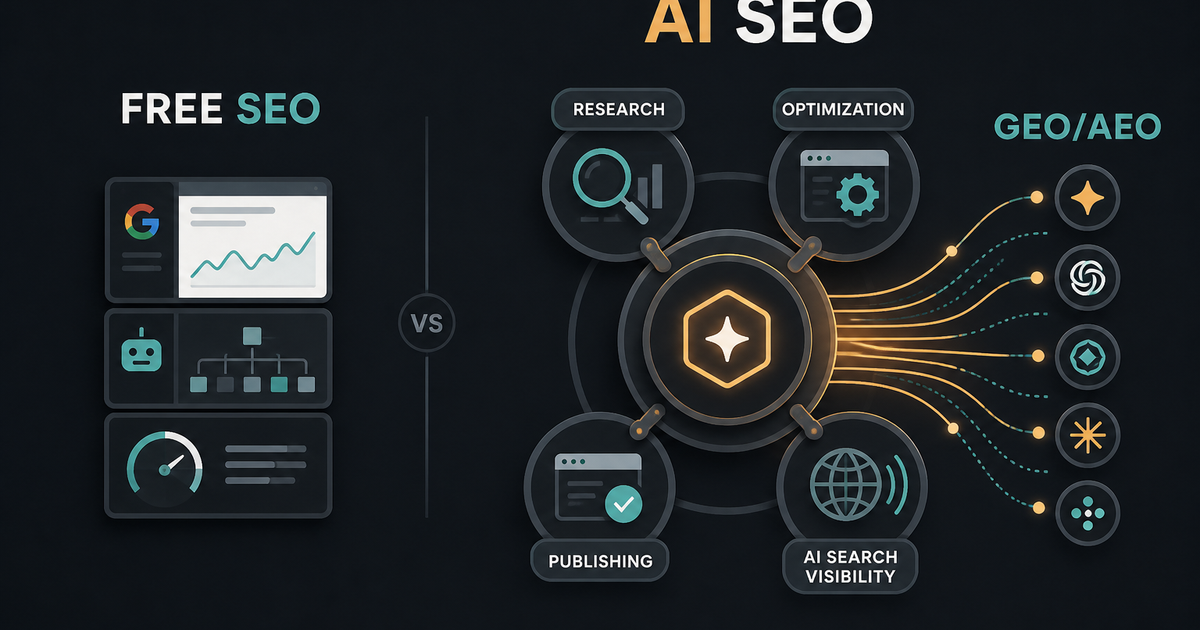
SEO is evolving in 2026. Google still matters, but AI search visibility, GEO, and AEO now shape how content gets discovered across ChatGPT, Perplexity, and AI Overviews.
That shift raises the bar for seo marketing tools. A toolset that only covers keyword research and reporting is behind the curve. A stack that can research, optimise, link, and publish content for both search and AI surfaces is built for where discovery is going next.